
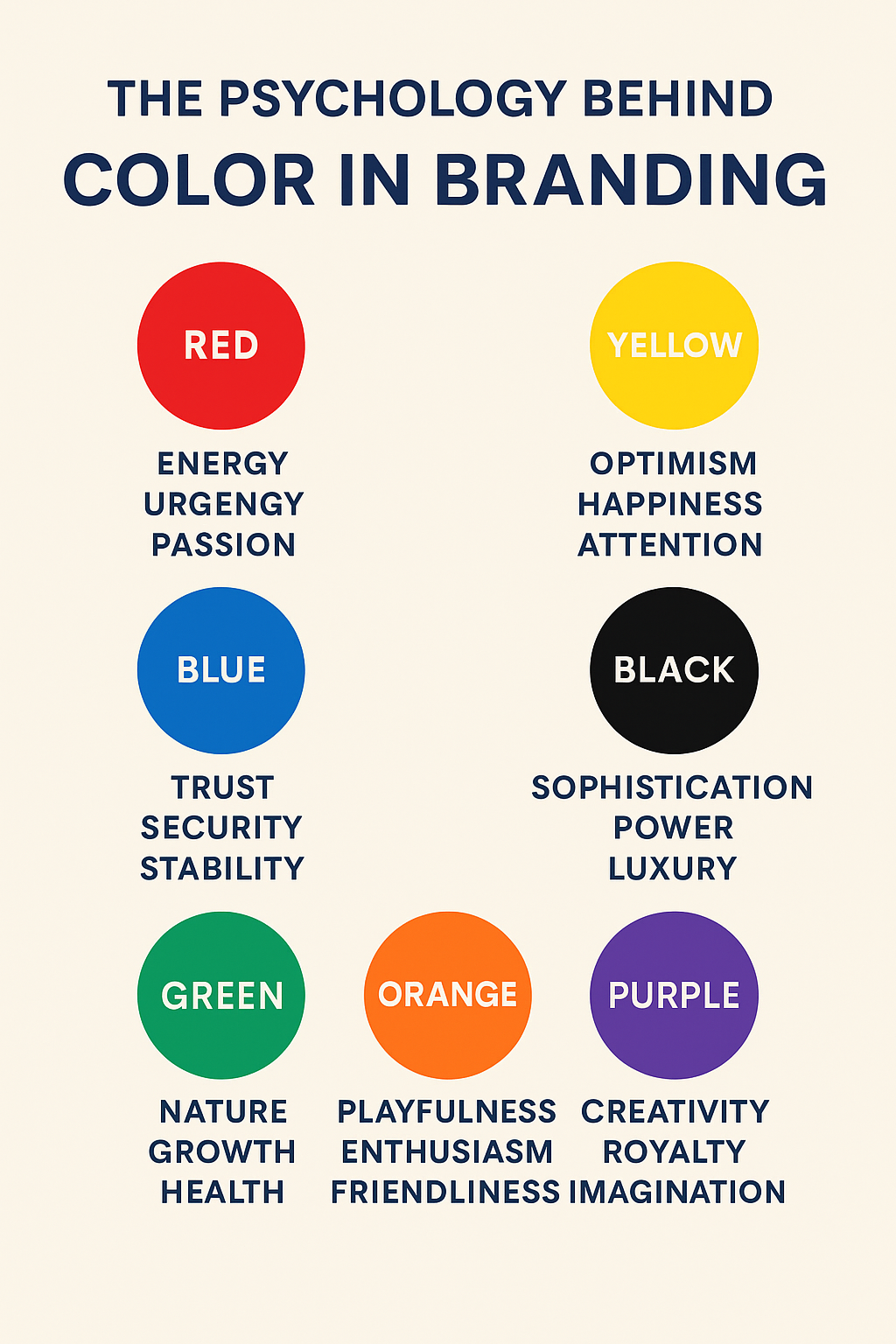
The Psychology Behind Color in Branding
Color is more than just a visual experience—it’s a psychological tool that influences perception, behavior, and decision-making. In the world of branding, color is one of the most powerful elements to evoke emotion, communicate values, and establish identity. From the calming blues of tech companies to the energizing reds of fast-food chains, color choices are never random. They’re strategic. In this article, we explore the psychology behind color in branding, how businesses leverage it to connect with consumers, and what you should consider when selecting a color palette for your own brand. Why Color Matters in Branding Color is often the first element a person notices about a brand. In fact, research suggests that up to 90% of initial judgments about a product can be based solely on color. The right color not only helps brands stand out but also enhances brand recognition by up to 80%. Consider these examples: Each choice reinforces a psychological response, helping brands craft an identity that resonates emotionally with their audience. The Psychology of Popular Brand Colors Let’s break down what different colors typically communicate: Choosing the Right Colors for Your Brand Choosing a brand color should go beyond personal preference. Ask yourself: The Role of Color Consistency in Brand Recognition It’s not enough to just pick a great color—you must use it consistently. A cohesive color scheme: Brands like Tiffany & Co. (with their iconic teal) and McDonald’s (with their golden arches) demonstrate how color can become synonymous with the brand itself. Mistakes to Avoid Final Thoughts Color in branding is both an art and a science. When used effectively, it can help tell your story, build emotional connections, and even influence consumer behavior. As your brand evolves, your color palette should remain a powerful anchor for recognition and trust. FAQs 1. How many colors should my brand use?Ideally, your brand should have 1–2 primary colors and 2–3 secondary colors. This ensures variety without overwhelming your audience. 2. Can I change my brand colors later?Yes, but with caution. A color rebrand requires a thoughtful rollout plan to maintain recognition and consumer trust. 3. What is color psychology in marketing?It’s the study of how colors affect perceptions and behaviors. Marketers use it to influence emotions and actions. 4. Do colors mean the same thing across cultures?Not always. For example, white signifies purity in Western cultures but mourning in some Eastern traditions. Always research your audience. 5. Are there tools to help me choose brand colors?Yes! Tools like Adobe Color, Coolors, and Canva’s Brand Kit can help you experiment with palettes that reflect your brand’s personality.