The Evolution of Logo Design: Then vs Now
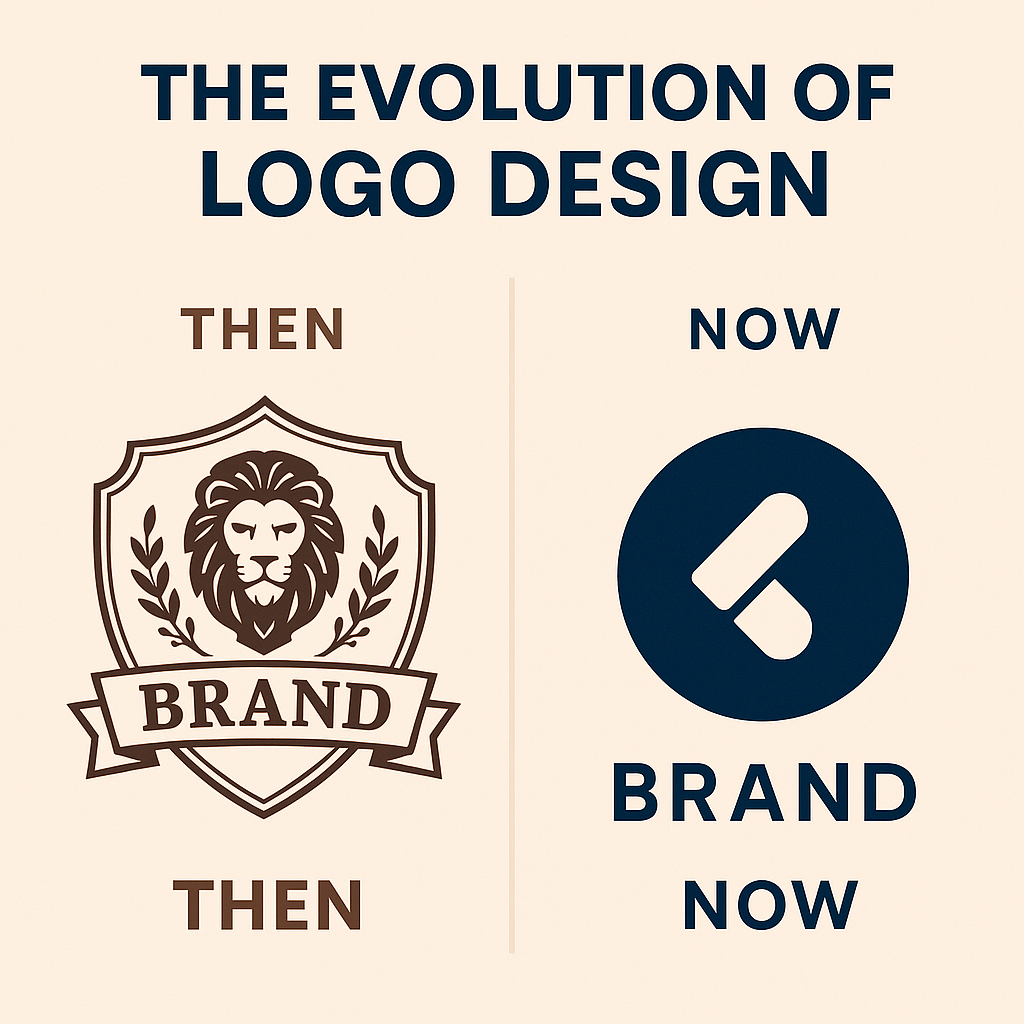
From ornate coats of arms to minimalist digital icons, the evolution of logo design is a fascinating journey through branding history, art trends, and cultural shifts. Logos are more than just symbols — they’re identity anchors for businesses, emotions wrapped in design. In this article, we explore how logos have changed over the decades, why they’ve changed, and what that means for brands today. Then: Detailed, Literal, and Traditional 1. Early Logos Were Literal In the early to mid-1900s, logos were often realistic and illustrative. Think of early car brands, breweries, or banks — their logos typically used crests, heraldic symbols, or full depictions of products. Example: The original Starbucks logo (1971) featured a detailed, twin-tailed mermaid in brown tones, inspired by 16th-century woodcuts. 2. Typography Was Decorative Fonts used in old logos were highly stylized — script, serif, and heavily ornamental. These designs conveyed tradition, craftsmanship, and authenticity. 3. Color Palettes Were Limited Due to printing technology limitations, color choices were often subdued, and most logos were black-and-white until color printing became standard. 4. Function Over Versatility Old logos were built for signage, product packaging, and print. Scalability and digital adaptability weren’t priorities. Now: Minimal, Abstract, and Digital-First 1. Simplicity Rules Today’s logos are clean, flat, and minimalist. Think Apple, Nike, or Airbnb. The emphasis is on quick recognition and digital scalability. Consumers scroll fast. Logos need to register instantly on screens of all sizes. 2. Abstract Over Literal Modern logos often imply meaning rather than state it directly. Logos like Twitter’s bird or Slack’s symbol evoke emotion and connection without needing text. 3. Bold Typography Contemporary font trends favor bold sans-serif typefaces, all-caps, and custom lettering — creating strong, modern identities. 4. Flexible Design Systems Modern logos are part of a larger brand system — adaptive for app icons, website headers, social media profiles, and merchandise. Think responsive logos that morph by screen size. Why the Shift? The Hybrid Future: Best of Both Worlds? Some brands are embracing both past and present. Retro-modern logos — where nostalgic design is updated with sleek geometry — are trending. Example: Burger King’s 2021 rebrand resurrected its vintage logo with flatter, simplified execution for modern platforms. FAQs 1. Why are modern logos so minimal?Minimalism ensures versatility, readability, and fast recognition across digital devices and platforms. 2. Do detailed logos still work?In some industries — like luxury fashion or wine — ornate or detailed logos still convey heritage and prestige. But even they often simplify for digital. 3. Should my logo evolve over time?Yes. Refreshing a logo every few years keeps your brand current and ensures it fits changing mediums and audience preferences. 4. What’s a responsive logo?A responsive logo adapts based on screen size or usage. For example, a full logo on desktop may reduce to just the icon or monogram on mobile. 5. How often should companies rebrand?There’s no strict rule, but if your logo feels outdated or no longer aligns with your brand vision or audience, it may be time for an update — typically every 7–10 years. Final Thoughts The evolution of logo design is a testament to how brands respond to the world around them. As society changes, so does visual identity. Whether you’re a startup creating a new logo or an established brand considering a redesign, understanding past and present trends can help you build a logo that resonates today — and lasts tomorrow.