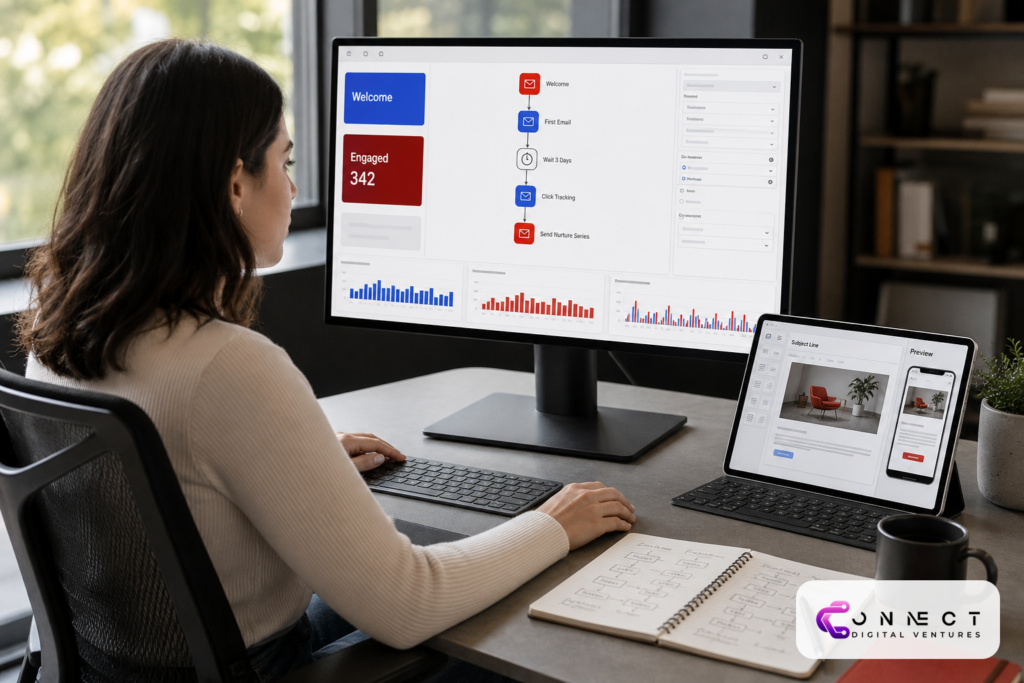
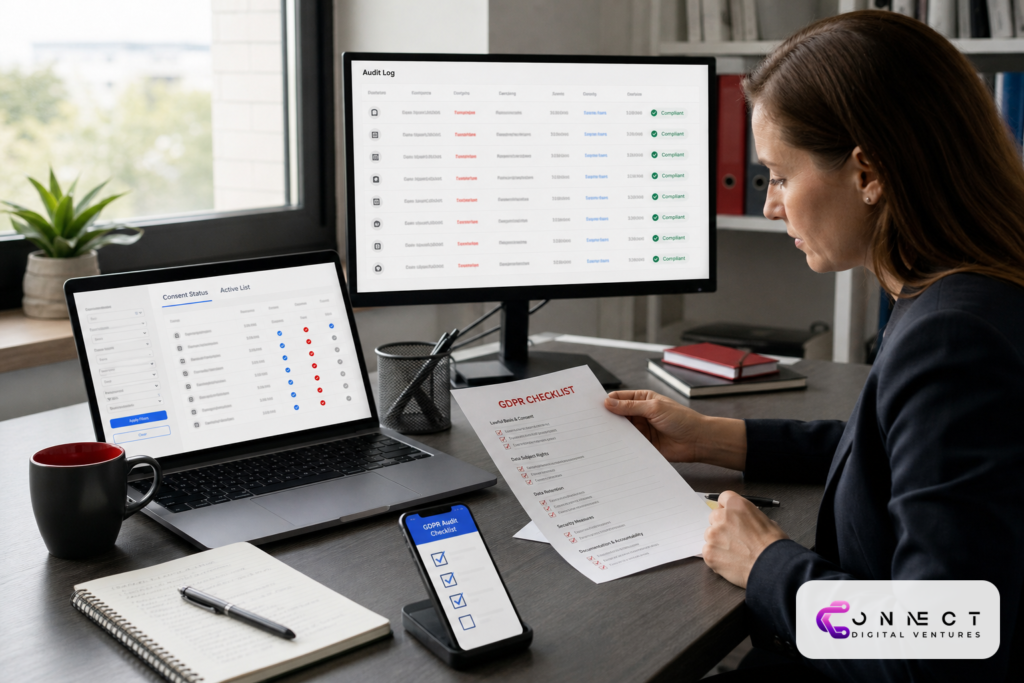
Buyer intelligence for B2B marketing is the practice of collecting, enriching, and acting on data about who your buyers are, which accounts are in market, and what they are doing right now, so sales and marketing can focus on the right people at the right moment. It combines three layers: intent signals, account attributes, and contact insights. This guide gives RevOps and go-to-market leaders a working framework, a data architecture, a tool-selection approach, and a way to measure results.
What Is Buyer Intelligence in B2B Marketing (and Why RevOps Teams Need It)
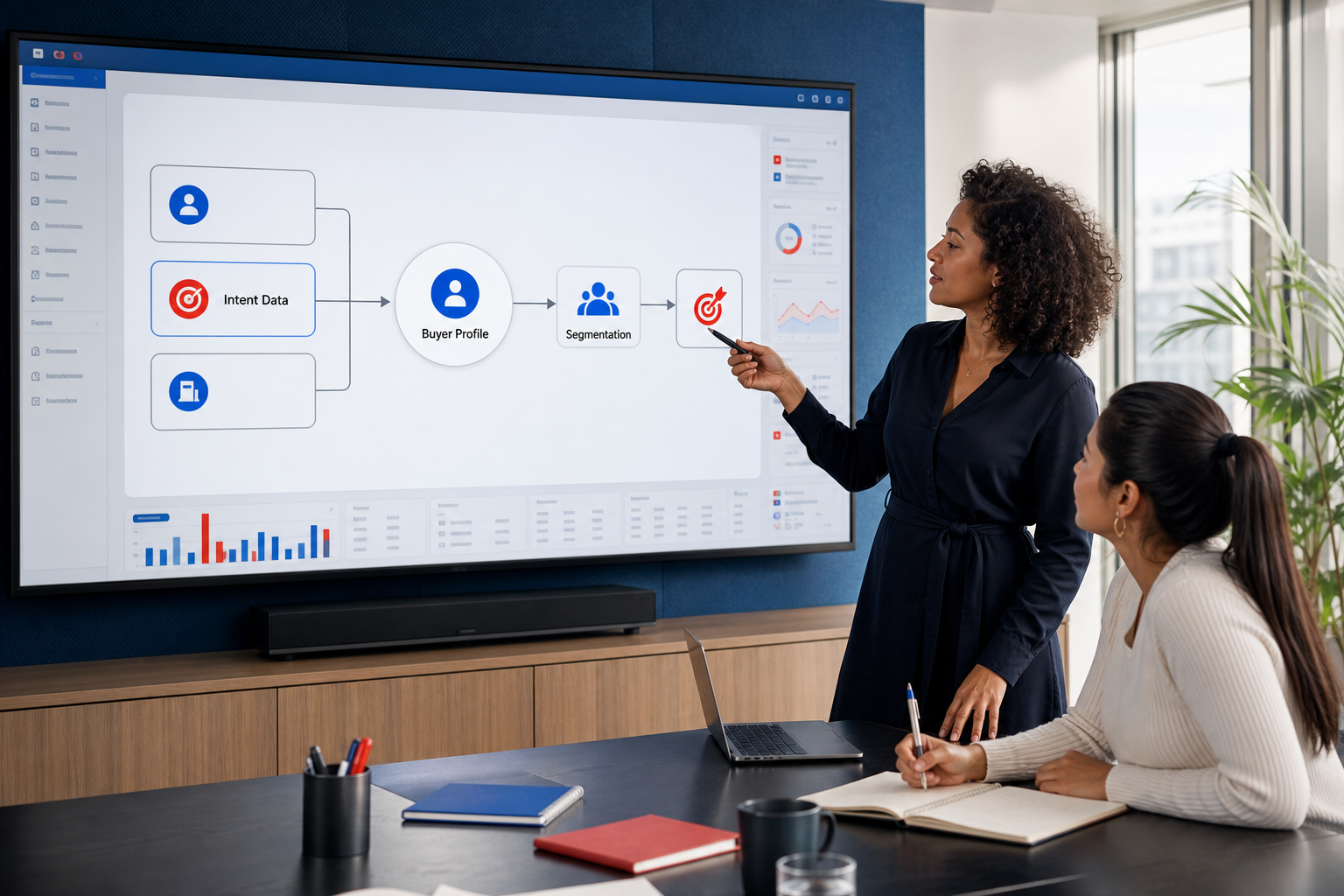
Buyer intelligence is the structured use of first-party, second-party, and third-party data to understand and predict the behavior of the people and organizations that buy from you. It answers four practical questions: who should we target, who is the buying committee, what do they care about, and are they showing signs of buying now?
RevOps teams need it because the modern B2B purchase is hard to see. Buying committees are larger, much of the research happens before anyone fills in a form, and CRM records decay quickly as people change roles and companies change priorities. Without a deliberate data strategy, sales works from stale lists, marketing optimizes for form fills, and leadership debates which numbers to trust.
Buyer intelligence vs. market intelligence vs. competitive intelligence
These terms are often used interchangeably, but they answer different questions:
- Buyer intelligence: focused on specific accounts and people. It tells you who is likely to buy, who influences the decision, and when to engage.
- Market intelligence: focused on the category. It covers market size, trends, regulatory shifts, and demand patterns, and informs positioning and planning.
- Competitive intelligence: focused on rivals. It covers their products, pricing moves, messaging, and win/loss patterns, and informs battlecards and differentiation.
The three overlap. A competitor’s new product launch (competitive) may change how a segment buys (market), which shows up as a spike in research activity at specific accounts (buyer). Treat buyer intelligence as the operational layer that turns the other two into action at account level.
Where we see it from: the events lens
At Celestine Event, we design and run exhibitions, conferences, press events, and brand activations from our base in Dubai. Events are one of the richest sources of first-party buyer data a B2B company has: booth conversations, session attendance, meeting requests, and the questions people ask in person. Yet we regularly see that data collected on a show floor never reaches the CRM in a usable form. The framework below treats events as one input among several, and it is built to fix that kind of gap.
The Three Layers of Buyer Intelligence: Intent, Account, and Contact Data
We organize buyer intelligence into three layers. Each answers a different question, and none is sufficient on its own.
Layer 1: Intent data and buyer intent signals
Buyer intent signals are observable behaviors that suggest an account or person is researching a problem or a solution. They fall into three groups:
- First-party signals: pricing page visits, repeat visits from one account, content downloads, webinar attendance, product usage, email replies, chat conversations, and event interactions such as booth scans, session check-ins, and meeting bookings.
- Second-party signals: data shared by a partner, such as a publisher, review platform, or event organizer, about engagement with their audience.
- Third-party signals: research activity across external sites and networks, typically aggregated at account level by intent data providers and used for intent data for B2B sales prioritization.
First-party signals are the most reliable because you own the context. Third-party signals are broader but noisier, and they work best as a prompt to look closer, not as proof of an active deal.
Layer 2: Account intelligence
Account intelligence describes the organization. It is the foundation of account-based marketing intelligence and predictive account scoring. Useful account attributes include:
- Firmographics: industry, headquarters and office locations, employee count, revenue band, ownership structure.
- Technographics: the tools and platforms the account already uses, which indicate fit, integration needs, and displacement opportunities.
- Trigger events: funding, leadership changes, expansions, new market entries, acquisitions, regulatory deadlines, and hiring patterns.
- Relationship history: past opportunities, previous customers who moved there, support history, and partner connections.
Layer 3: Contact insights
Contact data is about the individuals. Effective contact enrichment for sales goes beyond a verified email address. Collect:
- Role and seniority: title, function, reporting line, and tenure in the role.
- Buying role: economic buyer, champion, technical evaluator, blocker, or end user.
- Reachability: verified business email, direct phone, preferred channel, and consent status.
- Engagement history: which content they consumed, which events they attended, and which conversations they had with your team.
What specific data points should we collect?
Resist the urge to collect everything. A practical minimum for a mid-market B2B team looks like this:
- Account: industry, size band, location, current technology stack, and one or two trigger events.
- Contact: title, function, seniority, verified email, and consent status.
- Behavior: web visits by account, key page views, content and event engagement, and reply activity.
- Outcome: opportunity stage, win/loss reason, and deal cycle length, which are essential for training scoring models later.
Every field you add should have an owner and a decision it supports. If no one can name the decision, do not collect it.
Building Your Data Architecture: Collection, Enrichment, and Activation
A sound GTM data strategy is less about any single tool and more about the flow of data. We use a simple model we call the Collect, Enrich, Activate (CEA) loop. The word loop matters: outcomes from activation feed back into collection and scoring, so the system improves over time.
Stage 1: Collection
Collection means capturing signals consistently at every touchpoint and writing them to a shared place. The sources usually include:
- Website and product analytics, with account-level identification where lawful and appropriate.
- Marketing automation and email engagement.
- CRM activity, including calls, meetings, and notes.
- Event platforms, registration systems, badge scanners, and meeting schedulers.
- Third-party intent and review data.
- Customer success and support data.
The most common failure here is inconsistent identifiers. If the same company appears as three different records across systems, no later step will fix it. Agree on a canonical account ID and a matching rule (typically domain-based) before you buy anything else.
Stage 2: Enrichment
Enrichment appends and validates attributes so raw records become usable. For contact enrichment for sales and account intelligence platforms alike, the workflow has four steps:
- Standardize: normalize job titles, country names, industries, and company names.
- Deduplicate and match: merge records and associate contacts with the correct parent account.
- Append: add firmographic, technographic, and contact attributes from one or more providers.
- Verify and refresh: validate emails, flag role changes, and set a refresh cadence.
How do we enrich raw data to predict buying intent?
Prediction comes from combining fit and behavior. Enrichment supplies the fit side: does this account look like the customers who buy and stay? Behavioral signals supply the timing side: is it acting like one right now? Predictive account scoring blends the two:
- Fit score: how closely firmographics, technographics, and buying-committee structure match your best customers.
- Engagement score: recency, frequency, and depth of first-party activity across multiple contacts.
- Intent score: third-party research on relevant topics, weighted by how closely those topics map to your offer.
- Trigger score: recent events, such as an expansion or leadership change, that historically precede purchases.
Start with a transparent, rules-based model that sales can read and challenge. Move to a statistical or machine learning model once you have enough closed-won and closed-lost outcomes to train and validate it. A model nobody understands is a model nobody uses.
Stage 3: Activation
Activation delivers intelligence into the tools and moments where people act. That means routing alerts to sellers inside the CRM, syncing audiences to ad platforms, triggering nurture programs, and informing event invitations and follow-up. If a signal sits in a dashboard that no one opens, it has not been activated.
A reference architecture
Most teams end up with a version of this structure:
- Sources: web, product, CRM, marketing automation, events, third-party providers.
- Central store: a CRM-centric model for smaller teams, or a data warehouse or customer data platform for larger ones.
- Identity and enrichment layer: account matching, deduplication, and data providers.
- Scoring and orchestration: rules or models, plus workflow routing.
- Activation endpoints: CRM, sales engagement, advertising, email, and event programs.
- Reporting: shared definitions and dashboards for pipeline and revenue.
Whether you need a dedicated platform or whether your CRM and email tools are enough is a real decision with trade-offs, and it is the subject of our related guide on when to build a GTM data stack around a customer data platform versus email and CRM. For help designing the data foundation itself, the data services from Connect Digital Ventures are a useful reference point.
How to Choose and Integrate Buyer Intelligence Tools for Your GTM Stack
Tool selection goes wrong when teams shop by feature list. We recommend choosing by job to be done and by integration fit.
Which tools should we prioritize?
Prioritize in this order, because each layer depends on the one before it:
- A clean system of record. Your CRM, with enforced fields, account hierarchy, and deduplication, comes first. Everything else writes to it or reads from it.
- Contact and account enrichment. Reliable coverage of the markets you actually sell into matters more than headline database size. Our related guide on B2B contact enrichment goes deeper on evaluating data quality tools.
- Behavioral tracking and first-party signal capture. Web analytics, marketing automation, and event data capture, all tied to account IDs.
- Account intelligence platforms and intent data. Add third-party signals once your first-party foundation works, so you can validate what they tell you.
- Orchestration and activation. Workflow, routing, sales engagement, and advertising audiences that put signals to work.
Evaluation criteria that matter
- Coverage in your market: test match rates on your own accounts and regions, not on a vendor’s sample. This is especially important for markets such as the Middle East, where global databases can be thinner than in North America.
- Accuracy and freshness: ask how data is verified and how often it refreshes. Run a blind test against a few hundred records you already know.
- Signal transparency: can you see which topics, sources, and behaviors drive an intent score?
- Integration depth: native, bidirectional sync with your CRM and automation tools, plus API access.
- Compliance posture: data provenance, consent handling, and support for data subject requests.
- Usability for sellers: if it does not surface in their daily workflow, adoption will fade.
Integration principles
- Define one source of truth for each data type, and prevent tools from overwriting each other’s fields.
- Log the source and timestamp of every enriched field so you can debug disagreements.
- Pilot with one segment and one team before a broad rollout.
- Document your data dictionary so marketing, sales, and RevOps use the same definitions.
A frequent mistake is buying an intent platform before the CRM can absorb its output. The signals arrive, nobody knows which account they belong to, and the subscription quietly goes unused.
From Signals to Action: Converting Buyer Intelligence Into Pipeline Growth
Intelligence has value only when it changes behavior. This is where revenue operations buyer data programs either pay off or stall.
How do we activate signals across sales and marketing?
Build a small set of explicit plays, each with a trigger, an owner, a response time, and a message. For example:
- High fit, rising intent: alert the account owner, share the signals that triggered it, and begin a coordinated outreach sequence. Marketing supports with targeted ads and relevant content.
- High fit, low engagement: keep the account in a low-cost awareness program and watch for trigger events.
- Multiple contacts engaging: treat this as a buying-committee signal. Map the roles and fill gaps with multithreaded outreach.
- Existing customer showing new-topic research: route to customer success or account management as an expansion lead.
- Event interaction: send a follow-up within a day that references the specific conversation or session, and update the CRM with notes and interest level, not just a badge scan.
Use B2B buying signals to shape the message
The signal tells you the topic as well as the timing. An account researching integration challenges needs a different conversation than one comparing vendors in a category. Sales enablement data infrastructure should therefore pass context, not just a score. Give sellers the three or four reasons an account surfaced, in plain language.
Events as an activation channel
Intelligence can also shape in-person programs. If you know which target accounts are in market, you can prioritize them for exhibition meetings, private briefings, hosted dinners, or tailored booth experiences. We see the best results when the booth design, the meeting schedule, and the follow-up workflow are planned together from concept to execution, so that every interaction on the floor is captured and routed. Our related guide on intent data for account-based marketing covers how to link these signals to ABM programs in more detail.
Align sales and marketing on definitions
Agree on what counts as a marketing-qualified account, a sales-ready signal, and an accepted lead. Document service levels: how fast sales responds, and what feedback they return to marketing. The feedback matters most. When sellers mark why a signal was useful or not, the scoring model gets better.
Common Mistakes RevOps Leaders Make With Buyer Intelligence (and How to Avoid Them)

Most advice on this topic focuses on buying more data. In our experience, the failures come from process and ownership, not from a lack of data.
Treating intelligence as a tool purchase
A platform does not create a program. Without a named owner, a defined use case, and a routing process, even excellent data sits unused. Start with one decision you want to improve, such as which accounts sales calls first, and work backward to the data you need.
Scoring everything and prioritizing nothing
Models with dozens of weighted inputs are difficult to explain and harder to trust. If a seller cannot say why an account is ranked highly, they will ignore the ranking. Begin with a small set of signals tied to real buying behavior, then add complexity only when feedback shows a gap.
Ignoring data quality at the source
Duplicate records, outdated titles, and unmapped domains quietly erode every downstream insight. Set a regular audit for account matching, contact accuracy, and enrichment coverage. Small corrections at the source prevent large errors in reporting.
Measuring activity instead of outcomes
Counting signals captured or reports generated shows effort, not impact. The measures that matter connect intelligence to pipeline and revenue, which is where the next section begins.
Leaving field and event intelligence outside the system
Conversations at exhibitions, briefings, and live programs often contain the clearest buying signals, yet they are frequently recorded in notebooks or lost entirely. Capture them in the same system as digital signals, with consistent fields, so they can influence scoring and follow-up.
How Do You Measure the ROI of Your Buyer Intelligence Program?
You measure the return on buyer intelligence by comparing how target accounts that received intelligence-led treatment performed against a baseline, across engagement, pipeline, and revenue outcomes. The comparison must be set up before launch, or you will have no credible point of reference.
Most advice stops at “track pipeline influenced,” which is too broad to be useful. Influence attribution tends to credit intelligence for deals that would have closed anyway. We prefer a measurement model with three layers, each answering a different question.
The three-layer measurement model
- Signal quality: Are we identifying the right accounts? Track match rate, coverage of your target account list, and the share of flagged accounts that sales confirms as genuinely in market.
- Action effectiveness: Are teams responding well? Track speed to first outreach, meeting acceptance rate, and how often sellers use the context provided.
- Commercial outcome: Is it changing results? Track opportunity creation rate, win rate, sales cycle length, and average deal size for intelligence-led accounts versus the baseline.
Working through the layers in order helps you diagnose problems. If signal quality is high but action effectiveness is low, the issue is routing or enablement, not data. If both are strong but outcomes are flat, the offer or the targeting criteria may need revisiting.
Set a baseline before you launch
Record the current conversion rate from target account to opportunity, the median sales cycle, and the average response time to inbound interest. Where possible, hold out a comparable group of accounts that follows your existing process for one or two quarters. A holdout is the most dependable way to separate the effect of intelligence from seasonal demand and other campaigns.
Which metrics matter most?
- Account engagement rate: the share of target accounts showing meaningful activity across channels.
- Signal-to-opportunity conversion: how many flagged accounts become qualified opportunities.
- Sales cycle length: whether better timing and context shorten the path to decision.
- Win rate on intelligence-led opportunities: a direct indicator of fit and timing.
- Event-sourced pipeline: opportunities that originate from or advance through exhibitions and hosted programs when accounts are prioritized in advance.
Report results in a way leadership can use
Present a short, consistent view each quarter: the baseline, the current figures, the change, and what you will adjust next. Include sales feedback alongside the numbers, since qualitative notes often explain why a metric moved. Be candid about what is unproven. A measured, honest report builds more trust than a polished one that overstates impact.
Buyer Intelligence for B2B Marketing: Frequently Asked Questions
What is buyer intelligence in B2B marketing?
Buyer intelligence is the practice of combining first-party, third-party, and field data to understand which accounts and contacts are likely to buy, what they care about, and when to engage them. It informs targeting, messaging, and sales prioritization.
How is buyer intelligence different from intent data?
Intent data is one input, showing research behavior around specific topics. Buyer intelligence is broader, adding firmographics, engagement history, buying committee details, and conversations from sales and events to give a complete picture.
Who should own a buyer intelligence program?
Revenue operations is usually best placed to own it, because the function sits between marketing, sales, and customer success. Ownership should include data governance, scoring logic, and the feedback loop with sellers.
How long does it take to see results?
Early signal quality and response-time improvements can appear within one to two quarters. Changes in win rate and sales cycle length usually take longer, depending on your typical deal length.
Can buyer intelligence support exhibitions and live events?
Yes. Knowing which target accounts are in market lets you prioritize meetings, personalize booth experiences, and route on-site conversations into follow-up quickly, so in-person investment links directly to pipeline.
Turning Buyer Intelligence Into a Lasting Advantage
Buyer intelligence works when data, process, and people are designed together. The organizations that benefit most are not those with the most data, but those that define clear use cases, give sellers context they trust, and measure outcomes with discipline. At Celestine Event, we bring the same meticulous attention to detail to in-person activations, helping teams connect what they learn about their buyers to experiences that make a lasting impression.
Learn how to implement a buyer intelligence program tailored to your GTM strategy—schedule a consultation with our RevOps experts or explore our go-to-market resources for guidance.
Related reading: Full-Service Email Marketing: What It Means and Why It Matters · B2B Email Marketing Strategy for Lead Generation: A Practical Guide to Qualified Pipeline · Top Metrics to Track in Google and Meta Ads Campaigns
Frequently asked questions
What specific data points should we collect to build effective buyer intelligence?
A practical minimum includes account data (industry, size, location, technology stack, trigger events), contact details (title, function, seniority, verified email, consent), behavior signals (web visits, content engagement, event interactions), and outcomes (opportunity stage, win/loss reasons, deal cycle length). Every field should have an owner and support a specific business decision.
How do we enrich raw account and contact data to predict buying intent?
The Collect, Enrich, Activate loop guides this process. Collect signals consistently from websites, marketing automation, CRM, events, and third-party sources. Enrich by adding firmographics, technographics, trigger events, and relationship history at account level, and role, seniority, buying role, and engagement history at contact level. Train scoring models using historical outcomes.
What’s the difference between buyer intelligence, market intelligence, and competitive intelligence?
Buyer intelligence focuses on specific accounts and people to identify who is likely to buy and when to engage. Market intelligence covers category trends, size, and demand patterns to inform positioning. Competitive intelligence tracks rival products and messaging for differentiation. Buyer intelligence is the operational layer that activates the other two at account level.
Which tools should we prioritize when building a buyer intelligence stack?
Prioritize tools that support the Collect, Enrich, Activate flow: website and product analytics with account-level identification, marketing automation and CRM systems, event platforms and registration systems, third-party intent data providers, and customer success tools. Focus on data flow consistency and matching rules before adding tools. Integration capability matters more than individual feature sets.
How do we activate buyer intelligence signals across sales and marketing teams?
Write signals to a shared system consistently from every touchpoint. Agree on canonical account identifiers and matching rules before implementation. Use first-party signals as your most reliable foundation, second-party signals from partners as confirmations, and third-party signals as prompts for deeper investigation. Ensure outcomes from activation feed back into collection to improve the system.
What are the privacy and compliance considerations for B2B buyer data collection?
Collect account-level identification only where lawful and appropriate. Verify consent status for all contact data, especially email addresses. Understand regulations affecting your industry and geographies. Document the decision each data point supports. Use ethical matching practices for account identification. Maintain clear data ownership and ensure compliance with privacy laws when enriching or sharing buyer data across systems.