Email remains one of the most reliable channels for generating B2B leads, but only when it is run as a system rather than a series of blasts. A strong B2B email marketing strategy for lead generation connects precise targeting, relevant content, automation, and sales alignment so that every message moves a buyer one step closer to a conversation. This guide walks through each component, from defining who you are emailing to measuring whether those emails produce revenue.
Understanding B2B Email Marketing vs. B2C: Key Differences for Lead Gen

The mechanics of sending email are identical in B2B and B2C. The buying context is not. Understanding the differences shapes every decision that follows.
Longer cycles and more stakeholders. A consumer may buy after a single promotional email. A B2B purchase often involves three to ten decision-makers, a budget approval process, and a sales cycle measured in months. Your emails must serve multiple roles, such as the technical evaluator, the financial approver, and the end user, often with different messages.
Logic over impulse. B2B buyers justify decisions with ROI, risk reduction, and efficiency gains. Content that demonstrates measurable outcomes, such as case studies, benchmarks, and process breakdowns, outperforms urgency-driven discounts.
Lower volume, higher value. B2B lists are smaller, and each contact may represent tens of thousands of dollars in lifetime value. That makes relevance and deliverability more important than raw send volume.
The goal is qualification, not just conversion. In B2C, the email often closes the sale. In B2B, email’s job is to create and qualify demand, then hand a sales-ready lead to a human. That shift in purpose is the foundation of everything below.
Building Your Ideal Customer Profile (ICP) for Email Targeting
Email performance is capped by targeting quality. Before writing a single subject line, define the accounts and people most likely to buy, stay, and expand.
Start with your best existing customers. Analyze closed-won deals and retained accounts for patterns in:
- Firmographics: industry, company size, revenue, geography, and growth stage.
- Technographics: the tools and platforms they already use, which signal fit and integration needs.
- Buying committee roles: the titles that initiate, influence, and approve purchases.
- Triggers and pain points: funding rounds, leadership changes, compliance deadlines, or expansion that create urgency.
Also identify negative signals: segments that churn quickly, demand heavy discounts, or never progress past the first call. Excluding poor-fit contacts protects sender reputation and sales time.
Turn the ICP into one to three buyer personas tied to specific problems. Each persona should have a documented primary challenge, preferred content format, and common objections. These documents become the briefing material for every campaign.
Email List Building Strategies: Quality Over Quantity for B2B

Email list quality for business leads matters more than list size. A 2,000-contact list of well-matched prospects will outperform a 20,000-contact list of loosely relevant addresses, and it will protect your deliverability.
Offer gated content that earns the subscription. Original research, templates, calculators, benchmark reports, and webinars attract people with a genuine problem. Generic newsletters sign-ups tend to attract students, competitors, and job seekers.
Use progressive profiling. Keep initial forms short, then collect job role, company size, and challenges over subsequent interactions. This improves conversion on forms while still building a rich record.
Capture intent signals. Pricing page visits, demo requests, and content downloads reveal readiness better than demographic data alone. Sync website behavior to your email platform.
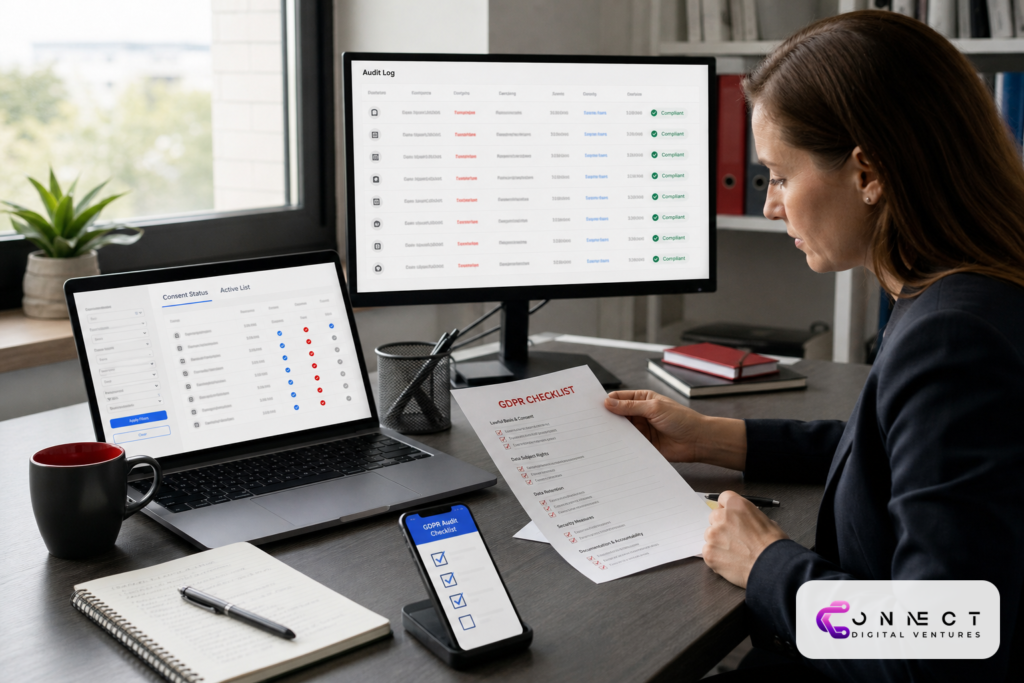
Use cold outreach carefully. Cold email outreach for B2B can be effective when it is targeted, compliant, and relevant. Build prospect lists from ICP criteria, verify addresses, and respect regional rules such as GDPR, CAN-SPAM, and CASL, including a clear opt-out and a legitimate-interest rationale where required. Never buy bulk lists; they damage reputation and rarely match your ICP.
Maintain hygiene. Verify addresses at the point of capture, remove hard bounces immediately, and sunset contacts who have not engaged in six to twelve months, perhaps after a re-engagement attempt.
Segmentation and Personalization Tactics That Drive Lead Qualification
Email segmentation for B2B sales is how you move from broadcasting to conversation. Segmented campaigns consistently deliver higher engagement and better lead quality because the message matches the reader’s situation.
How do you segment B2B email lists to improve lead quality and relevance? Layer several dimensions rather than relying on one:
- Firmographic: industry, company size, and region determine which examples and proof points to use.
- Role and seniority: executives want outcomes and risk; practitioners want workflows and features.
- Funnel stage: subscribers, marketing-qualified leads, opportunities, and customers need different content and calls to action.
- Behavior: topics clicked, assets downloaded, webinars attended, and pages visited reveal interests and intent.
- Account-level status: whether the company is a target account, an active opportunity, or an existing client.
Personalization should go beyond a first name token. Reference the prospect’s industry challenge, a relevant case study from a similar company, or the specific resource they downloaded. Dynamic content blocks let you adapt a single email for several segments without building separate campaigns. Keep personalization genuine; referencing data a prospect never shared can feel intrusive.
Email Automation Workflows for Lead Nurturing and Scoring

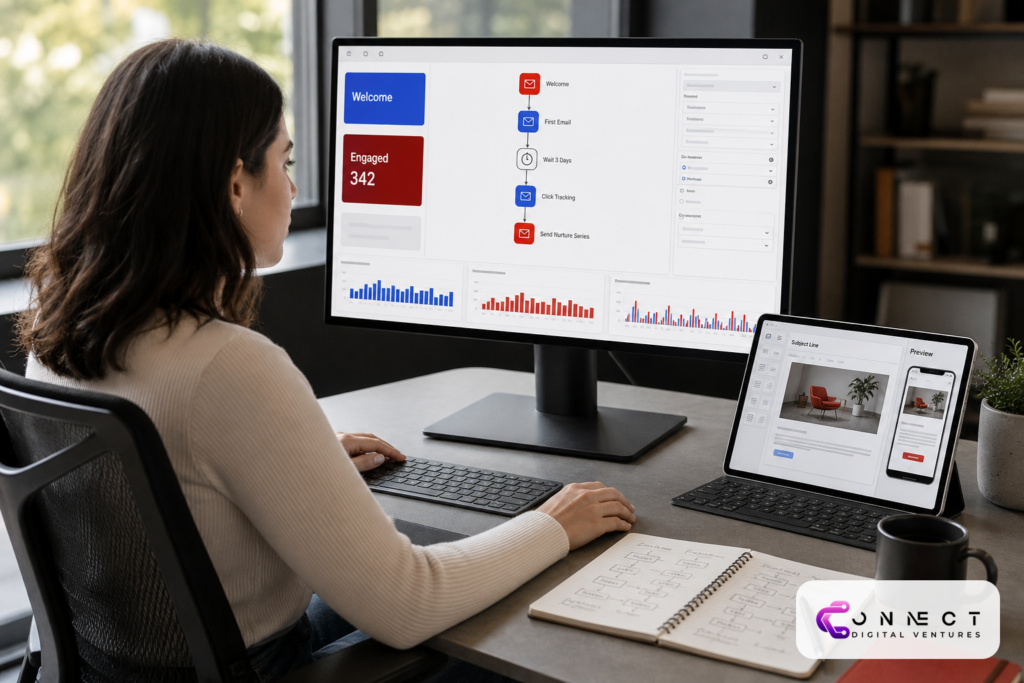
B2B email automation workflows keep prospects moving through long sales cycles without constant manual effort. B2B lead nurturing email campaigns work best when triggered by behavior rather than sent on a fixed calendar alone.
What automation workflows should B2B companies use to nurture leads through the sales cycle? These are the core ones:
- Welcome and onboarding series: three to five emails introducing your point of view, best content, and a low-friction next step.
- Content-triggered nurture: after a download, send related resources that deepen the topic and gradually introduce your solution.
- High-intent follow-up: a pricing page visit or demo page view triggers a personalized email and an alert to sales.
- Post-webinar sequence: separate tracks for attendees and no-shows, with the recording and a relevant offer.
- Re-engagement: a short series for dormant leads, ending with a clear opt-in-or-leave choice.
- Opportunity support: case studies, ROI materials, and objection-handling content for deals in progress.
- Customer expansion: onboarding tips, adoption milestones, and upsell content after the sale.
Lead scoring through email engagement. Assign points to actions that signal buying interest, and combine them with fit data from your ICP. A pricing page click or demo request should weigh far more than an email open. Apply negative scoring for inactivity, unsubscribes, or poor-fit attributes. When a lead crosses an agreed threshold, route it to sales with context on what they engaged with. Review the model quarterly against actual closed deals and adjust the weights.
How do you balance cold outreach with relationship-building? Treat cold email as the opening of a relationship, not a pitch. Keep first messages short, specific to the recipient’s role or trigger event, and focused on a single question or useful insight. If there is no reply, follow up with value, such as a relevant resource or data point, rather than repeated “just checking in” messages. Move responders into nurture streams and keep sales sequences separate from marketing automation so prospects never receive conflicting messages. A reasonable rule is that most touches should give something useful, and only a minority should ask for time.
Copywriting and Design Elements That Maximize B2B Conversion
B2B conversion rate optimization in email starts with clarity. Busy professionals skim, so every element should make the next step obvious.
Subject lines. Be specific and relevant. Mention the problem, outcome, or resource, and keep it short enough to read on mobile. Avoid clickbait, excessive punctuation, and spam-trigger language.
Opening lines. Establish relevance within the first sentence. Reference a challenge the reader recognizes or a trigger relevant to their company.
Body copy. Write for one person, focus on one idea, and lead with benefits supported by proof: metrics, customer names, or short quotes. Plain, conversational language performs better than jargon.
One primary call to action. Match the ask to the stage. Early on, offer a guide, checklist, or short video. Later, invite a demo, assessment, or consultation. Use specific button text like “Get the benchmark report” rather than “Click here.”
Design. Simple, lightly designed emails often outperform heavy templates in B2B because they feel like one-to-one communication. Ensure mobile responsiveness, readable fonts, and sufficient contrast. Use a real sender name and a reply-friendly address.
Testing. A/B test one variable at a time, such as subject line, call to action, send time, or length, and run tests on enough volume to be meaningful.
Measuring Email Performance: Metrics Beyond Open Rates
Open rates have become unreliable since mail privacy protections began pre-loading images. They are a directional signal at best. Focus instead on metrics tied to pipeline.
What metrics matter most when measuring B2B email ROI for lead generation?
Start with these, in rough order of importance:
- Reply rate. Especially for outbound and nurture emails, replies, and positive replies in particular, show real engagement.
- Click-through rate and click-to-conversion rate. Clicks show interest. What happens after the click shows whether your offer and landing page deliver.
- Conversion rate by email. Track how many recipients download, register, or book a meeting.
- Marketing qualified leads (MQLs) and sales qualified leads (SQLs) sourced. Volume means little if sales rejects the leads. Track acceptance rates alongside counts.
- Pipeline and revenue influenced. Use multi-touch attribution in your CRM to see how email contributes to opportunities and closed deals.
- Unsubscribe and spam complaint rates. Keep complaints well under 0.1% to protect deliverability.
- Bounce rate. A rising bounce rate usually signals list decay or poor data quality.
Review these numbers by segment, not just in aggregate. A campaign that looks average overall may be performing very well for one industry or job title and poorly for another. That insight tells you where to focus your next round of effort.
Common B2B Email Mistakes and How to Avoid Them
Even experienced teams repeat the same errors. Here are the most common, along with the fix for each.
Sending the same message to everyone. Generic blasts get generic results. Segment by role, industry, and funnel stage, and tailor at least the opening and the offer to each group.
Asking for too much, too soon. A demo request in the first email to a cold contact rarely works. Build trust with useful content first, then escalate the ask as engagement grows.
Neglecting list hygiene. B2B data decays quickly as people change jobs and companies. Verify addresses before sending, remove hard bounces immediately, and suppress contacts who have been inactive for six months or more.
Ignoring deliverability. Skipping authentication (SPF, DKIM, DMARC), buying lists, or sending large volumes from a new domain can land you in spam. Warm up new domains gradually and monitor sender reputation.
Writing about yourself instead of the reader. Emails packed with company news and feature lists get ignored. Frame everything around the recipient’s problem and the outcome you can help them reach.
Burying the call to action. If readers have to hunt for the next step, most won’t. Give each email one clear ask, and make it easy to act on.
Failing to align with sales. If sales doesn’t follow up quickly, or doesn’t know what a lead engaged with, your best leads go cold. Agree on lead definitions, share engagement data in the CRM, and set a response-time standard.
Not testing or learning. Without a steady testing habit, performance plateaus. Document results, keep what works, and retire what doesn’t.
Your Next Step
A strong B2B email marketing strategy for lead generation comes down to a few fundamentals: a clean, well-segmented list, relevant messages sent at the right moments, a single clear call to action in every email, and measurement tied to pipeline rather than vanity metrics. You don’t need to fix everything at once. Pick one area from this guide, such as list cleanup, a welcome sequence, or a segmented campaign for your best-fit accounts, and put it into action this week.
Ready to turn email into a dependable source of qualified leads? Take the next step today: audit your current email program against the practices above, choose your first improvement, and start building momentum.
Frequently asked questions
What email strategies specifically convert B2B prospects into qualified leads?
B2B email works as a system, not isolated blasts. Connect precise targeting, relevant content, automation, and sales alignment. Use your ICP to target the right accounts and roles. Deliver logic-based content like case studies and benchmarks rather than urgency-driven offers. Segment by role, industry, and funnel stage so each message matches the reader’s situation and moves them closer to a sales conversation.
How do you segment B2B email lists to improve lead quality and relevance?
Layer multiple dimensions: firmographic data like industry and company size, role and seniority levels, funnel stage, behavior signals from clicks and downloads, and account-level status. This approach replaces one-size-fits-all messaging with targeted conversations. Use dynamic content blocks to adapt a single email across segments. Reference the prospect’s industry challenge or a relevant case study to make personalization genuine and avoid feeling intrusive.
What automation workflows should B2B companies use to nurture leads through the sales cycle?
Use behavior-triggered workflows rather than fixed calendar sends. Core sequences include welcome and onboarding series, content-triggered nurture after a download, high-intent follow-up for pricing or demo visits, post-webinar tracks for attendees and no-shows, re-engagement for dormant leads, opportunity support with case studies and objection content, and customer expansion with adoption milestones and upsell materials.
How do you balance cold outreach with relationship-building in B2B email campaigns?
Cold outreach works when targeted, compliant, and relevant. Build prospect lists from your ICP criteria, verify addresses, and respect GDPR, CAN-SPAM, and CASL requirements. Never buy bulk lists; they damage reputation. Combine cold outreach with relationship-building by moving prospects into nurture sequences based on behavior and engagement. Segment and personalize follow-ups to shift from cold to warm conversations over time.
What metrics matter most when measuring B2B email ROI for lead generation?
Focus on lead quality metrics beyond open and click rates. Track marketing-qualified lead volume and conversion to sales opportunities. Measure email-sourced deal value and pipeline influence to calculate true ROI. Monitor engagement by segment and workflow to identify what messaging drives action. Measure cost per qualified lead and time to conversion. Include multi-touch attribution to see how email contributes alongside other channels in the full buyer journey.
Why is email list quality more important than list size for B2B lead generation?
A 2,000-contact list of well-matched prospects outperforms a 20,000-contact list of loosely relevant addresses. Higher quality protects sender reputation and deliverability, which directly impacts email success. B2B contacts represent higher lifetime value, so relevance and qualification matter more than volume. Quality lists reduce wasted sends, improve engagement rates, and generate sales-ready leads faster than larger, unfocused lists.