typography

The Science of Typography in Branding

The Science of Typography in Branding

Introduction When building a brand, most companies focus on logos, colors, and messaging. But one often underestimated element—typography—holds remarkable power over how your brand is perceived. From sleek modern sans-serifs to elegant, timeless serifs, the typeface you choose doesn’t just convey words—it communicates personality, emotion, and trustworthiness. Let’s explore the science behind typography in branding and why your font choices can be just as critical as your logo or color palette. 🎯 Why Typography Matters in Branding Typography is more than style. It’s strategic design. The right typography: According to MIT research, people form an impression of your website within 50 milliseconds, and typography plays a key role in that rapid judgment. 🔬 The Psychology of Fonts Different fonts evoke different psychological responses. Here’s a breakdown: Font Style Perception Brand Example Serif Traditional, trustworthy The New York Times Sans-Serif Modern, clean, minimal Google, Airbnb Script Elegant, artistic, personal Cadbury, Instagram Monospace Technical, functional GitHub Display/Decorative Unique, creative, bold Disney, Fanta Tip: Use typography that mirrors your brand’s tone and values. A legal firm might use a classic serif, while a tech startup may opt for a clean sans-serif. Typography and Brand Recognition Consistency in typography reinforces brand identity. Just like colors or logos, fonts should remain uniform across platforms to foster brand recognition. Key Branding Benefits of Consistent Typography: Cognitive Science Behind Typography Typography impacts reading fluency, attention span, and even persuasion. Best Practices for Typography in Branding 1. Limit Your Font Families Stick to a maximum of 2–3 complementary typefaces (e.g., one for headers, one for body text, and possibly a decorative option). 2. Create a Type Hierarchy Define clear levels for headings, subheadings, body, and CTA fonts. This creates visual rhythm and clarity. 3. Use Fonts with Versatility Choose typefaces that look good in multiple weights and sizes, especially across mobile and desktop formats. 4. Ensure Accessibility Check for proper contrast ratios and avoid overly stylized fonts that hinder legibility, especially for visually impaired users. 5. Document in Brand Guidelines Codify your typography choices in a brand book, detailing usage, sizing, spacing, and alignment for different platforms. Real-World Typography Examples Coca-Cola Uses a custom Spencerian script to evoke nostalgia and tradition. Spotify Uses Circular, a geometric sans-serif, which aligns with its modern and approachable brand identity. Vogue Uses Didot, a luxurious serif font that complements its high-fashion tone. FAQs About Typography in Branding 1. Can typography really affect consumer trust? Yes. Studies show that professional, readable typography increases brand credibility and user retention. 2. Is it okay to use free fonts like Google Fonts? Absolutely. Many free fonts are high quality—but avoid overused options if you want a distinctive brand presence. 3. Should I create a custom font for my brand? Custom fonts offer ultimate uniqueness, but they come at a higher cost. Worth it for established brands or premium positioning. 4. Can changing fonts hurt my brand? Frequent or inconsistent font changes damage brand recognition. Rebranding should always include strategic typography planning. 5. What’s the difference between a typeface and a font? A typeface is the family (e.g., Helvetica), and a font is a style within that family (e.g., Helvetica Bold 12pt). Final Thoughts Typography is not an afterthought—it’s a core branding tool. Every font choice speaks volumes about your values, tone, and audience. If you’re building or refining your brand, invest time in understanding the science of typography. Because in the eyes of your audience, every letter matters.
Read more
10 Key Elements Every Successful Brand Book Should Include

10 Key Elements Every Successful Brand Book Should Include

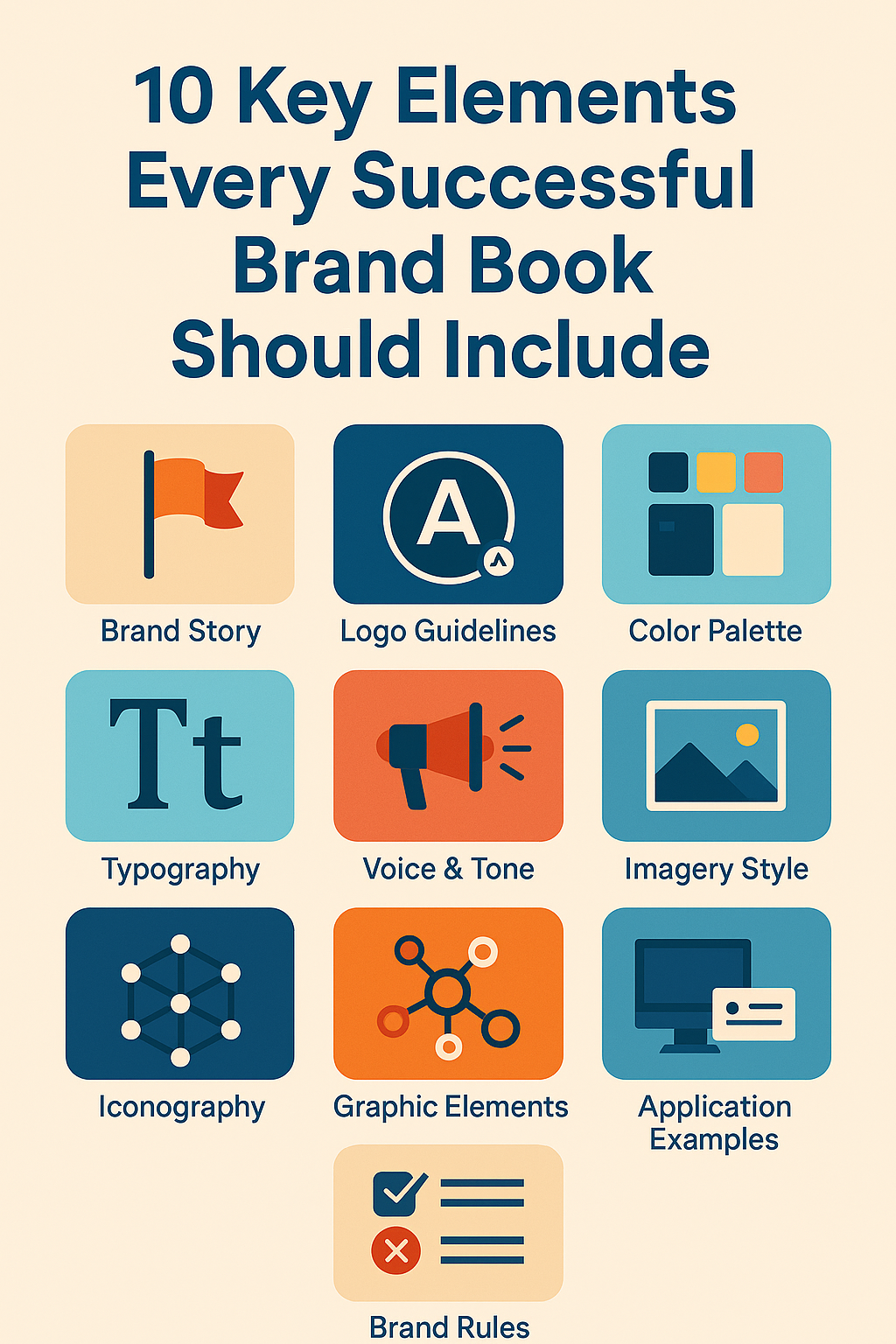
In today’s fast-paced digital world, where brands are built (or broken) in milliseconds, maintaining a consistent identity across all touchpoints is non-negotiable. The cornerstone of that consistency? A well-structured brand book. But not all brand books are created equal. To make a lasting impression and build trust, yours must include key elements that clearly define who you are, how you speak, and how you show up. Here are the 10 key elements every successful brand book should include: 🔑 1. Brand Story This is your origin story, vision, mission, and core values. It helps internal teams and external partners connect emotionally with your purpose and future goals. 🎨 2. Logo Guidelines Showcase all versions of your logo (primary, secondary, monochrome) and explain exactly how (and how not) to use them. Include spacing, sizing, and placement rules. 🎯 3. Color Palette Define your brand’s color scheme with HEX, RGB, and CMYK codes. A strong palette builds visual consistency and psychological connection with your audience. 🔠 4. Typography List the fonts your brand uses, including headers, subheaders, and body text. Detail sizing, line spacing, and usage to ensure legibility and coherence. 🎤 5. Voice & Tone Outline how your brand “talks.” Is it formal or conversational? Friendly or authoritative? Include examples of on-brand and off-brand language. 🖼️ 6. Imagery Style Guide the look and feel of your photography, illustrations, icons, and visual themes. This keeps content visually aligned no matter who creates it. 📦 7. Iconography Explain the style, size, and color usage of icons. This is particularly important for digital products and infographics. 🧩 8. Graphic Elements Define patterns, borders, textures, or shapes used in your brand’s visuals. These add uniqueness and reinforce identity beyond the logo. 📨 9. Application Examples Show real-world examples of how your brand identity is applied across business cards, websites, packaging, email templates, and social media posts. 📘 10. Brand Rules & Do’s/Don’ts Prevent misuse with clear examples of off-brand behavior—wrong fonts, incorrect logo placement, poor color choices, etc. 🧠 Why These Elements Matter Each element above plays a crucial role in shaping a cohesive, memorable brand identity. Together, they act as your brand’s operating system, enabling every team—from marketing to design—to create content that feels, looks, and sounds unmistakably yours. Whether you’re managing a team of 3 or 300, your brand book should be the source of truth for all brand decisions. 💬 Top 5 FAQs About Brand Book Elements 1. Can a small business benefit from a brand book with all these elements? Absolutely. Even solopreneurs benefit from a structured identity—it’s easier to scale and hand off design or marketing tasks down the line. 2. How often should a brand book be updated? Ideally, review it annually. Major updates should follow a rebrand, product launch, or major shift in strategy or design. 3. What’s the difference between a brand book and a brand guideline PDF? They’re often used interchangeably. However, a full brand book usually includes narrative elements like brand story and values, while guidelines may focus on visuals alone. 4. Should the brand book be publicly available? It depends. Some brands publish them to reinforce transparency and inspire community collaboration, while others keep them internal for strategic consistency. 5. What software should I use to design a brand book? Tools like Adobe InDesign, Canva, or Figma work well. For more comprehensive and professional execution, consider working with a digital agency like Connect Digital Ventures. ✒️ Final Thoughts A powerful brand isn’t built on one logo or clever slogan—it’s built on consistency. By ensuring these 10 elements are in your brand book, you’re setting your business up for scalable, recognizable success.

Read more
Contact us

Full-Service Data & Email Marketing Agency

Turn your marketing communications into a sales powerhouse and increase revenue with full-service email marketing.

Email us at: info@connectdigitalventures.com

Your benefits:

What happens next?

1

We Schedule a call at your convenience 

2

We do a discovery and consulting meting 

3

We prepare a proposal 

Request a Free Sample/Campaign Demo