email marketing

How to Build an Email List from Scratch

How to Build an Email List from Scratch

In today’s digital economy, your email list is one of your most valuable marketing assets. It’s permission-based, owned media that gives you direct access to your audience without relying on changing algorithms or third-party platforms. But what if you’re starting from zero? No subscribers. No email platform. No opt-ins. Don’t worry—everyone starts somewhere, and the key is doing it right: with ethical, engaging, and scalable tactics that build trust and conversions. Step-by-Step: How to Build an Email List from Scratch 1. Choose the Right Email Marketing Platform Start by selecting a reliable ESP (Email Service Provider). Look for: 🛠 Top Tools: Mailchimp, ConvertKit, ActiveCampaign, Klaviyo, Brevo (formerly Sendinblue) 2. Create a Lead Magnet A lead magnet is a free, valuable resource offered in exchange for someone’s email. Examples: 🎯 Pro Tip: Make it ultra-specific and directly aligned with your service or product. 3. Design High-Converting Opt-In Forms Your form is the gateway to your email list. It should be: 💡 Use compelling CTAs like:“Get My Free Guide” or “Claim Your Discount” 4. Build a Landing Page While you can place forms on your site, a dedicated landing page gives your offer its own spotlight. Include: 5. Promote Everywhere You won’t grow your list without traffic. Here’s where to promote: 6. Use a Welcome Sequence Once someone signs up, don’t let them go cold. Set up an automated welcome email or a short email series that: 📈 Pro Tip: Welcome emails have the highest open rate of all marketing emails. 7. Keep the List Clean & Engaged Regularly: Quality > quantity. A small, active list is more profitable than a huge, unengaged one. 5 Frequently Asked Questions (FAQs) 1. Can I buy an email list to grow faster? No. Purchased lists are low-quality, often illegal (under GDPR/CCPA), and damage your domain reputation. 2. How long does it take to build a solid list? Depends on your niche and traffic. With consistent effort, you can grow to 1,000+ subscribers in 90 days. 3. Should I use double opt-in or single opt-in? Double opt-in ensures cleaner lists, but single opt-in results in faster growth. Balance depends on your goals. 4. What’s the best lead magnet format? The best format is one that solves your audience’s most urgent problem in a digestible way. PDFs and checklists are great starting points. 5. Can social media followers be converted to email subscribers? Yes! Promote your lead magnet consistently across social platforms using bio links, Stories, and pinned posts. Final Thoughts Building an email list from scratch isn’t about going viral—it’s about adding value consistently and earning trust. With a solid strategy, the right tools, and a customer-first mindset, your list can become a powerful engine for sales, engagement, and long-term brand loyalty.

Read more
Email Deliverability: What You Need to Know

Email Deliverability: What You Need to Know

In email marketing, open rates, click-throughs, and conversions often take center stage. But there’s a behind-the-scenes player that determines whether your audience even sees your message—email deliverability. In simple terms, email deliverability refers to your ability to land emails in your subscribers’ inboxes rather than getting lost in the spam folder or blocked entirely. Ignoring it is like sending beautifully wrapped invitations that never arrive. What Is Email Deliverability? Email deliverability is the measure of how successfully an email message arrives in a recipient’s inbox. It’s different from email delivery, which only confirms the email was accepted by the recipient’s server—not that it landed in the inbox. Deliverability determines whether your message: Why Email Deliverability Matters If your deliverability is poor, even the most beautifully crafted email won’t get results. Here’s why it matters: 📊 Fact: According to Return Path, 1 in 5 emails never reaches the inbox. Key Factors That Influence Email Deliverability 1. Sender Reputation Internet Service Providers (ISPs) score your domain/IP based on engagement, complaint rates, and bounce history. 2. Email Authentication Use standards like: These prove you’re a trusted sender, not a spammer. 3. Engagement Rates Low open rates, high bounce rates, or frequent unsubscribes send negative signals to email providers. 4. Spam Triggers in Content Avoid using all caps, excessive exclamation marks, or spammy phrases like “FREE!!!” or “Act Now.” 5. List Quality Old, purchased, or unengaged lists can lead to spam complaints and hard bounces. 6. Sending Frequency Inconsistent or excessive emailing may result in recipients flagging your emails. Best Practices to Improve Email Deliverability Real Example: The Cost of Bad Deliverability A mid-size e-commerce company saw a 40% drop in revenue from emails over one quarter. After analysis, they discovered: After implementing basic deliverability protocols and cleaning their list, their inbox rate improved by 58%—and so did their sales. FAQs About Email Deliverability 1. What’s the difference between delivery and deliverability? Delivery = sent to the server. Deliverability = actually made it to the inbox. 2. How do I check my email deliverability? Use tools like Google Postmaster Tools, MXToolbox, or email marketing platforms with inbox testing features. 3. Why do my emails go to spam even with permission-based lists? This often results from poor content, bad sender reputation, or missing authentication. 4. How often should I clean my email list? Ideally, every 3–6 months. Remove unengaged users and bounce-prone addresses. 5. Can using images or emojis affect deliverability? Yes—overuse or improper formatting can trigger spam filters. Balance is key. Final Thoughts Email deliverability isn’t just a technical checkbox—it’s the lifeline of your email strategy. By focusing on building a clean, permission-based list, writing relevant content, and maintaining a good sender reputation, you ensure that your efforts aren’t wasted in the void of spam folders. The best campaigns in the world mean nothing if they’re never seen.

Read more
7 Email Templates Every Business Should Have

7 Email Templates Every Business Should Have

Why Email Templates Are Non-Negotiable for Growing Businesses In today’s fast-paced digital landscape, businesses must communicate consistently, professionally, and effectively. But crafting every email from scratch is a productivity killer. That’s where email templates come in—ready-made frameworks that save time and ensure your messaging stays on-brand. Whether you’re a startup, agency, SaaS platform, or ecommerce brand, having a library of essential email templates will increase efficiency, improve engagement, and standardize your brand voice. Let’s explore the 7 must-have email templates every business should keep ready to deploy. 1. Welcome Email Template Purpose: To greet new subscribers, customers, or users and set expectations. Why it matters: First impressions are everything. Welcome emails typically have the highest open rates of all marketing emails. Key Elements: ✅ Pro Tip: Add a clear CTA like “Explore Your Dashboard” or “Start Shopping.” 2. Follow-Up Email Template Purpose: To re-engage leads, clients, or attendees after initial contact. Why it matters: Timing is critical in lead nurturing. A strategic follow-up boosts conversion odds and keeps you top of mind. Use cases: ✅ Pro Tip: Include a value reminder and a link to schedule the next step. 3. Abandoned Cart Email Template Purpose: To recover potentially lost revenue from ecommerce shoppers. Why it matters: According to research, nearly 70% of carts are abandoned, but well-timed emails can recover up to 20% of them. Key Elements: ✅ Pro Tip: Add urgency—“Items in your cart are selling fast!” 4. Newsletter Template Purpose: To share updates, insights, or curated content with subscribers. Why it matters: Newsletters keep your brand relevant and build long-term trust. Best practices: ✅ Pro Tip: Use a consistent format and send on the same day/time weekly. 5. Thank You Email Template Purpose: To show appreciation after purchases, signups, events, or referrals. Why it matters: Gratitude builds loyalty and strengthens relationships. Use Cases: ✅ Pro Tip: Include a bonus offer or recommendation to keep the momentum going. 6. Feedback Request Email Template Purpose: To gather reviews, testimonials, or customer feedback. Why it matters: Reviews build trust, and feedback fuels product/service improvements. Key Elements: ✅ Pro Tip: Send shortly after an interaction to get fresh, honest responses. 7. Re-Engagement Email Template Purpose: To win back inactive subscribers or customers. Why it matters: It’s cheaper to retain a customer than acquire a new one, and re-engagement emails help reignite interest. What to include: ✅ Pro Tip: Use a strong subject line like “We Miss You” or “Still Interested?” FAQs: Email Templates for Business Success 1. Should I personalize email templates?Absolutely. Use dynamic fields (like names or company info) to make templates feel personal and engaging. 2. How often should I update my templates?At least quarterly, or when you update branding, pricing, offers, or tools. 3. Can templates hurt my brand if overused?Only if they feel robotic. Add human tone, personalization, and relevancy. 4. What tools help manage templates?Platforms like Mailchimp, HubSpot, Klaviyo, and ConvertKit make it easy to manage and automate templates. 5. Are HTML-designed templates better than plain text?It depends. HTML looks polished for newsletters and promos; plain text feels personal and often lands better in inboxes. Final Thoughts In the era of automation and personalization, email templates are no longer optional—they’re foundational. From converting leads to nurturing loyal customers, having these 7 email templates in your toolkit means you’re ready to respond, engage, and win at every touchpoint. Want custom email templates tailored for your business niche or tone of voice? Let me know, and I’ll help you create them!

Read more
How to Turn Social Media Followers Into Paying Customers

How to Turn Social Media Followers Into Paying Customers

In the era of digital dominance, social media isn’t just about likes, shares, and comments—it’s about conversion. Brands today are not only fighting for visibility but also for tangible business outcomes. And the key lies in transforming casual followers into loyal, paying customers. Whether you’re a startup or an established enterprise, the true ROI of social media marketing comes when your audience stops scrolling and starts buying. Here’s how to make that happen. 1. Understand Your Audience First Before you sell, you must listen. Analyze your followers’ behavior, interests, and pain points through insights, polls, and engagement metrics. The better you understand them, the more effectively you can speak their language and deliver what they want. Tip: Use Instagram Stories, Twitter polls, or LinkedIn surveys to gather real-time data. 2. Build a Trustworthy Brand Presence People buy from brands they trust. Ensure your social media profiles are consistent, professional, and reflective of your brand identity. Clear bios, branded highlights, and a cohesive content strategy build familiarity and confidence. Bonus: Feature user-generated content and testimonials to build social proof. 3. Offer Value Before Selling Use the 80/20 rule: 80% value-driven content (tips, inspiration, education) and 20% promotional content. Delivering free value positions your brand as a helpful authority, making your paid offers more compelling. Content Ideas: 4. Create Irresistible Lead Magnets Turn followers into leads with a compelling reason to give their contact info. Offer free downloadable guides, webinars, or discount codes in exchange for email addresses. Example:“Get our FREE 7-day social media growth checklist—link in bio!” 5. Use Clear CTAs That Drive Action Every post should have a purpose. Whether it’s directing followers to your shop, newsletter, or booking page, include strong calls to action (CTAs). Effective CTA Examples: 6. Leverage Social Commerce With tools like Instagram Shopping, Facebook Shops, and TikTok Shop, users can now buy directly from your feed. Tag products, create curated collections, and use platform-specific tools to reduce friction in the buyer journey. 7. Retarget and Nurture with Ads Many users won’t convert immediately. Retargeting helps bring warm leads back into your funnel. Use Meta or Google Ads to retarget website visitors or engaged followers with tailored messaging. 8. Build Email and SMS Funnels Once someone opts into your lead magnet, nurture them via automated email or SMS flows. Deliver value consistently, share customer success stories, and promote limited-time offers to drive conversions. 9. Create Exclusive Offers for Followers Reward your community with follower-only promos, early access launches, or giveaways. This boosts loyalty and incentivizes action. 10. Track, Test, Optimize Use UTM codes, analytics, and A/B testing to track what’s working. Refine your CTAs, landing pages, and content formats based on actual performance. FAQs 1. How long does it take to turn followers into customers?It varies by niche and strategy. With the right approach, you may start seeing conversions within weeks, but consistent nurturing over months usually drives sustainable results. 2. Do I need a large following to make sales on social media?Not necessarily. A highly engaged, niche audience can drive more conversions than a large but passive one. 3. What platform converts best for sales?It depends on your audience. Instagram and TikTok work well for B2C, while LinkedIn often excels for B2B sales. 4. Should I invest in ads to drive conversions?Yes, especially for retargeting and lead generation. Ads can accelerate conversion when combined with organic strategies. 5. How do I measure success?Track metrics like conversion rate, cost per acquisition (CPA), average order value (AOV), and return on ad spend (ROAS) alongside engagement.

Read more
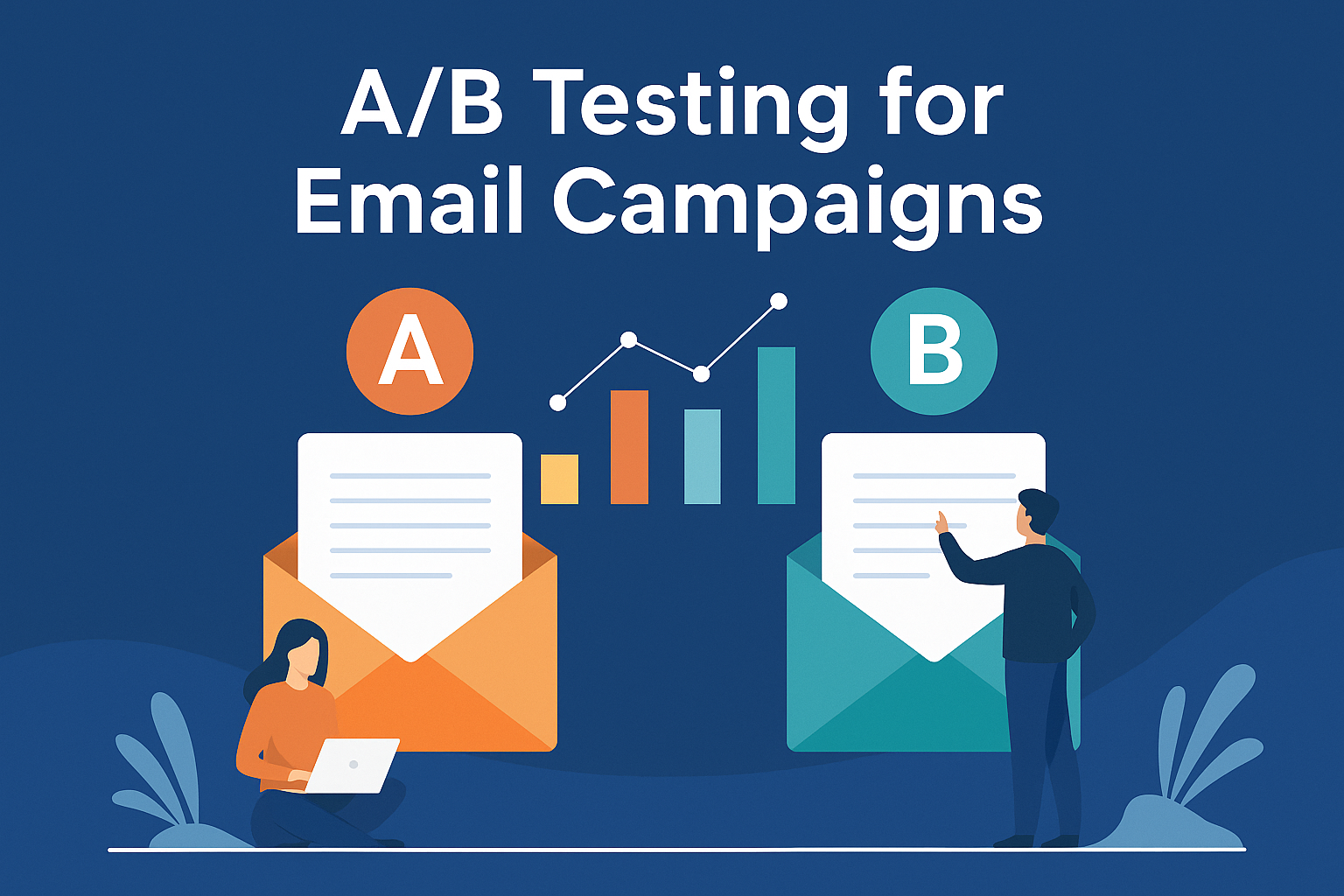
A/B Testing for Email Campaigns: How to Do It Right

A/B Testing for Email Campaigns: How to Do It Right

Introduction In the world of email marketing, success is never guaranteed—but it can be optimized. That’s where A/B testing comes in. Also known as split testing, this method allows marketers to test two variations of an email against each other to see which performs better. Whether you’re tweaking a subject line or testing call-to-action buttons, A/B testing empowers data-driven decisions that can significantly boost your email marketing ROI. This article will walk you through what A/B testing is, why it matters, and how to do it right, even if you’re a beginner. Let’s dive in. What Is A/B Testing in Email Marketing? A/B testing involves sending two versions (A and B) of the same email to small, randomly selected segments of your audience. These versions differ by a single variable—subject line, design, CTA, send time, etc. The version that gets better performance (opens, clicks, or conversions) is then sent to the remaining audience. Why A/B Testing Matters Key Elements You Can A/B Test How to Run a Successful A/B Test for Email Campaigns 1. Choose One Variable at a Time Avoid confusion by testing just one element. For example, change only the subject line, keeping all else constant. 2. Segment Your List Smartly Split your list randomly but evenly to ensure unbiased results. 3. Determine Your Success Metric Are you measuring open rates, click-through rates, or conversions? Decide this upfront. 4. Set a Statistically Significant Sample Size Use a calculator or platform suggestions to ensure valid results. 5. Run the Test Long Enough Let the test run for a minimum of 24 hours to get accurate results across time zones. 6. Analyze and Apply the Winner Once the winning variation is clear, use it to send to the remaining audience or future campaigns. Common Mistakes to Avoid Top 5 FAQs About A/B Testing for Email Campaigns 1. What’s the ideal sample size for an A/B test? It depends on your total list size. A common rule is to test 10–20% of your list, ensuring it’s large enough for statistical significance. 2. How long should I run my A/B test? At least 24–48 hours. Longer campaigns (weekly/monthly) may need more time depending on user behavior. 3. Can I test multiple variables at once? Technically yes (this is called multivariate testing), but it’s best for advanced marketers. Beginners should stick to one variable per test. 4. What should I test first in a new campaign? Start with the subject line—it has the biggest impact on open rates. 5. What tools can help with A/B testing? Most email marketing platforms like Mailchimp, HubSpot, and Klaviyo offer built-in A/B testing features. Conclusion A/B testing isn’t just a trend—it’s a fundamental tool in any email marketer’s toolkit. With consistent testing and analysis, you’ll be able to craft emails that not only reach inboxes but also spark action. Remember, small changes can lead to big results.

Read more
A Complete Guide to Managed Email Marketing Solutions

A Complete Guide to Managed Email Marketing Solutions

Introduction to Email Marketing Email marketing is a vital component of any comprehensive digital marketing strategy, representing a direct line of communication between businesses and their customers. At its core, email marketing involves sending promotional messages and newsletters through email to a targeted audience. Its significance in the digital age cannot be overstated, as it provides a cost-effective means to reach a broad audience while facilitating personalized interactions. This direct engagement allows businesses to inform customers about new products, promotions, or company news, fostering a sense of connection and encouraging loyalty. The ongoing relevance of email marketing can be attributed to its versatility and effectiveness. Unlike many other forms of digital marketing, email marketing allows businesses to segment their audience based on various criteria such as demographics, behavior, and past interactions. This segmentation ensures that messages are tailored to the interests and needs of different groups, resulting in higher open and click-through rates. Furthermore, the ability to automate campaigns means that businesses can maintain consistent communication with minimal effort, thereby enhancing operational efficiency. Understanding Managed Email Marketing Solutions Managed email marketing solutions refer to comprehensive services that are designed to assist businesses in effectively managing their email marketing campaigns. These solutions are primarily provided by specialized agencies or providers with expertise in email marketing strategies. By outsourcing this aspect of their marketing efforts, businesses can streamline their operations and free up valuable internal resources. The core offerings of managed email marketing solutions generally encompass various stages of an email campaign. This includes the initial planning phase, where professionals assess the business’s target audience, craft tailored messaging, and develop a content strategy. Additionally, these solutions involve the execution of email campaigns, where service providers handle aspects such as design, list management, and scheduling. This ensures that the emails not only reach the intended recipients but also engage them effectively. Another critical component of managed email marketing solutions is the analysis of campaign performance. Providers typically leverage advanced analytics tools to monitor key metrics such as open rates, click-through rates, and conversion rates. This data-driven approach allows businesses to understand how their campaigns are performing and to identify areas for improvement. By using these insights, businesses can refine their email marketing strategies, leading to more effective outreach and higher engagement with their audiences. Moreover, managed email marketing solutions can offer personalization features, allowing businesses to send customized messages based on user behavior and preferences. This level of personalization significantly enhances the customer experience and improves the likelihood of successful interactions. In essence, managed email marketing solutions are tailored to equip businesses with the necessary tools and expertise to optimize their email marketing efforts while allowing them to focus on their core operations. Key Features of Managed Email Marketing Solutions Managed email marketing solutions are designed to streamline the process of creating, sending, and analyzing marketing emails. These solutions typically encompass a range of essential features that significantly enhance the effectiveness of email campaigns. One of the most important features is automation, which allows marketers to schedule emails, trigger responses based on customer interactions, and send out timely follow-ups. This not only saves time but also ensures that the content reaches the audience when they are most likely to engage. Another vital feature is segmentation. With managed email marketing solutions, businesses can categorize their email lists into specific groups based on demographic information, behavior, interests, or past purchase history. This level of targeting enables companies to tailor their messaging more accurately, ensuring that recipients receive content that is relevant and engaging, which can lead to higher open and click-through rates. Analytics is also a cornerstone of these solutions, providing valuable insights into campaign performance. Marketers can track key metrics such as open rates, click rates, conversion rates, and unsubscribe rates. This data-driven approach allows businesses to fine-tune their strategies over time, ensuring continual improvement in their email marketing endeavors. Furthermore, template design plays a crucial role in managed email marketing. Many solutions offer an array of customizable templates that are visually appealing and optimized for different devices. This facilitates easy creation of aesthetically pleasing emails, which can boost engagement among recipients. Lastly, personalized messaging is increasingly becoming a focus, as customers expect communication tailored to their preferences. By leveraging data from customer interactions, managed email marketing solutions enable marketers to create personalized experiences that resonate with individual subscribers. Benefits of Using Managed Email Marketing Services Managed email marketing services offer businesses a unique opportunity to enhance their marketing strategies through a variety of benefits. One of the primary advantages is cost-effectiveness. By outsourcing email marketing, companies can significantly reduce overhead costs associated with hiring in-house teams or investing in complex software. This allows businesses to allocate their resources more efficiently, ultimately leading to better returns on investment. Furthermore, access to advanced tools is another crucial benefit of implementing managed email marketing solutions. Service providers usually offer comprehensive platforms that include automation features, analytics tools, and A/B testing capabilities. These resources enable businesses to craft more targeted campaigns, monitor performance in real-time, and adjust strategies to align with audience preferences. The seamless integration of these tools can lead to more successful email campaigns that resonate with consumers. Reliability is a significant factor in the success of email marketing, and managed services typically excel in this area. These specialized providers ensure that campaigns are executed without delays or technical issues, which can often be a drawback for businesses managing email marketing independently. By entrusting this responsibility to experts, companies can maintain consistency in their messaging and branding. Moreover, improving deliverability rates is essential for effective communication with clients. Managed email marketing services focus on compliance with best practices, thereby minimizing the risk of emails being marked as spam. This leads to higher engagement rates, as messages have a higher likelihood of reaching their intended audience. Additionally, professional expertise in crafting compelling content and designing visually appealing templates plays a pivotal role in optimizing campaigns for better results. In sum, the myriad benefits of managed

Read more
Contact us

Full-Service Data & Email Marketing Agency

Turn your marketing communications into a sales powerhouse and increase revenue with full-service email marketing.

Email us at: info@connectdigitalventures.com

Your benefits:

What happens next?

1

We Schedule a call at your convenience 

2

We do a discovery and consulting meting 

3

We prepare a proposal 

Request a Free Sample/Campaign Demo