digital branding

The Role of Animation in Modern Branding

The Role of Animation in Modern Branding

Introduction: More Than Just Moving Pictures In a saturated digital landscape, attention is currency. With users scrolling past static content at lightning speed, animation has emerged as a powerful tool in modern branding. Whether it’s a logo that morphs with personality or a micro-interaction on a landing page, animation isn’t just a trend—it’s an expectation. Today’s consumers crave dynamic, immersive experiences. Animation helps brands deliver them with flair, functionality, and purpose. Why Animation Matters in Branding 1. Animation Tells a Story—Instantly Brands thrive on storytelling. Animation condenses complex narratives into seconds of movement that communicate emotion, tone, and message more effectively than text or still images. From explainer videos to social media loops, animation makes abstract ideas tangible and memorable. 2. Enhances User Engagement Animated content is proven to: Why? Because our brains are wired to notice motion—and good animation creates a sense of flow, progression, and delight. 3. Builds a Distinct Brand Identity Consistent animation styles—like motion logos, transitions, and hover effects—create a recognizable visual language that enhances brand recall. Think of: These aren’t just design flourishes—they’re branding assets. 4. Humanizes Digital Experiences Motion gives life to brand assets. Animated characters, expressive typography, or even subtle button animations create warmth and relatability. In a world driven by screens, animation helps bridge the emotional gap between brand and audience. 5. Makes Content More Accessible Animated infographics and explainer videos make complex information more digestible. They help break down silos of jargon into approachable, visual stories. For B2B brands and startups with technical products, this is a game-changer. Use Cases: Where Animation Adds Value 5 Frequently Asked Questions (FAQs) 1. Is animation expensive for small businesses? Not necessarily. With tools like Lottie, Canva, and After Effects templates, animation can be cost-effective even for startups. 2. Does animation affect website load time? When optimized correctly (SVG, Lottie JSON, compressed files), performance impact is minimal and can even improve engagement metrics. 3. What style of animation suits my brand? It depends on your brand tone. Minimalist for modern brands, playful for lifestyle brands, sophisticated for luxury—consistency is key. 4. Is animation better than video? Not better—different. Animation is ideal for abstract ideas, while video excels at real-world storytelling. The best brands use both strategically. 5. Can animation be used in email marketing? Absolutely! GIFs and Lottie animations in emails can dramatically increase click-through rates—just ensure they’re mobile-friendly. Final Thoughts Animation is no longer a luxury or gimmick—it’s a branding necessity. In a digital-first world, where your brand has just seconds to connect, motion can mean the difference between being ignored and being remembered.

Read more
How to Align Social Media with Your Brand Strategy

How to Align Social Media with Your Brand Strategy

In today’s digital-first world, your brand doesn’t just live in your logo or website — it thrives (or dies) across social platforms. Social media has evolved into more than a promotional tool; it’s the front line of customer engagement and brand perception. Yet, many brands stumble by treating social media as an afterthought rather than an integral part of their branding strategy. So how do you ensure your social media presence reflects your core brand values and amplifies your business goals? Here’s a deep dive into aligning your social media channels with your overarching brand strategy. Why Alignment Matters Consistency breeds trust. A brand that communicates cohesively across all channels — from website to Instagram — cultivates stronger recognition, credibility, and loyalty. When your audience encounters mismatched messaging, tone, or visuals, it can confuse or alienate them. Proper alignment ensures that: 1. Define Your Core Brand Elements Before diving into posting schedules or hashtags, you need clarity on your brand’s identity. Ask yourself: Document these in a brand book and use them as the north star for all content creation. 2. Choose the Right Platforms Not every social media platform is suitable for every brand. Instead of spreading yourself thin, focus on platforms where your audience already spends time. For example: Your strategy should dictate your platforms — not the other way around. 3. Create a Social Media Style Guide Translate your brand book into a tailored social media style guide that includes: This guide ensures every post, reel, or tweet aligns with your brand identity. 4. Map Content to Business Goals Every piece of content should serve a purpose. Tie your social content to objectives such as: Use content pillars that reflect your brand’s core messages, and rotate through them for consistency and variety. 5. Leverage Brand Storytelling Brand storytelling humanizes your company. Use customer testimonials, founder stories, behind-the-scenes videos, or team highlights to tell authentic stories that reinforce your values and build trust. 6. Monitor and Adapt Use analytics tools to track what’s working. Key metrics include: Monitor sentiment, test content types, and refine your approach. Alignment isn’t static — it evolves with your audience and brand. Final Thoughts Aligning your social media with your brand strategy isn’t a one-time task — it’s an ongoing process. With strategic alignment, your social platforms become powerful channels for connection, conversion, and community building. FAQs 1. Why is it important to align social media with brand strategy?It ensures consistency across all customer touchpoints, builds trust, and reinforces your brand’s message effectively. 2. How do I know which social platforms are right for my brand?Start by identifying where your target audience spends time and choose platforms that align with your content type and goals. 3. Should small businesses invest in social media branding?Absolutely. Social media offers a cost-effective way to build brand awareness, credibility, and customer relationships. 4. How often should I post to stay consistent?It depends on the platform, but consistency is key. Create a social media calendar and stick to a schedule that you can maintain. 5. What tools help in aligning social media with branding?Tools like Canva (for design), Hootsuite or Buffer (for scheduling), and Google Analytics or Meta Insights (for tracking) are essential.

Read more
10 Key Elements Every Successful Brand Book Should Include

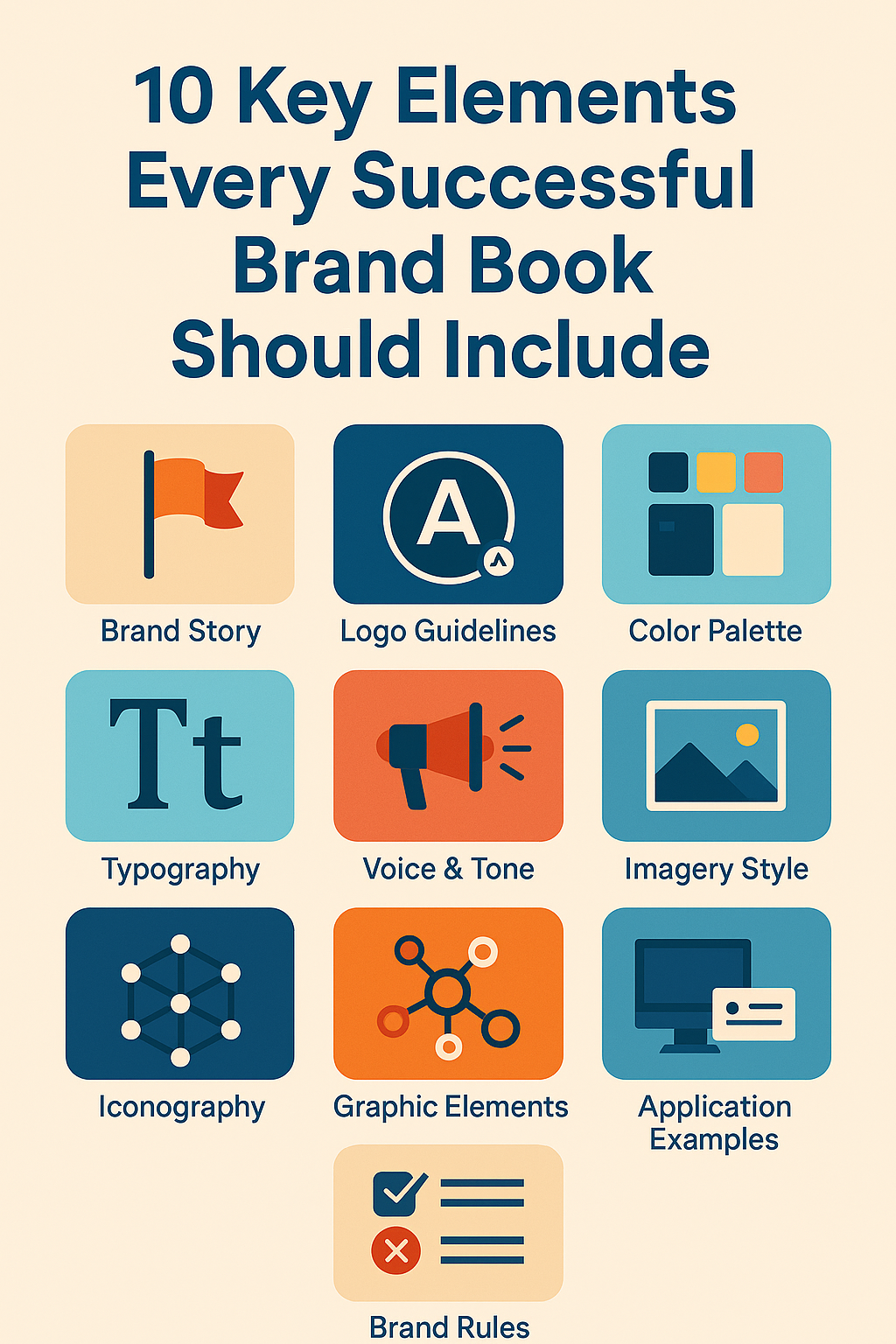
10 Key Elements Every Successful Brand Book Should Include

In today’s fast-paced digital world, where brands are built (or broken) in milliseconds, maintaining a consistent identity across all touchpoints is non-negotiable. The cornerstone of that consistency? A well-structured brand book. But not all brand books are created equal. To make a lasting impression and build trust, yours must include key elements that clearly define who you are, how you speak, and how you show up. Here are the 10 key elements every successful brand book should include: 🔑 1. Brand Story This is your origin story, vision, mission, and core values. It helps internal teams and external partners connect emotionally with your purpose and future goals. 🎨 2. Logo Guidelines Showcase all versions of your logo (primary, secondary, monochrome) and explain exactly how (and how not) to use them. Include spacing, sizing, and placement rules. 🎯 3. Color Palette Define your brand’s color scheme with HEX, RGB, and CMYK codes. A strong palette builds visual consistency and psychological connection with your audience. 🔠 4. Typography List the fonts your brand uses, including headers, subheaders, and body text. Detail sizing, line spacing, and usage to ensure legibility and coherence. 🎤 5. Voice & Tone Outline how your brand “talks.” Is it formal or conversational? Friendly or authoritative? Include examples of on-brand and off-brand language. 🖼️ 6. Imagery Style Guide the look and feel of your photography, illustrations, icons, and visual themes. This keeps content visually aligned no matter who creates it. 📦 7. Iconography Explain the style, size, and color usage of icons. This is particularly important for digital products and infographics. 🧩 8. Graphic Elements Define patterns, borders, textures, or shapes used in your brand’s visuals. These add uniqueness and reinforce identity beyond the logo. 📨 9. Application Examples Show real-world examples of how your brand identity is applied across business cards, websites, packaging, email templates, and social media posts. 📘 10. Brand Rules & Do’s/Don’ts Prevent misuse with clear examples of off-brand behavior—wrong fonts, incorrect logo placement, poor color choices, etc. 🧠 Why These Elements Matter Each element above plays a crucial role in shaping a cohesive, memorable brand identity. Together, they act as your brand’s operating system, enabling every team—from marketing to design—to create content that feels, looks, and sounds unmistakably yours. Whether you’re managing a team of 3 or 300, your brand book should be the source of truth for all brand decisions. 💬 Top 5 FAQs About Brand Book Elements 1. Can a small business benefit from a brand book with all these elements? Absolutely. Even solopreneurs benefit from a structured identity—it’s easier to scale and hand off design or marketing tasks down the line. 2. How often should a brand book be updated? Ideally, review it annually. Major updates should follow a rebrand, product launch, or major shift in strategy or design. 3. What’s the difference between a brand book and a brand guideline PDF? They’re often used interchangeably. However, a full brand book usually includes narrative elements like brand story and values, while guidelines may focus on visuals alone. 4. Should the brand book be publicly available? It depends. Some brands publish them to reinforce transparency and inspire community collaboration, while others keep them internal for strategic consistency. 5. What software should I use to design a brand book? Tools like Adobe InDesign, Canva, or Figma work well. For more comprehensive and professional execution, consider working with a digital agency like Connect Digital Ventures. ✒️ Final Thoughts A powerful brand isn’t built on one logo or clever slogan—it’s built on consistency. By ensuring these 10 elements are in your brand book, you’re setting your business up for scalable, recognizable success.

Read more
What Is a Brand Book and Why Your Business Needs One

What Is a Brand Book and Why Your Business Needs One

In the digital-first, attention-deficit economy we live in, brands are more than just logos—they’re the soul of a business. And behind every powerful brand is a foundational document that guides it all: the brand book. Whether you’re a startup trying to make your mark or a growing business expanding into new markets, a well-structured brand book ensures your message remains clear, consistent, and aligned across every touchpoint. 🧠 What Is a Brand Book? A brand book (also called a brand style guide or brand manual) is a comprehensive document that outlines your brand’s identity. It defines how your brand looks, sounds, and feels across platforms—think of it as your brand’s DNA. A typical brand book covers: 📌 Why Is a Brand Book Important? ✅ What Should Be Included in a Brand Book? 💬 Top 5 FAQs About Brand Books 1. How is a brand book different from a brand strategy? A brand strategy outlines your brand’s positioning, audience, and goals. A brand book visually and verbally brings that strategy to life by providing creative guidelines. 2. Does every business need a brand book? Absolutely. Whether you’re a solopreneur or a global corporation, a brand book ensures your message stays on-brand and recognizable at every customer touchpoint. 3. How often should I update my brand book? Ideally, review it annually. If your brand evolves (e.g., rebranding, launching new products), it should be updated immediately to reflect those changes. 4. Can I create a brand book myself? Yes—but it’s recommended to involve a branding expert or design agency to ensure the book is both functional and visually aligned with industry standards. 5. What tools can I use to build a brand book? You can use tools like Adobe InDesign, Canva, Figma, or hire branding agencies like Connect Digital Ventures to create a professional, scalable brand manual. 🎯 Final Thoughts A brand book isn’t just a nice-to-have—it’s a growth tool. It unifies your marketing, simplifies your creative process, and ensures your brand is always presented at its best. In an era where consistency equals credibility, your brand book might just be your most valuable marketing asset.

Read more
Contact us

Full-Service Data & Email Marketing Agency

Turn your marketing communications into a sales powerhouse and increase revenue with full-service email marketing.

Email us at: info@connectdigitalventures.com

Your benefits:

What happens next?

1

We Schedule a call at your convenience 

2

We do a discovery and consulting meting 

3

We prepare a proposal 

Request a Free Sample/Campaign Demo