
How to Set SMART Goals for Marketing Success
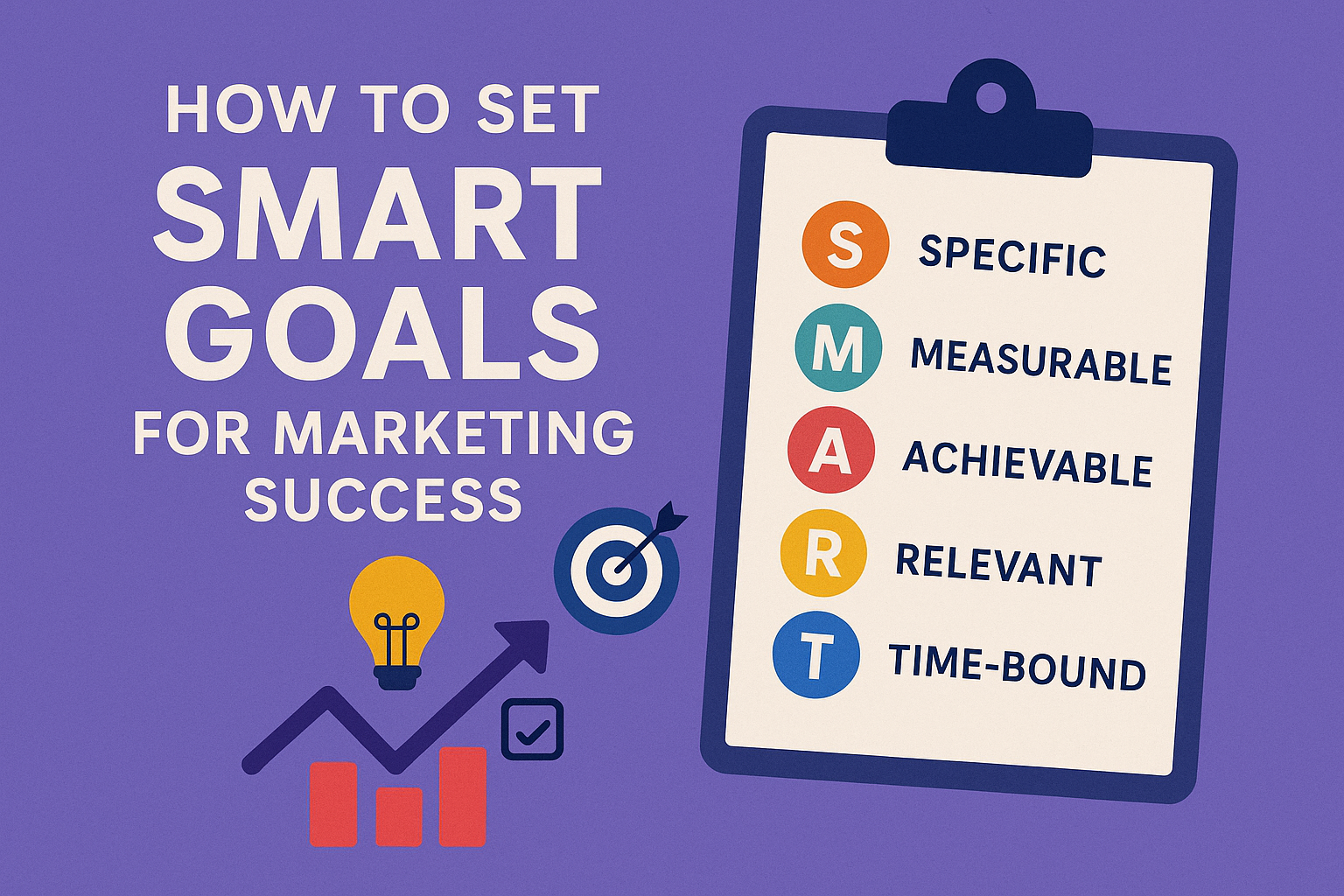
Introduction: Why SMART Goals Are a Marketer’s Secret Weapon In the fast-paced world of marketing—where campaigns compete for attention, budgets shift overnight, and trends evolve at lightning speed—goal setting isn’t just helpful, it’s essential. But vague goals like “get more followers” or “increase website traffic” won’t move the needle. What you need are SMART goals: objectives that are Specific, Measurable, Achievable, Relevant, and Time-bound. Whether you’re a startup founder planning your first campaign or a CMO overseeing multiple channels, SMART goals are the foundation of accountability, strategy, and measurable success. What Are SMART Goals? SMART is an acronym that stands for: These five principles help businesses define clear, strategic objectives that are actionable and results-driven. Let’s break them down: The 5 Elements of SMART Marketing Goals 1. Specific Goals must be clear and well-defined. Instead of saying, “We want to grow our social media,” aim for something like: “Increase our Instagram followers by 15% over the next 90 days.” 2. Measurable You need data points to evaluate your progress. Use metrics like click-through rates, email open rates, conversion rates, or cost per lead. ✔ Bad: “We want to improve our email marketing.”👍 Better: “Increase our average email open rate from 18% to 25% over the next two months.” 3. Achievable Set goals that are ambitious but attainable based on your resources. Unrealistic targets lead to frustration and burnout. Consider past data, team capacity, and current tools when setting expectations. 4. Relevant Make sure your goal aligns with broader business objectives. If your brand is prioritizing customer acquisition, focus on lead generation or trial sign-ups—not vanity metrics. 5. Time-bound Set a deadline. Without a clear time frame, there’s no urgency or accountability. Example: “Generate 1,000 qualified leads from Facebook Ads by the end of Q3.” Examples of SMART Marketing Goals Here’s how SMART goals look in real life: Why SMART Goals Drive Better Marketing Results How to Implement SMART Goals in Your Marketing Plan FAQs on SMART Marketing Goals 1. Can SMART goals be applied to content marketing? Yes! For example: “Publish 8 SEO-optimized blog posts that drive 5,000 unique visits in 60 days.” 2. What’s a common mistake marketers make with goal setting? Being too vague or unrealistic—like “go viral” or “double our revenue in a month.” 3. Do SMART goals apply to branding efforts too? Absolutely. Example: “Increase brand recall by 15% in Q4 through video ad campaigns.” 4. How many goals should a marketing team set? Focus on 3–5 key goals per quarter to stay strategic and manageable. 5. What tools can help track SMART goals? Google Analytics, HubSpot, Notion, Asana, Salesforce, and Excel dashboards are all helpful tools. Final Thoughts SMART goals aren’t just another business buzzword—they’re the strategic framework that separates busy marketing from impactful marketing. By setting goals that are specific, measurable, achievable, relevant, and time-bound, you ensure your campaigns don’t just run—they perform, scale, and succeed. Ready to take your marketing to the next level? Start with SMART goals—and watch the clarity, focus, and results follow.