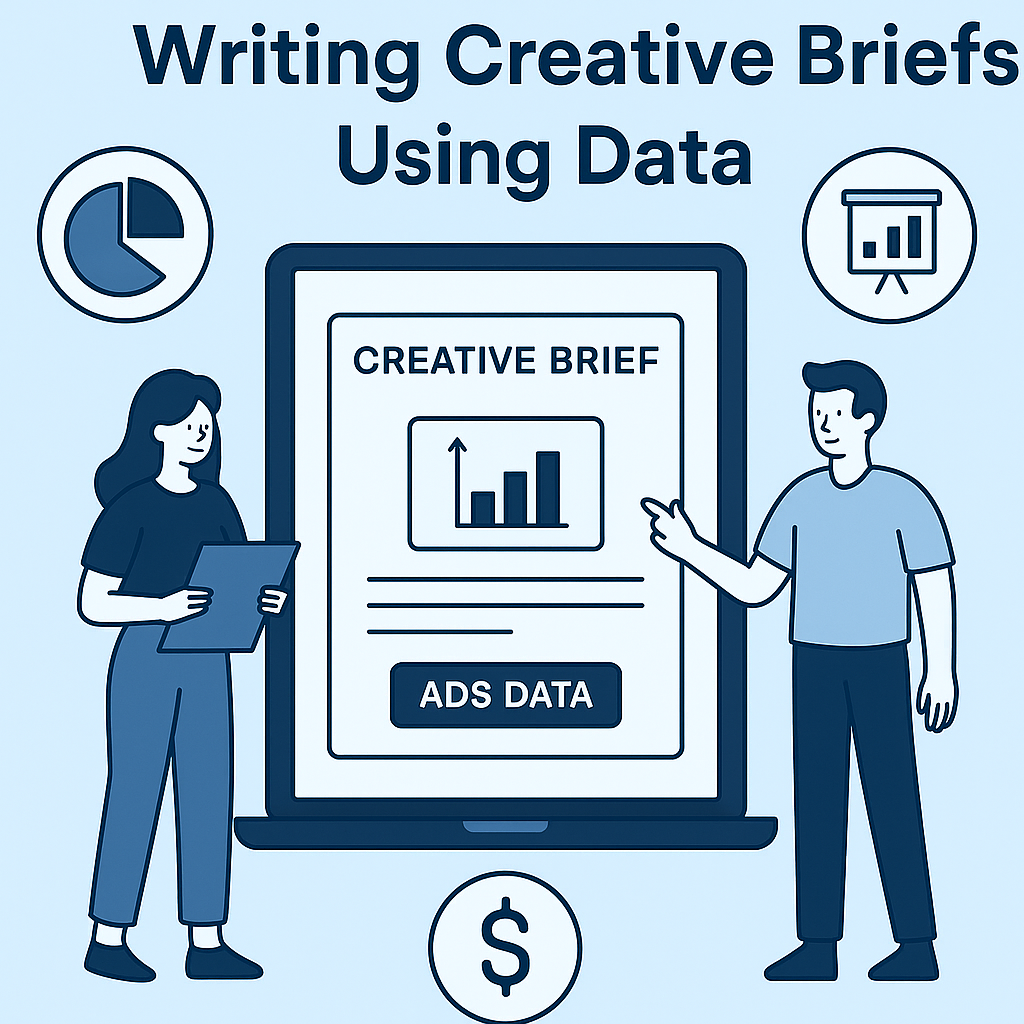
Creative briefs are the blueprint for high-performing marketing campaigns. They serve as the critical link between strategy and execution, aligning marketers, designers, copywriters, and other creatives toward a common goal. But in today’s performance-driven marketing landscape, traditional briefs often fall short. Why? Because they’re based more on assumptions than hard evidence.
Enter the age of data-driven creative briefs a smarter, sharper approach that brings together creative intuition and analytical insights to fuel high-impact advertising.
Whether you’re managing a DTC brand, an e-commerce store, or a creative agency, using data to write your creative briefs is no longer optional it’s essential. In this guide, we’ll dive deep into how you can leverage ad performance data, audience insights, and conversion metrics to elevate your creative strategy from good to exceptional.
Why Traditional Creative Briefs Fall Short
Creative briefs have been a cornerstone of marketing for decades. They outline the campaign’s objectives, target audience, tone of voice, and deliverables. However, traditional briefs often rely on generalizations, gut instincts, and outdated personas.
Here’s where they go wrong:
- Vague goals like “increase engagement” without defining what engagement means.
- Generic audience segments like “Millennials” or “working professionals” without real behavioral insights.
- No feedback loop, so there’s no connection between what’s written in the brief and what actually performs in the market.
The result? Creative teams operate in silos. Campaigns miss the mark. Ad fatigue sets in quickly. And budgets burn without measurable ROI.
What Is a Data-Driven Creative Brief?
A data-driven creative brief uses real-time, empirical data to inform every part of the creative process. From audience segmentation to messaging angles, visuals to CTAs data serves as the foundation for decisionmaking.
Key characteristics of data-driven creative briefs:
- Rooted in campaign performance data.
- Built from behavioral and psychographic insights.
- Informed by split testing results and conversion metrics.
- Include channel-specific guidelines based on what performs best.
- Include competitor benchmarks and industry trends.
This approach enables creative teams to produce high-converting, resonant campaigns while reducing guesswork and creative burnout.
Benefits of Using Data in Creative Briefs
1. Better Alignment Between Teams
When everyone works from the same source of truth performance data it’s easier to align on goals and expectations. This reduces friction between strategy, media buying, and creative teams.
2. Improved Ad Performance
Using data to define value propositions, angles, and CTAs leads to more engaging content. You already know what works you’re just scaling it.
3. Faster Testing and Iteration
With a clear picture of what performs, you can build a creative testing roadmap. This saves time and budget by avoiding low-potential ideas.
4. Stronger Brand-Consumer Fit
By analyzing real customer behavior, you craft messages that reflect their desires, pain points, and language leading to higher conversion rates.
What Data Should You Include in a Creative Brief?
To build an effective data-driven creative brief, you need to go beyond surface-level numbers. Here’s the essential data to include:
1. Campaign Goals & KPIs
Start with the “why.” Define clear, measurable goals.
- Examples: Increase ROAS by 20%, lower CAC to ₹400, improve CTR by 30%, drive 10K new subscribers, etc.
2. Audience Data
Include both quantitative and qualitative insights:
- Demographics: Age, gender, location
- Psychographics: Interests, aspirations, pain points
- Behavioral data: Site visits, abandoned carts, email opens
- Best-performing segments: Based on previous campaigns or CRM data
🔍 Pro Tip: Use tools like Meta Audience Insights, Google Analytics 4, and Klaviyo to get granular.
3. Messaging Insights
Pull learnings from previous high-performing campaigns:
- Headlines with highest CTRs
- Copy that drove conversions
- Testimonials that resonated
- Hook angles that performed well (e.g., “problem-solution,” “social proof,” “urgency”)
4. Creative Performance Data
Include performance of different creative formats:
- Static vs. video
- UGC vs. branded content
- Carousel vs. single image
- Long-form vs. short-form copy
5. Channel-Specific Data
Break down performance by channel to tailor creatives accordingly:
- Facebook: Short copy, bold hooks
- Google Display: Clean visuals, strong CTAs
- YouTube: Story-driven scripts with value in first 5 seconds
- Email: Personalised subject lines, clear CTAs
6. Competitor Creative Intelligence
Use platforms like Meta Ad Library, Semrush, or SimilarWeb to analyze:
- What your competitors are running
- What hooks they’re using
- Their offer positioning
- What’s getting high engagement
The Anatomy of a Data Driven Creative Brief
Here’s a simple framework you can follow:
1. Overview
- Campaign name
- Dates & deadlines
- Owner/stakeholders
2. Campaign Objective
- What are we trying to achieve?
- Key success metrics
3. Audience Profile (with Data)
- Key segments & insights
- Pain points & motivators
- Historical engagement data
4. Core Messaging
- Main hook/angle (based on previous winners)
- Supporting messages
- Tone of voice (with examples)
5. Content Format
- What formats are needed? (Static, video, stories)
- Recommended length/duration
- Examples of past winning creatives
6. Design Direction
- Visual references
- Brand colors/fonts
- Image/asset requirements
- Do’s and don’ts based on performance
7. Offer & CTA
- What’s the offer? (Discount, free trial, bundle)
- Call-to-action based on conversions
8. Testing Plan
- What are we testing? (Hooks, formats, CTAs)
- How many variations?
- Timeline for rollout
Example: Before vs. After (Traditional vs. Data-Driven Brief)
| Traditional Brief | Data-Driven Brief |
|---|---|
| Target Audience: Young professionals | Target: Men 25–34 in Tier 1 cities, interested in fitness & tech. Highest ROAS in Delhi. |
| Goal: Drive awareness | Goal: Increase CTR from 1.2% to 2.5%, lower CPL by 20% |
| Message: “Stay Healthy” | Hook: “This smart band helps you sleep 2x better” previously best CTR |
| Format: Video ad | Format: 15s UGC video highest ROAS last month |
| CTA: “Buy Now” | CTA: “Get Your Free Trial Today” 40% more conversions than “Buy Now” |
How to Collect the Right Data for Creative Briefs
1. Use Ad Manager Platforms
- Meta Ads Manager, Google Ads, TikTok Ads provide performance breakdowns by creatives.
- Analyze CTR, ROAS, CPM, CPC, Thumbstop Rate (for video), Engagement Rate, etc.
2. Tap Into CRM & Email Platforms
- Tools like Klaviyo or HubSpot show behavioral trends and high-engagement content.
3. Conduct Surveys & Interviews
- Ask your customers directly what they loved or disliked in past campaigns.
4. Use Heatmaps and Session Recordings
- Hotjar and Crazy Egg show where users click, scroll, or drop off.
5. Analyze Onsite Behavior
- Use Google Analytics 4 to track landing page performance, bounce rate, time on site.
Implementing a Feedback Loop
A key part of a data-driven creative process is the feedback loop. Don’t just build a brief once. Update it consistently with learnings from live campaigns.
Set Up a Debriefing Ritual:
- After campaign ends, gather:
- What performed best
- What didn’t work
- What surprised the team
- Update your template with new “winning insights”
- Tag all creatives with performance notes
This continuous improvement cycle leads to smarter briefs and better campaigns over time.
Mistakes to Avoid
- Overloading the brief with raw data – Summarize only what’s actionable.
- Ignoring outliers – Dig into why a certain creative over-performed.
- Not segmenting performance by channel – A hook that works on TikTok may flop on LinkedIn.
- Assuming past success = future results – Keep testing to stay ahead of audience shifts.
The Future of Creative Briefs: AI and Predictive Insights
AI tools like Meta’s Advantage+ Creative, Marpipe, or CreativeX are now integrating performance data to automatically generate creative recommendations. Some platforms even suggest the best copy variants or visuals based on past data.
In the near future, machine-generated creative briefs could become standard but they will still need a strategic, human touch.
Creative excellence no longer belongs only to gut instincts or brainstorming whiteboards. In a world where brands live and die by ROAS, creative performance is a data game.
A data-driven creative brief isn’t just a document. It’s a strategic weapon that turns insights into impact helping teams align faster, iterate better, and scale smarter.
As brands compete for increasingly fragmented attention, those who combine creative intuition with data intelligence will win.
So the next time you’re about to brief your creative team, ask:
“What does the data say?”
FAQs
1. What is a creative brief?
A creative brief is a strategic document that outlines the key details of a marketing or advertising campaign. It includes objectives, target audience, messaging, format, and tone to guide the creative team.
2. How does data improve a creative brief?
Data ensures your brief is based on real performance insights instead of assumptions. This leads to more accurate targeting, stronger messaging, and higher-performing creative assets.
3. What are the top metrics to include in a creative brief?
Top metrics include:
- Click-through Rate (CTR)
- Conversion Rate
- Cost per Click (CPC)
- Return on Ad Spend (ROAS)
- Customer Acquisition Cost (CAC)
- Engagement Rate (ER)
4. How often should you update your creative briefs?
You should revisit and update creative briefs after each major campaign or at least quarterly, depending on how frequently your ads are tested and launched.
5. Can small businesses use data-driven creative briefs?
Absolutely. Even small brands can collect performance insights from Facebook Ads Manager, Google Analytics, or Shopify reports. The key is to start small and optimize consistently.