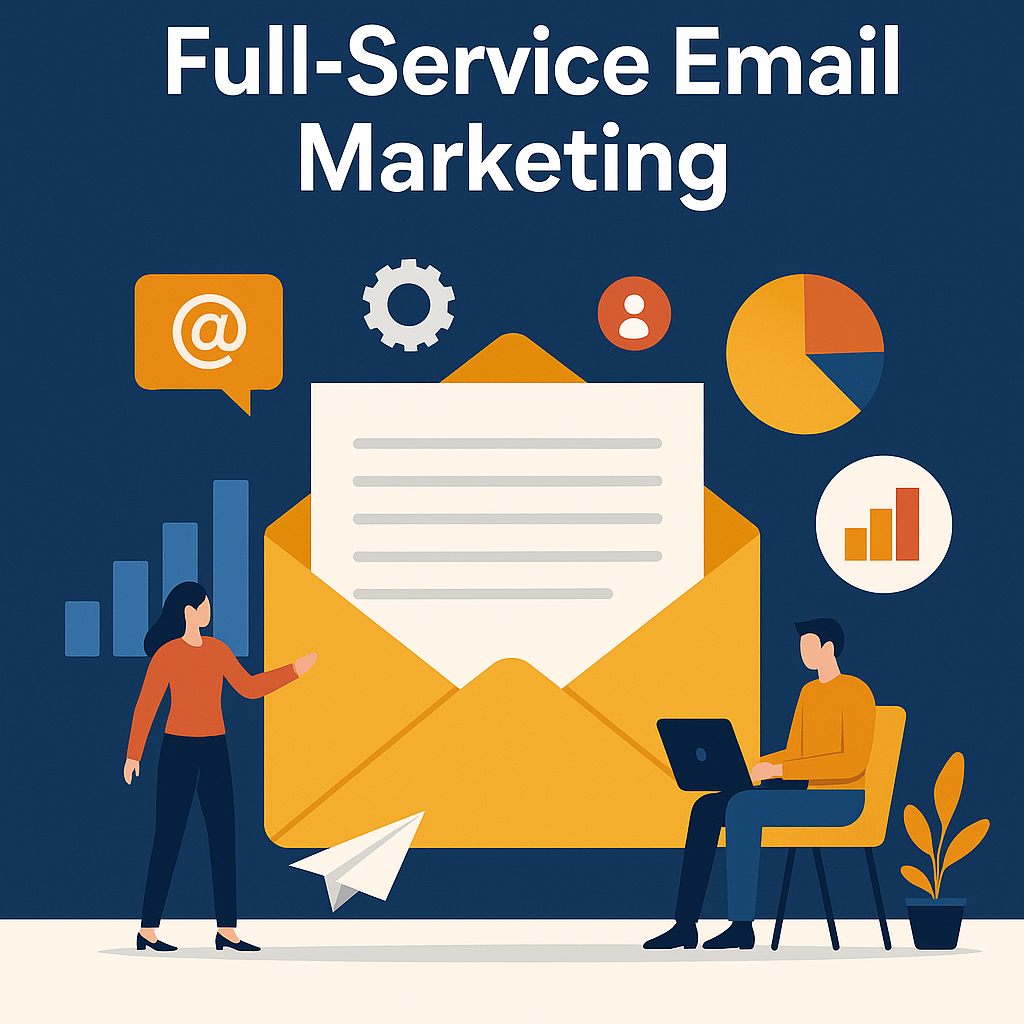
Full-Service Email Marketing: What It Means and Why It Matters

Introduction

In a digital world flooded with fleeting impressions and distractions, email remains one of the most powerful tools in a brand’s marketing arsenal. However, not all email strategies are created equal. While many businesses rely on simple tools to send newsletters or offers, full-service email marketing goes beyond just sending emails — it’s about delivering results-driven campaigns that are automated, personalized, and aligned with your brand’s goals.

In this article, we’ll explore what full-service email marketing truly means, the key services included, why it’s essential for scaling your business, and how to choose the right partner for the job.


What is Full-Service Email Marketing?

Full-service email marketing refers to an all-inclusive solution where a specialized agency or marketing partner handles every aspect of your email campaigns. This comprehensive approach is ideal for businesses that want expert strategy, creative execution, and technical management — all under one roof.


Core Components of Full-Service Email Marketing

  1. Strategy Development
    • Audience segmentation
    • Campaign goals and calendar
    • Funnel and journey mapping
  2. Copywriting & Design
    • Compelling subject lines
    • Persuasive email copy
    • Mobile-optimized design templates
  3. List Management
    • List cleaning and validation
    • Opt-in and unsubscribe compliance
    • CRM synchronization
  4. Automation & Personalization
    • Behavior-triggered email flows
    • Dynamic content personalization
    • Abandoned cart and post-purchase emails
  5. Testing & Optimization
    • A/B testing of subject lines and designs
    • Time and frequency testing
    • Deliverability monitoring
  6. Reporting & Analytics
    • Open rate, click-through rate (CTR), and conversion tracking
    • ROI analysis
    • Heatmaps and engagement metrics
  7. Compliance & Security
    • GDPR and CAN-SPAM compliance
    • Secure data handling
    • Permission-based marketing

Why Full-Service Email Marketing Matters

1. Saves Time & Resources
Managing a successful campaign takes hours of planning, designing, coding, testing, and analyzing. Outsourcing allows your team to focus on core business functions.

2. Access to Experts
You gain access to a full team — strategists, designers, copywriters, and developers — without the cost of hiring each in-house.

3. Better Results Through Specialization
Experts who live and breathe email marketing understand what works. They’ll continuously optimize your campaigns to ensure better performance.

4. Advanced Tools & Technology
Agencies use premium ESPs (email service providers), automation software, and analytics tools that give your brand a technological edge.

5. Scalability
Whether you’re sending 10,000 or 10 million emails per month, full-service solutions grow with your business needs.


How to Choose the Right Full-Service Email Marketing Partner

  • Look for industry experience and case studies
  • Ensure platform compatibility (Mailchimp, Klaviyo, HubSpot, etc.)
  • Evaluate their creative portfolio
  • Understand their reporting and communication style
  • Ask about compliance and data security protocols

Real-World Impact: A Case Study Snapshot

A B2B SaaS client working with a full-service agency saw a 48% increase in engagement within 3 months. Key wins included automated onboarding flows, redesigned templates, and personalized product updates based on user behavior.


Conclusion

Email marketing remains one of the highest ROI-generating channels — but only when executed correctly. A full-service approach eliminates guesswork, empowers your brand with expert insight, and ensures every email sent has the potential to convert. Whether you’re launching a startup or scaling an enterprise, partnering with a full-service email marketing provider can be a game-changer for growth.


FAQs

1. Who needs full-service email marketing?
Brands that want to scale, lack internal expertise, or require campaign consistency benefit the most from a full-service model.

2. Is full-service email marketing expensive?
While it’s an investment, it often proves cost-effective by improving performance and reducing wasted effort.

3. Can I still be involved in the process?
Yes, good agencies will collaborate with you on goals, approvals, and performance reviews while managing execution.

4. What tools are used in full-service email marketing?
Popular platforms include Mailchimp, Klaviyo, HubSpot, ActiveCampaign, and custom CRM integrations.

5. How long does it take to see results?
You may see engagement improvements within the first few campaigns, with more significant revenue results in 60–90 days.
case studies

See More Case Studies

Using Reddit Ads to Reach Niche Communities

Using Reddit Ads to Reach Niche Communities

In the crowded world of digital marketing, standing out often means finding the right people in the right place and few platforms do this better than Reddit. With over 100,000 active communities (subreddits) dedicated to almost every interest imaginable, Reddit ads allow brands to reach high-intent, niche audiences with precision targeting. If you’re a marketer aiming for niche targeting, Reddit offers something that Facebook, Instagram, and even Google Ads can’t always deliver: direct access to tight-knit communities where people are actively discussing their passions. In this guide, we’ll break down Reddit ads strategy so you can connect with the right audience and drive meaningful results. Why Use Reddit Ads for Niche Targeting? Reddit isn’t just another social media platform it’s a community-driven discussion hub where users are more engaged, skeptical of overt advertising, and highly invested in the topics they follow. Key reasons Reddit ads are perfect for niche targeting: Understanding Reddit’s Audience Before launching your campaign, understand the Reddit audience: Step-by-Step Reddit Ads Strategy for Niche Brands 1. Define Your Niche and Audience Start by identifying which subreddits align with your brand. Tools like RedditList or even manual searches can help. Look for: 2. Choose the Right Ad Format Reddit offers several ad types: For niche targeting, Promoted Posts tend to perform best because they blend naturally into the conversation. 3. Use Subreddit Targeting Effectively You can target specific subreddits directly for example: 4. Craft Authentic, Conversation-Driven Ad Copy Redditors value genuine contributions. Tips for ad copy: Example:❌ “Our product is the best on the market!”✅ “Here’s how I cut my monthly energy bill by 30% using this gadget (and no, it’s not solar).” 5. Test and Optimize 6. Leverage Reddit Pixel for Retargeting Installing the Reddit Pixel on your site allows you to: Pro Tips for Success with Reddit Ads Strategy Example Reddit Ads Campaign: Niche Outdoor Gear Brand Objective: Drive sales of a new camping stove.Target Subreddits: r/CampingGear, r/Outdoors, r/Backpacking.Ad Format: Promoted Post with a personal story and product demo video.Result: 4.2% CTR, 28% higher conversion rate than Facebook campaigns, strong community discussion in comments. A Reddit ads strategy isn’t about blasting generic messages — it’s about joining conversations where your audience already feels at home. By focusing on niche targeting, authentic messaging, and community engagement, brands can turn Reddit into a high-performing ad channel. If your competitors aren’t on Reddit yet, now is the perfect time to claim your spot in these niche conversations. FAQs 1. Are Reddit ads effective for small businesses?Yes — because you can target highly relevant communities, even small budgets can yield strong ROI. 2. How much do Reddit ads cost?CPMs can range from $0.75 to $3.50, depending on competition and audience size. 3. What makes Reddit ads different from Facebook or Google Ads?They’re community-driven, with a higher emphasis on relevance and authenticity over mass reach. 4. Can I target multiple subreddits in one campaign?Yes, but for best results, group similar communities together to maintain ad relevance. 5. Do Reddit users react negatively to ads?If the ad feels spammy or irrelevant, yes. But genuine, value-driven ads often receive positive engagement.

Learn more
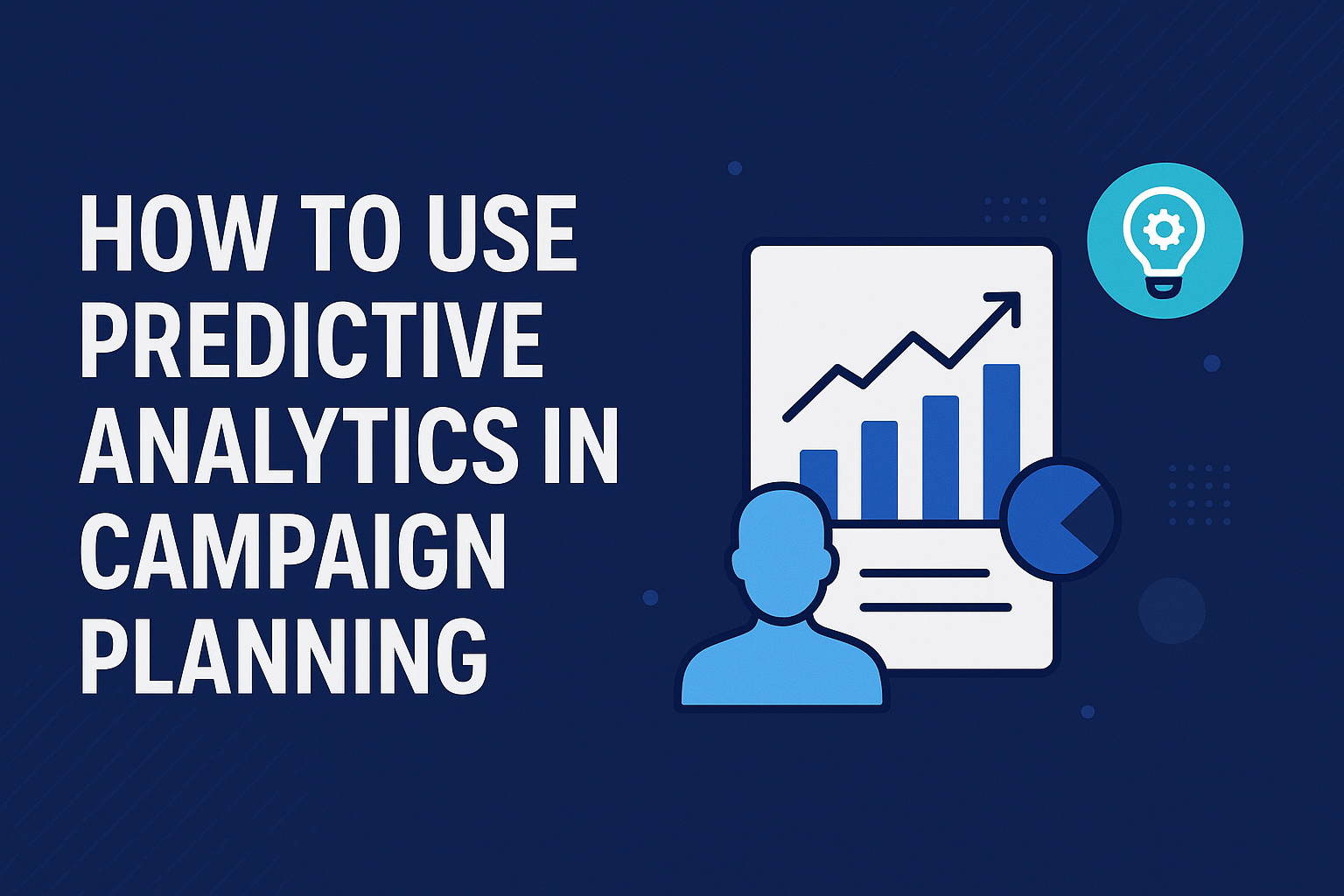
How to Use Predictive Analytics in Campaign Planning

How to Use Predictive Analytics in Campaign Planning

Why Predictive Analytics Is Changing Marketing Forever Marketing has always relied on one part data, one part creativity, and one part intuition. But as digital channels multiply and customer journeys become more complex, gut feeling isn’t enough. Businesses that win today are those that can anticipate customer behavior before it happens and act on it. That’s where predictive analytics marketing comes in. By using historical data, machine learning models, and statistical algorithms, marketers can forecast trends, identify high-value segments, and optimize campaigns before they even launch. The result? Higher ROI, lower wasted ad spend, and campaigns that feel like they’re reading your customer’s mind. In this detailed guide, we’ll explore: 1. Understanding Predictive Analytics Marketing 1.1 What Is Predictive Analytics? Predictive analytics uses historical data combined with statistical algorithms and machine learning techniques to forecast the likelihood of future outcomes. In marketing, it’s used to: Example: If your e-commerce store has years of transaction data, a predictive model can help forecast which customers are likely to buy during the holiday season — allowing you to send them targeted promotions. 1.2 Difference Between Descriptive, Diagnostic, Predictive, and Prescriptive Analytics Predictive analytics sits at the intersection of data science and marketing strategy, feeding insights into decision-making. 2. The Role of Predictive Analytics in Campaign Planning Predictive analytics transforms campaign planning by: 3. Steps to Implement Predictive Analytics in Campaign Planning 3.1 Step 1: Collect the Right Data Your predictive model is only as good as your data. Pro Tip: Implement a CDP (Customer Data Platform) to unify data from multiple sources. 3.2 Step 2: Clean and Prepare Data Before modeling, ensure: 3.3 Step 3: Define Campaign Goals Your campaign goals will dictate the type of predictive model you choose. 3.4 Step 4: Choose a Predictive Model Common Predictive Models in Marketing: 3.5 Step 5: Train, Test, and Validate the Model 3.6 Step 6: Apply Insights to Campaign Planning Model outputs can directly inform: 3.7 Step 7: Monitor and Refine Predictive analytics is not a one-and-done process. 4. Tools for Predictive Analytics Marketing Tool Purpose Best For Google Analytics 4 Predictive audiences & purchase probability Web & e-commerce campaigns HubSpot Predictive lead scoring B2B lead nurturing Salesforce Einstein AI-powered sales and marketing predictions Enterprise campaigns IBM Watson Studio Custom ML models Data science teams Python + scikit-learn Open-source predictive modeling Technical marketing/data teams 5. Real-World Examples E-commerce: Amazon uses predictive analytics to recommend products and anticipate demand for restocking. Subscription Services: Netflix predicts what shows you’ll enjoy next and uses it to drive personalized email campaigns. Retail: Target famously predicted a customer’s pregnancy before she announced it by analyzing her purchase patterns. 6. Common Mistakes to Avoid 7. Best Practices for Success FAQs Q1: How is predictive analytics different from AI in marketing?AI is a broad term that includes predictive analytics, which specifically focuses on forecasting outcomes using past data. Q2: What industries benefit most from predictive analytics marketing?E-commerce, SaaS, finance, retail, and healthcare see strong ROI from predictive targeting and personalization. Q3: Can small businesses use predictive analytics?Yes many tools like HubSpot and Google Analytics offer built-in predictive features without requiring coding. Q4: How much historical data is needed for predictive analytics?Typically 6–12 months of clean, relevant data is a good starting point. Q5: What’s the biggest challenge in predictive analytics marketing?Ensuring the accuracy and relevance of data, followed by translating insights into actionable campaigns. Predictive analytics marketing is no longer a futuristic concept it’s a present-day necessity. From enhancing audience targeting to maximizing ROI, predictive models give marketers a competitive advantage. The key lies in pairing quality data with the right models, tools, and a continuous improvement mindset.

Learn more
Smart Bidding in Google Ads: What to Know in 2025

Smart Bidding in Google Ads: What to Know in 2025

In 2025, Google Ads smart bidding has become more sophisticated than ever, leveraging advanced machine learning and real-time data to help advertisers reach their goals faster. Whether your priority is lowering CPA, increasing ROAS, or scaling conversions, smart bidding in Google Ads can be a powerful tool if you know how to use it effectively. In this guide, we’ll break down how smart bidding works, its benefits and limitations, the latest updates in 2025, and proven strategies to optimize your campaigns for maximum ROI. What Is Smart Bidding in Google Ads? Smart bidding is Google’s automated bidding strategy that uses machine learning to optimize your bids in every auction (known as “auction-time bidding”). Instead of manually adjusting bids for keywords or placements, Google’s algorithm determines the best bid based on signals like device, location, time of day, search intent, and historical performance. The four main smart bidding strategies are: How Smart Bidding Works Google’s smart bidding algorithms factor in a wide range of contextual signals at the moment of the auction, such as: By analyzing these signals in real time, Google adjusts your bids for each auction to increase the likelihood of achieving your campaign goals. Benefits of Smart Bidding in 2025 Smart bidding has evolved significantly, offering advertisers more accuracy, better scalability, and reduced guesswork. 1. Better Use of First-Party Data With third-party cookies being phased out, Google now prioritizes first-party audience data for bid optimization, improving performance in privacy-compliant ways. 2. Faster Learning & Adaptation Machine learning models can now adapt to performance changes more quickly, meaning campaigns recover faster from market fluctuations. 3. Real-Time Auction Adjustments Auction-time bidding considers dozens of signals simultaneously, something manual bidding can’t replicate. 4. Integration with Broad Match Keywords In 2025, broad match + smart bidding is a recommended pairing for maximum reach and intent matching. Challenges & Limitations While smart bidding offers significant advantages, it’s not a magic bullet. Best Practices for Optimizing Smart Bidding in 2025 To get the most out of smart bidding in Google Ads, follow these proven strategies: 1. Set Realistic CPA or ROAS Goals Don’t start with overly aggressive targets allow the algorithm to learn with attainable goals first. 2. Ensure Accurate Conversion Tracking Smart bidding relies heavily on conversion data, so set up Google Ads conversion tracking and integrate it with Google Analytics 4. 3. Use Value-Based Bidding For eCommerce, set conversion values to prioritize high-margin products rather than just volume. 4. Test with Broad Match Leverage Google’s improved broad match to reach more high-intent queries while letting smart bidding optimize for conversions. 5. Allow a Learning Period Avoid making frequent changes to budgets or goals during the first 2–3 weeks of running smart bidding, so the algorithm can stabilize. Smart Bidding Trends to Watch in 2025 Smart bidding in Google Ads is no longer an optional strategy—it’s becoming the backbone of performance advertising. In 2025, the advertisers seeing the best results are those who combine automation with strong data hygiene, realistic goals, and continuous testing. By understanding how smart bidding works and applying the best practices above, you can maximize your CPA, ROAS, and overall ad performance while letting Google’s algorithms do the heavy lifting. FAQs About Smart Bidding in Google Ads 1. Is smart bidding better than manual bidding in 2025?Yes, in most cases. Smart bidding uses real-time signals to optimize every auction, which manual bidding can’t match. However, manual bidding may still work better for campaigns with very specific, low-volume keywords. 2. How long does the smart bidding learning phase last?Typically 7–14 days, depending on conversion volume. Avoid making major changes during this time. 3. Can I use smart bidding with a small budget?Yes, but ensure you have enough conversion data at least 15–30 conversions per month for optimal results. 4. Does smart bidding work with Performance Max campaigns?Yes. In fact, Performance Max campaigns run exclusively on smart bidding strategies. 5. How can I improve CPA with smart bidding?Focus on improving conversion tracking accuracy, using relevant audiences, and setting realistic CPA goals that can be refined over time.

Learn more
Contact us

Full-Service Data & Email Marketing Agency

Turn your marketing communications into a sales powerhouse and increase revenue with full-service email marketing.

Email us at: info@connectdigitalventures.com

Your benefits:

What happens next?

1

We Schedule a call at your convenience 

2

We do a discovery and consulting meting 

3

We prepare a proposal 

Request a Free Sample/Campaign Demo