In today’s fast-paced business world, branding is more than just a logo — it’s how your business is perceived, remembered, and trusted. Yet, many businesses still fall for outdated beliefs that sabotage their brand’s full potential.
Let’s bust some of the most common branding myths so you can build a stronger, more effective brand from the ground up.
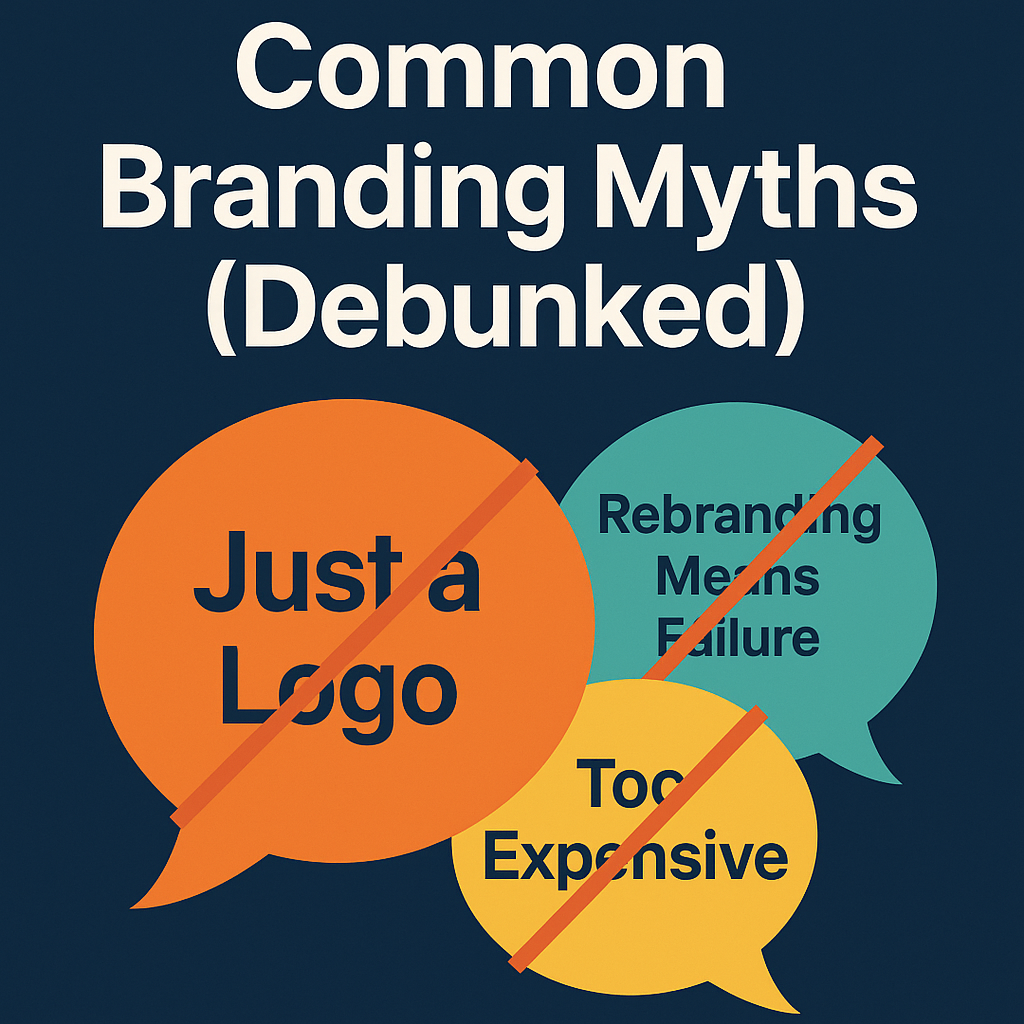
Myth 1: Branding Is Just a Logo
Reality: While your logo is a key element, branding is everything your audience thinks and feels about your business. It includes your voice, colors, mission, messaging, customer service, and even employee behavior. A logo is just one piece of the brand puzzle.
A great logo can catch attention, but consistent branding builds loyalty.
Myth 2: Only Big Companies Need Branding
Reality: Small businesses and startups benefit even more from strong branding. It sets you apart in a crowded market, builds credibility, and helps attract the right customers. A clear brand helps people remember you — no matter your size.
Myth 3: Branding is Expensive and Time-Consuming
Reality: Good branding doesn’t need a six-figure budget. What it needs is clarity and consistency. Define your core values, visual style, and tone of voice — and stick to them. Many tools and professionals can help create impactful branding on any budget.
Myth 4: Rebranding Means You Failed
Reality: Rebranding isn’t a sign of failure — it’s often a sign of growth. Businesses evolve, and so should your brand. Whether it’s a shift in audience, mission, or aesthetics, rebranding can reinvigorate your message and relevance.
Myth 5: Branding Doesn’t Impact Sales
Reality: A strong brand builds trust — and trust drives conversions. Consumers are more likely to buy from companies they recognize and feel connected to. Branding influences every step of the customer journey, from first impression to repeat purchase.
Myth 6: You Control Your Brand Completely
Reality: You can guide your brand — but your audience defines it. A brand is built in the minds of your customers through every experience they have with you. That’s why authenticity and consistency are critical.
Myth 7: A Good Product Sells Itself
Reality: Even the best product needs a strong brand to survive. Without clear messaging and a recognizable identity, it’s hard to break through the noise. Branding helps your product stand out and connect emotionally with your audience.
FAQs
1. Is branding the same as marketing?
No — branding defines your identity and values, while marketing promotes them. Branding comes first; it informs all marketing decisions.
2. When should I rebrand?
Consider rebranding if your business has changed direction, audience, or if your branding feels outdated or inconsistent.
3. Can I build a brand without a designer?
Yes, there are many tools (like Canva, Looka, and AI generators) to help you build basic brand assets. However, a designer can ensure professionalism.
4. What’s the most important element of branding?
Consistency. No matter your logo, tone, or style — using them consistently across every touchpoint builds trust.
5. How do I know if my branding is working?
Monitor customer feedback, engagement, and loyalty. If people recognize and resonate with your message — your branding is doing its job.
Final Thoughts
Falling for branding myths can hold your business back. The truth is, branding is an essential strategy — not just a creative exercise. It’s how you shape perception, build loyalty, and inspire trust.
Whether you’re just starting out or refreshing your look, always lead with clarity, consistency, and authenticity.