visual identity

The Science of Typography in Branding

The Science of Typography in Branding

Introduction When building a brand, most companies focus on logos, colors, and messaging. But one often underestimated element—typography—holds remarkable power over how your brand is perceived. From sleek modern sans-serifs to elegant, timeless serifs, the typeface you choose doesn’t just convey words—it communicates personality, emotion, and trustworthiness. Let’s explore the science behind typography in branding and why your font choices can be just as critical as your logo or color palette. 🎯 Why Typography Matters in Branding Typography is more than style. It’s strategic design. The right typography: According to MIT research, people form an impression of your website within 50 milliseconds, and typography plays a key role in that rapid judgment. 🔬 The Psychology of Fonts Different fonts evoke different psychological responses. Here’s a breakdown: Font Style Perception Brand Example Serif Traditional, trustworthy The New York Times Sans-Serif Modern, clean, minimal Google, Airbnb Script Elegant, artistic, personal Cadbury, Instagram Monospace Technical, functional GitHub Display/Decorative Unique, creative, bold Disney, Fanta Tip: Use typography that mirrors your brand’s tone and values. A legal firm might use a classic serif, while a tech startup may opt for a clean sans-serif. Typography and Brand Recognition Consistency in typography reinforces brand identity. Just like colors or logos, fonts should remain uniform across platforms to foster brand recognition. Key Branding Benefits of Consistent Typography: Cognitive Science Behind Typography Typography impacts reading fluency, attention span, and even persuasion. Best Practices for Typography in Branding 1. Limit Your Font Families Stick to a maximum of 2–3 complementary typefaces (e.g., one for headers, one for body text, and possibly a decorative option). 2. Create a Type Hierarchy Define clear levels for headings, subheadings, body, and CTA fonts. This creates visual rhythm and clarity. 3. Use Fonts with Versatility Choose typefaces that look good in multiple weights and sizes, especially across mobile and desktop formats. 4. Ensure Accessibility Check for proper contrast ratios and avoid overly stylized fonts that hinder legibility, especially for visually impaired users. 5. Document in Brand Guidelines Codify your typography choices in a brand book, detailing usage, sizing, spacing, and alignment for different platforms. Real-World Typography Examples Coca-Cola Uses a custom Spencerian script to evoke nostalgia and tradition. Spotify Uses Circular, a geometric sans-serif, which aligns with its modern and approachable brand identity. Vogue Uses Didot, a luxurious serif font that complements its high-fashion tone. FAQs About Typography in Branding 1. Can typography really affect consumer trust? Yes. Studies show that professional, readable typography increases brand credibility and user retention. 2. Is it okay to use free fonts like Google Fonts? Absolutely. Many free fonts are high quality—but avoid overused options if you want a distinctive brand presence. 3. Should I create a custom font for my brand? Custom fonts offer ultimate uniqueness, but they come at a higher cost. Worth it for established brands or premium positioning. 4. Can changing fonts hurt my brand? Frequent or inconsistent font changes damage brand recognition. Rebranding should always include strategic typography planning. 5. What’s the difference between a typeface and a font? A typeface is the family (e.g., Helvetica), and a font is a style within that family (e.g., Helvetica Bold 12pt). Final Thoughts Typography is not an afterthought—it’s a core branding tool. Every font choice speaks volumes about your values, tone, and audience. If you’re building or refining your brand, invest time in understanding the science of typography. Because in the eyes of your audience, every letter matters.
Read more
The Evolution of Logo Design: Then vs Now

The Evolution of Logo Design: Then vs Now

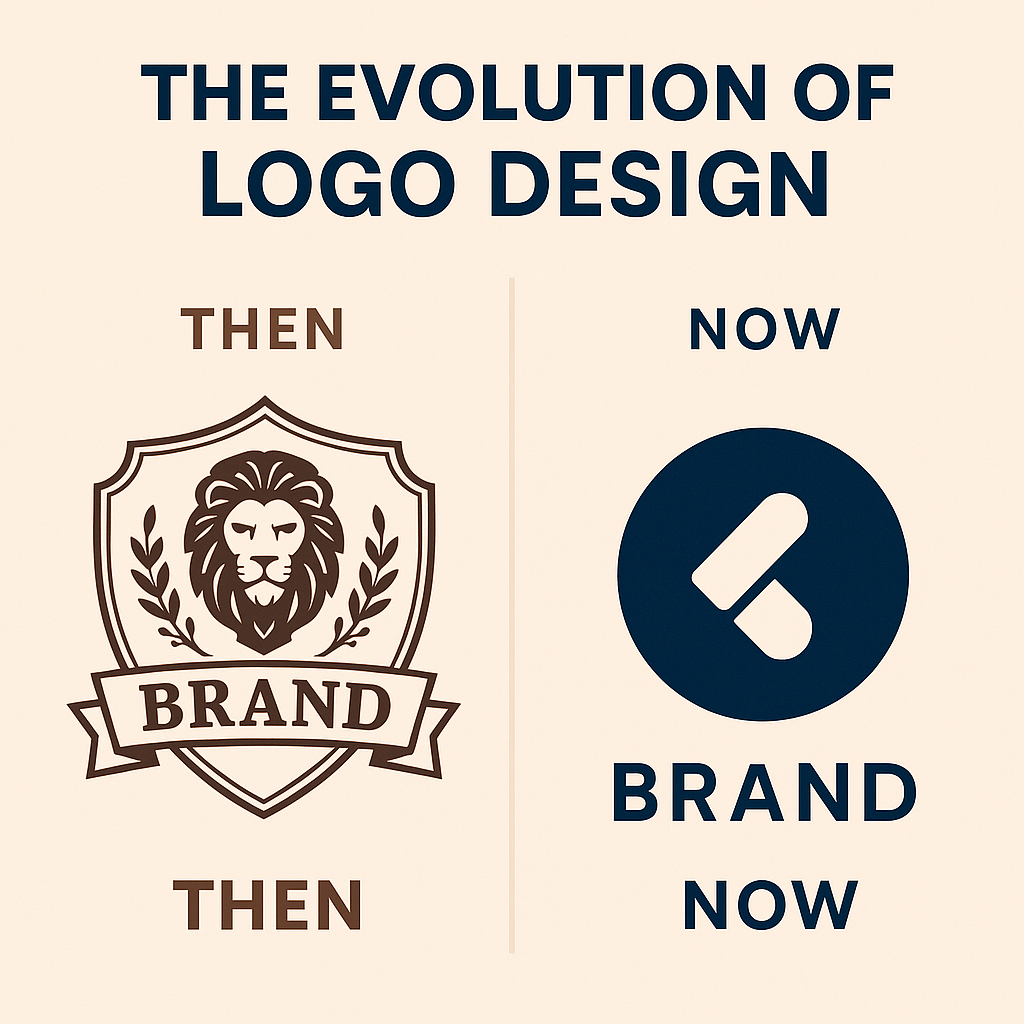
From ornate coats of arms to minimalist digital icons, the evolution of logo design is a fascinating journey through branding history, art trends, and cultural shifts. Logos are more than just symbols — they’re identity anchors for businesses, emotions wrapped in design. In this article, we explore how logos have changed over the decades, why they’ve changed, and what that means for brands today. Then: Detailed, Literal, and Traditional 1. Early Logos Were Literal In the early to mid-1900s, logos were often realistic and illustrative. Think of early car brands, breweries, or banks — their logos typically used crests, heraldic symbols, or full depictions of products. Example: The original Starbucks logo (1971) featured a detailed, twin-tailed mermaid in brown tones, inspired by 16th-century woodcuts. 2. Typography Was Decorative Fonts used in old logos were highly stylized — script, serif, and heavily ornamental. These designs conveyed tradition, craftsmanship, and authenticity. 3. Color Palettes Were Limited Due to printing technology limitations, color choices were often subdued, and most logos were black-and-white until color printing became standard. 4. Function Over Versatility Old logos were built for signage, product packaging, and print. Scalability and digital adaptability weren’t priorities. Now: Minimal, Abstract, and Digital-First 1. Simplicity Rules Today’s logos are clean, flat, and minimalist. Think Apple, Nike, or Airbnb. The emphasis is on quick recognition and digital scalability. Consumers scroll fast. Logos need to register instantly on screens of all sizes. 2. Abstract Over Literal Modern logos often imply meaning rather than state it directly. Logos like Twitter’s bird or Slack’s symbol evoke emotion and connection without needing text. 3. Bold Typography Contemporary font trends favor bold sans-serif typefaces, all-caps, and custom lettering — creating strong, modern identities. 4. Flexible Design Systems Modern logos are part of a larger brand system — adaptive for app icons, website headers, social media profiles, and merchandise. Think responsive logos that morph by screen size. Why the Shift? The Hybrid Future: Best of Both Worlds? Some brands are embracing both past and present. Retro-modern logos — where nostalgic design is updated with sleek geometry — are trending. Example: Burger King’s 2021 rebrand resurrected its vintage logo with flatter, simplified execution for modern platforms. FAQs 1. Why are modern logos so minimal?Minimalism ensures versatility, readability, and fast recognition across digital devices and platforms. 2. Do detailed logos still work?In some industries — like luxury fashion or wine — ornate or detailed logos still convey heritage and prestige. But even they often simplify for digital. 3. Should my logo evolve over time?Yes. Refreshing a logo every few years keeps your brand current and ensures it fits changing mediums and audience preferences. 4. What’s a responsive logo?A responsive logo adapts based on screen size or usage. For example, a full logo on desktop may reduce to just the icon or monogram on mobile. 5. How often should companies rebrand?There’s no strict rule, but if your logo feels outdated or no longer aligns with your brand vision or audience, it may be time for an update — typically every 7–10 years. Final Thoughts The evolution of logo design is a testament to how brands respond to the world around them. As society changes, so does visual identity. Whether you’re a startup creating a new logo or an established brand considering a redesign, understanding past and present trends can help you build a logo that resonates today — and lasts tomorrow.

Read more
Contact us

Full-Service Data & Email Marketing Agency

Turn your marketing communications into a sales powerhouse and increase revenue with full-service email marketing.

Email us at: info@connectdigitalventures.com

Your benefits:

What happens next?

1

We Schedule a call at your convenience 

2

We do a discovery and consulting meting 

3

We prepare a proposal 

Request a Free Sample/Campaign Demo