Growth strategy

What Is Full-Funnel Marketing? Explained

What Is Full-Funnel Marketing? Explained

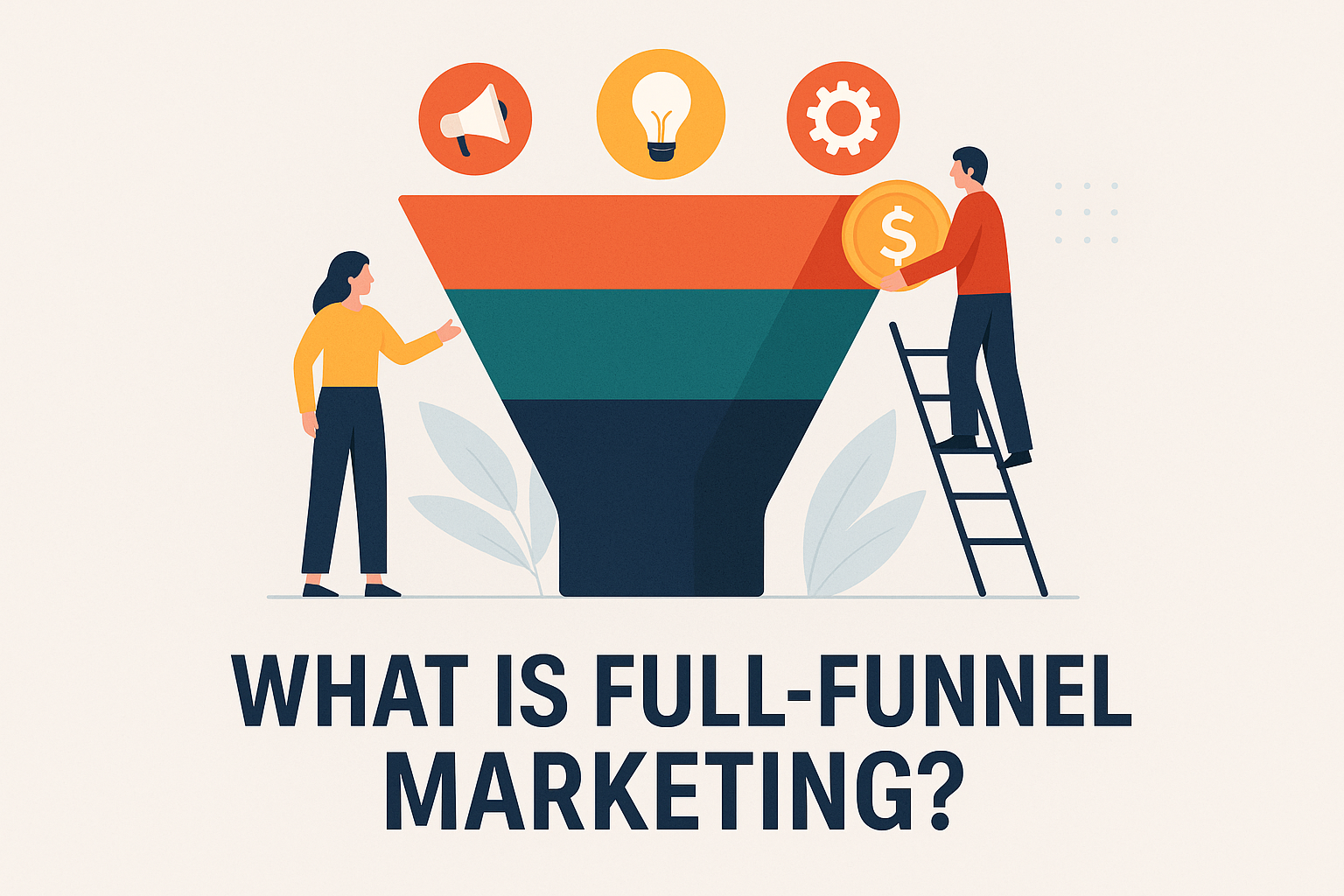
Full-funnel marketing is more than just a buzzword it’s a powerful strategy that helps businesses guide customers through every stage of the buyer’s journey, from awareness to decision and loyalty. In 2025’s competitive digital landscape, companies that embrace full-funnel marketing gain a significant edge over those using siloed, one-size-fits-all campaigns. In this article, we’ll break down what full-funnel marketing really means, why it matters, how to build your strategy, and how to align your content, channels, and measurement across the funnel. What Is Full-Funnel Marketing? Full-funnel marketing is a strategic approach that targets consumers at all stages of the buyer journey top (awareness), middle (consideration), and bottom (conversion). Instead of focusing only on quick wins or short-term conversions, this model nurtures long-term customer relationships and increases lifetime value. Think of it like a funnel: Why Full-Funnel Marketing Matters in 2025 How to Build a Full-Funnel Marketing Strategy 1. Define Your Buyer Journey Map out how your customers discover, evaluate, and purchase your product or service. This will help you align messaging and touchpoints at each stage. 2. Segment Your Funnel 3. Use Data for Smarter Targeting Leverage tools like Meta Pixel, Google Analytics 4, and CRM data to track behavior and segment your audience based on their stage in the funnel. 4. Optimize for Every Stage Set KPIs tailored to each funnel stage. For example: Tools to Support Full-Funnel Execution Real-World Example A DTC skincare brand might: This holistic approach creates a seamless buyer experience and increases the odds of turning a one-time buyer into a long-term fan. Facts In a world where attention is scarce and competition is fierce, full-funnel marketing isn’t optional it’s essential. By tailoring your strategy across every customer touchpoint, you create a journey that feels personal, builds trust, and ultimately drives more conversions. If you’re not thinking about the full funnel, you’re only doing half the job.
Read more
How to Write Email Subject Lines That Actually Get Clicked

How to Write Email Subject Lines That Actually Get Clicked

How to Write Email Subject Lines That Actually Get Clicked In a crowded inbox, your subject line is the gatekeeper to your email content. No matter how brilliant your offer, design, or call to action is, if your subject line fails to grab attention, the rest of your email won’t even get a glance. As brands battle for attention, crafting compelling email subject lines is no longer just a good practice—it’s a necessity. Here’s how you can write subject lines that not only get noticed but also drive real action. Why Subject Lines Matter So Much Your subject line is the first impression, the hook, and often the deciding factor for whether someone will open your email. With open rates directly tied to subject line performance, marketers must view them as a critical part of their email strategy. According to Campaign Monitor, 47% of recipients open an email based solely on the subject line, while 69% report emails as spam based on it. That’s a lot of power for one line of text. Proven Strategies to Write Click-Worthy Subject Lines 1. Keep It Short and Clear Most email clients cut off subject lines after 40–60 characters. Keep it concise and make every word count. Aim for 6–10 words or fewer to ensure it’s fully visible across devices. ✅ Example: “50% Off Today Only – Don’t Miss Out!” 2. Create Urgency or Scarcity People respond to time-sensitive deals. Words like “limited,” “today,” and “ending soon” can motivate recipients to take action now. ✅ Example: “Only 2 Hours Left to Claim Your Gift 🎁” 3. Personalization Wins Using the recipient’s name or tailoring based on past behavior (like abandoned carts or past purchases) can significantly boost engagement. ✅ Example: “Hey Sarah, Your Favorite Sneakers Are Back in Stock!” 4. Ask a Compelling Question Questions pique curiosity and invite clicks. Make sure the answer lies within your email. ✅ Example: “Are You Making These Marketing Mistakes?” 5. Use Numbers and Lists Emails that include numbers are easier to process and more enticing. ✅ Example: “5 Easy Ways to Grow Your Audience This Month” Bonus Tips 5 Common Subject Line Mistakes to Avoid FAQs 1. How long should an email subject line be? Ideally, keep it under 50 characters to ensure visibility across devices. 2. Can I use emojis in subject lines? Yes, but use them sparingly and only if they align with your brand voice and audience preferences. 3. What are some examples of high-performing subject lines? “Your Free eBook is Here!” or “Don’t Miss This: Exclusive 24-Hour Deal” are effective due to clarity and urgency. 4. Should I personalize every subject line? Where possible, yes. Personalized emails have higher open and click-through rates. 5. How do I A/B test a subject line? Split your audience into two groups. Send each a different subject line, and compare open and click-through rates. Final Thoughts Subject lines may be short, but their impact is massive. Mastering the art of writing effective email subject lines will dramatically improve your open rates, engagement, and ultimately, conversions. Invest the time to test, tweak, and refine. Because in email marketing, your subject line isn’t just the beginning—it’s everything.

Read more
Contact us

Full-Service Data & Email Marketing Agency

Turn your marketing communications into a sales powerhouse and increase revenue with full-service email marketing.

Email us at: info@connectdigitalventures.com

Your benefits:

What happens next?

1

We Schedule a call at your convenience 

2

We do a discovery and consulting meting 

3

We prepare a proposal 

Request a Free Sample/Campaign Demo