creative strategy

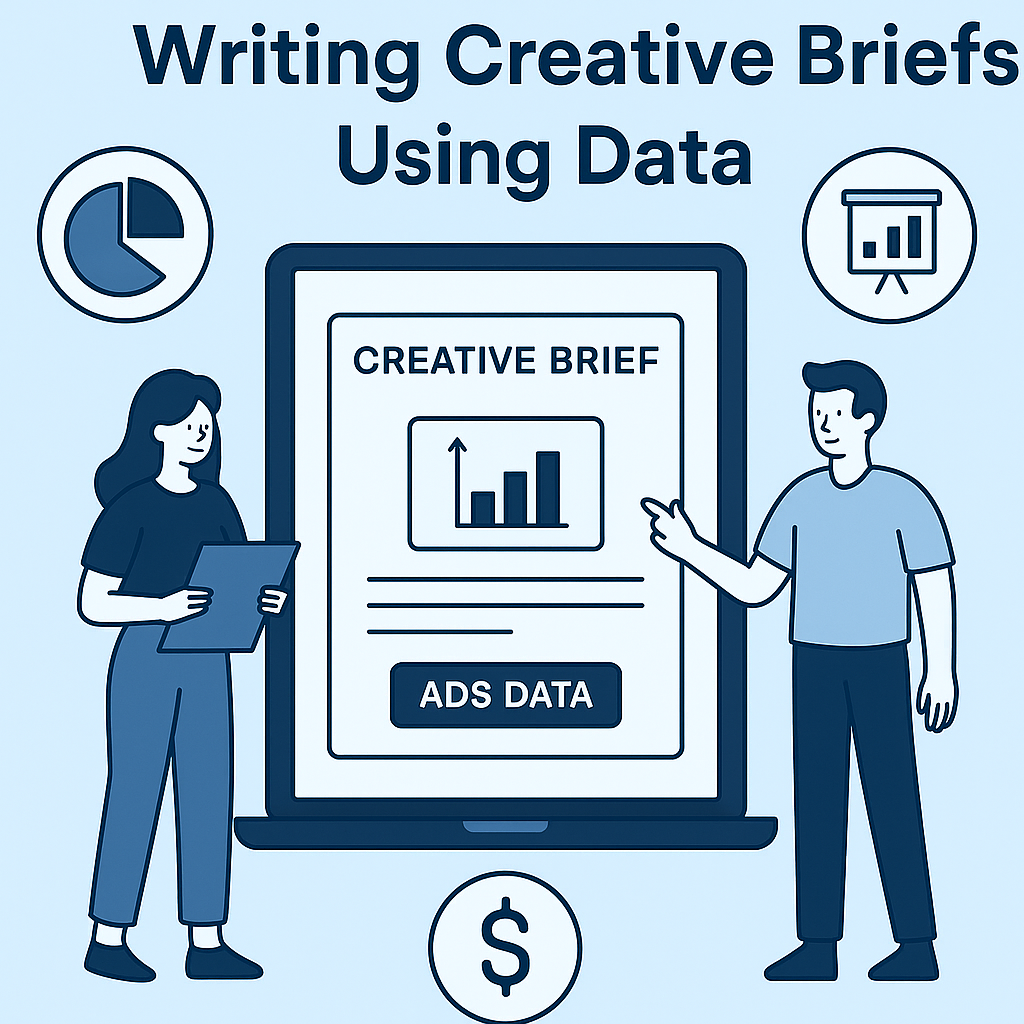
How to Use Data to Improve Creative Briefs

How to Use Data to Improve Creative Briefs

Creative briefs are the blueprint for high-performing marketing campaigns. They serve as the critical link between strategy and execution, aligning marketers, designers, copywriters, and other creatives toward a common goal. But in today’s performance-driven marketing landscape, traditional briefs often fall short. Why? Because they’re based more on assumptions than hard evidence. Enter the age of data-driven creative briefs a smarter, sharper approach that brings together creative intuition and analytical insights to fuel high-impact advertising. Whether you’re managing a DTC brand, an e-commerce store, or a creative agency, using data to write your creative briefs is no longer optional it’s essential. In this guide, we’ll dive deep into how you can leverage ad performance data, audience insights, and conversion metrics to elevate your creative strategy from good to exceptional. Why Traditional Creative Briefs Fall Short Creative briefs have been a cornerstone of marketing for decades. They outline the campaign’s objectives, target audience, tone of voice, and deliverables. However, traditional briefs often rely on generalizations, gut instincts, and outdated personas. Here’s where they go wrong: The result? Creative teams operate in silos. Campaigns miss the mark. Ad fatigue sets in quickly. And budgets burn without measurable ROI. What Is a Data-Driven Creative Brief? A data-driven creative brief uses real-time, empirical data to inform every part of the creative process. From audience segmentation to messaging angles, visuals to CTAs data serves as the foundation for decisionmaking. Key characteristics of data-driven creative briefs: This approach enables creative teams to produce high-converting, resonant campaigns while reducing guesswork and creative burnout. Benefits of Using Data in Creative Briefs 1. Better Alignment Between Teams When everyone works from the same source of truth performance data it’s easier to align on goals and expectations. This reduces friction between strategy, media buying, and creative teams. 2. Improved Ad Performance Using data to define value propositions, angles, and CTAs leads to more engaging content. You already know what works you’re just scaling it. 3. Faster Testing and Iteration With a clear picture of what performs, you can build a creative testing roadmap. This saves time and budget by avoiding low-potential ideas. 4. Stronger Brand-Consumer Fit By analyzing real customer behavior, you craft messages that reflect their desires, pain points, and language leading to higher conversion rates. What Data Should You Include in a Creative Brief? To build an effective data-driven creative brief, you need to go beyond surface-level numbers. Here’s the essential data to include: 1. Campaign Goals & KPIs Start with the “why.” Define clear, measurable goals. 2. Audience Data Include both quantitative and qualitative insights: 🔍 Pro Tip: Use tools like Meta Audience Insights, Google Analytics 4, and Klaviyo to get granular. 3. Messaging Insights Pull learnings from previous high-performing campaigns: 4. Creative Performance Data Include performance of different creative formats: 5. Channel-Specific Data Break down performance by channel to tailor creatives accordingly: 6. Competitor Creative Intelligence Use platforms like Meta Ad Library, Semrush, or SimilarWeb to analyze: The Anatomy of a Data Driven Creative Brief Here’s a simple framework you can follow: 1. Overview 2. Campaign Objective 3. Audience Profile (with Data) 4. Core Messaging 5. Content Format 6. Design Direction 7. Offer & CTA 8. Testing Plan Example: Before vs. After (Traditional vs. Data-Driven Brief) Traditional Brief Data-Driven Brief Target Audience: Young professionals Target: Men 25–34 in Tier 1 cities, interested in fitness & tech. Highest ROAS in Delhi. Goal: Drive awareness Goal: Increase CTR from 1.2% to 2.5%, lower CPL by 20% Message: “Stay Healthy” Hook: “This smart band helps you sleep 2x better” previously best CTR Format: Video ad Format: 15s UGC video highest ROAS last month CTA: “Buy Now” CTA: “Get Your Free Trial Today” 40% more conversions than “Buy Now” How to Collect the Right Data for Creative Briefs 1. Use Ad Manager Platforms 2. Tap Into CRM & Email Platforms 3. Conduct Surveys & Interviews 4. Use Heatmaps and Session Recordings 5. Analyze Onsite Behavior Implementing a Feedback Loop A key part of a data-driven creative process is the feedback loop. Don’t just build a brief once. Update it consistently with learnings from live campaigns. Set Up a Debriefing Ritual: This continuous improvement cycle leads to smarter briefs and better campaigns over time. Mistakes to Avoid The Future of Creative Briefs: AI and Predictive Insights AI tools like Meta’s Advantage+ Creative, Marpipe, or CreativeX are now integrating performance data to automatically generate creative recommendations. Some platforms even suggest the best copy variants or visuals based on past data. In the near future, machine-generated creative briefs could become standard but they will still need a strategic, human touch. Creative excellence no longer belongs only to gut instincts or brainstorming whiteboards. In a world where brands live and die by ROAS, creative performance is a data game. A data-driven creative brief isn’t just a document. It’s a strategic weapon that turns insights into impact helping teams align faster, iterate better, and scale smarter. As brands compete for increasingly fragmented attention, those who combine creative intuition with data intelligence will win. So the next time you’re about to brief your creative team, ask:“What does the data say?” FAQs 1. What is a creative brief? A creative brief is a strategic document that outlines the key details of a marketing or advertising campaign. It includes objectives, target audience, messaging, format, and tone to guide the creative team. 2. How does data improve a creative brief? Data ensures your brief is based on real performance insights instead of assumptions. This leads to more accurate targeting, stronger messaging, and higher-performing creative assets. 3. What are the top metrics to include in a creative brief? Top metrics include: 4. How often should you update your creative briefs? You should revisit and update creative briefs after each major campaign or at least quarterly, depending on how frequently your ads are tested and launched. 5. Can small businesses use data-driven creative briefs? Absolutely. Even small brands can collect performance insights from Facebook Ads Manager, Google Analytics, or Shopify reports.
Read more
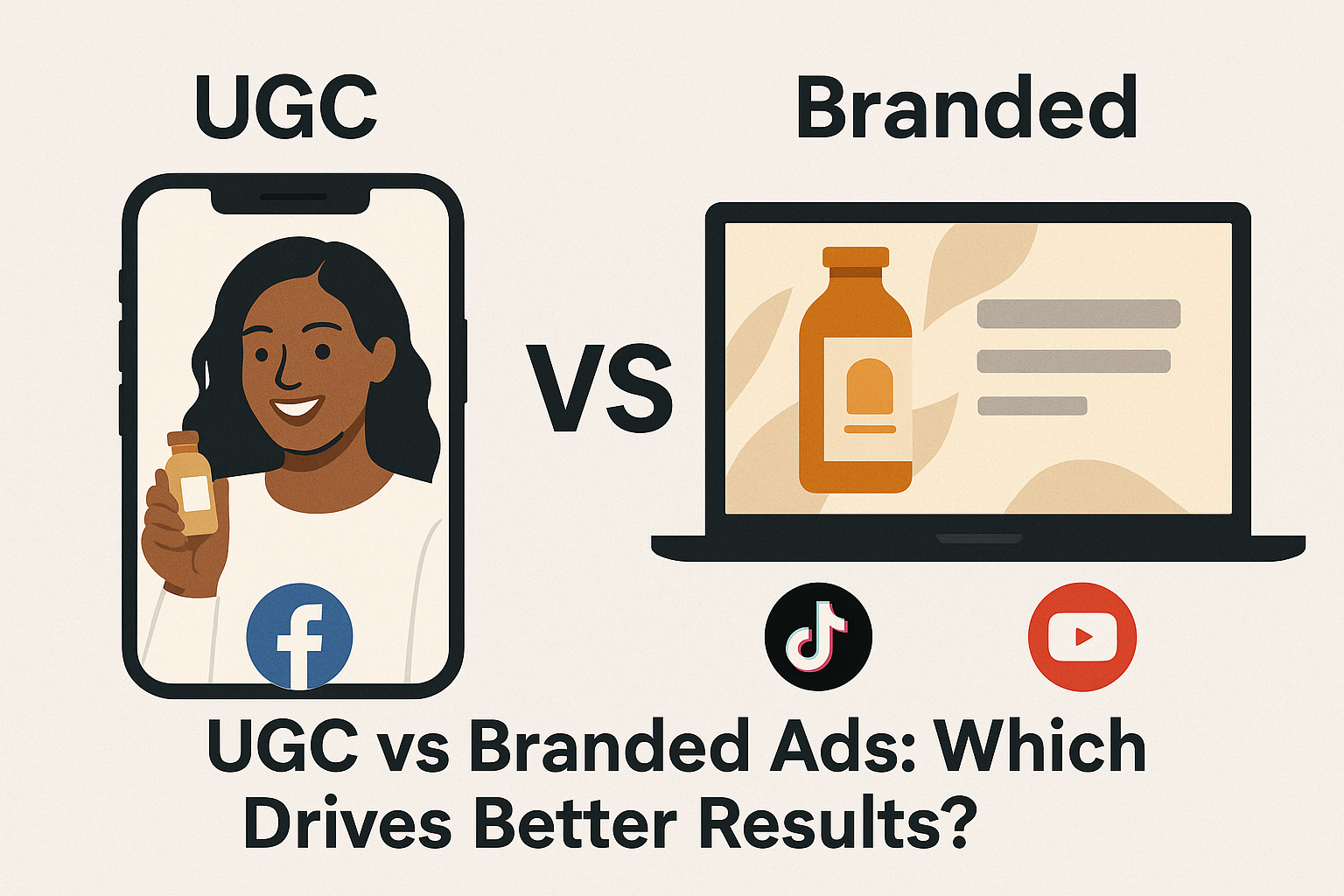
UGC vs Branded Ads: Which Drives Better Results?

UGC vs Branded Ads: Which Drives Better Results?

In a digital world dominated by fast-scrolling, short attention spans, and increasing ad fatigue, advertisers are under pressure to deliver high-performing creatives that capture attention and convert. As brands scale campaigns across Meta, TikTok, and YouTube, one debate consistently surfaces: UGC vs branded ads which truly drives better results? From global e-commerce brands to bootstrapped startups, the tension between authenticity and polish is clear. User-generated content (UGC) offers relatability, while branded creatives bring consistency and control. But when it comes to ROAS, CTR, and engagement which wins? This deep-dive explores both creative strategies in detail, compares their performance across major platforms, and provides actionable takeaways on how to blend both for maximum impact. What Is UGC (User-Generated Content)? User-generated content is any media created by real users, customers, or influencers that showcases their genuine experience with a product or service. It often includes: UGC has taken over platforms like TikTok and Instagram Reels due to its informal, authentic tone that resonates with modern consumers. Brands either repurpose organic UGC or commission creators to produce UGC-style content. UGC Pros UGC Cons What Are Branded Ads? Branded ads are polished, company-produced creatives that follow brand guidelines, tone, and quality standards. These include: Branded creatives are essential for brand-building campaigns, website banners, and top-of-funnel awareness, especially on YouTube and TV. Branded Ad Pros Branded Ad Cons Performance Comparison: UGC vs Branded Ads Across Platforms Let’s compare how each creative type performs across Meta (Facebook/Instagram), TikTok, and YouTube. Meta (Facebook & Instagram) UGC Ads: Branded Ads: Verdict:UGC outperforms in direct response campaigns. Branded content is ideal for mid-funnel engagement and remarketing. TikTok UGC Ads: Branded Ads: Verdict:TikTok thrives on authenticity. UGC is the clear winner here. Branded ads must emulate TikTok’s native style to succeed. YouTube UGC Ads: Branded Ads: Verdict:YouTube supports branded content more than UGC, especially for top-of-funnel awareness. However, short UGC reels work in YouTube Shorts placements. What the Data Says: Industry Benchmarks Metric UGC Performance Branded Ads Performance Click-Through Rate (CTR) ↑ 3.4% avg. ↓ 1.1–2.0% avg. Cost-Per-Click (CPC) ↓ $0.60 avg. ↑ $1.20+ avg. ROAS ↑ 3–6x 2–4x Engagement Rate ↑ 4–5% ↓ 1.5–2.5% Production Cost $150–$800 $5,000+ According to Meta’s internal case studies and DTC growth brands, UGC often drives 2–3x better ROI compared to branded ads especially for eCommerce products under $150. When to Use UGC Creatives UGC is ideal for storytelling + relatability. It works best when trying to earn trust quickly. When to Use Branded Creatives Use branded ads when visual consistency, emotional storytelling, and brand perception are essential. Blending UGC and Branded for Best Results The top-performing brands don’t choose either/or they blend both in a well-rounded creative strategy. Best Practices for a Hybrid Creative Strategy: Pro Tip: Run A/B tests with the same offer using both UGC and branded versions. Measure performance based on platform behavior (not gut feeling). The Psychological Edge of UGC UGC works not just because it “feels real,” but because of psychological triggers: Challenges in Scaling UGC Despite its performance edge, UGC comes with its own set of operational challenges: To scale UGC: The Rise of UGC Agencies & Creator Marketplaces As demand for UGC rises, creator platforms like Billo, Minisocial, Trend, and agencies that specialize in UGC production have exploded. These platforms offer: Outsourcing UGC doesn’t mean losing authenticity — it means creating repeatable, performance-tested formats. FAQs: UGC vs Branded Ads Q1: Which is cheaper UGC or branded ads?A: UGC is significantly cheaper to produce. UGC costs range from $100–$800 per video, while branded content often exceeds $5,000+ depending on production. Q2: Is UGC only for TikTok?A: No. UGC works across Meta, Instagram, YouTube Shorts, and even display ads. Any platform where consumers scroll quickly benefits from UGC’s native feel. Q3: Can luxury brands use UGC?A: Yes, but carefully. UGC must still align with brand aesthetics. High-end creators or stylized UGC formats can work well for premium positioning. Q4: What kind of UGC performs best?A: High-performing formats include: Q5: Can branded ads ever outperform UGC?A: Yes, especially in top-of-funnel brand-building or video storytelling. High-ticket items also benefit from branded confidence-building creatives. Q6: What’s the best UGC platform for beginners?A: Platforms like Billo, Incense, or Trend are ideal. They offer affordable, vetted creators with simple briefing workflows for UGC beginners. Q7: How often should I refresh UGC ads?A: Every 2–3 weeks is ideal. TikTok and Meta algorithms fatigue fast. High-frequency creative refreshes keep performance strong. The Verdict on UGC vs Branded Ads When it comes to performance, UGC wins in CTR, ROAS, and engagement, especially for scroll-heavy platforms like TikTok and Instagram. However, branded ads are still crucial for reinforcing brand identity, credibility, and storytelling across YouTube and top-funnel campaigns. The smartest marketers understand that it’s not about UGC vs branded ads it’s about using the right format at the right stage of the funnel. To maximize results:

Read more
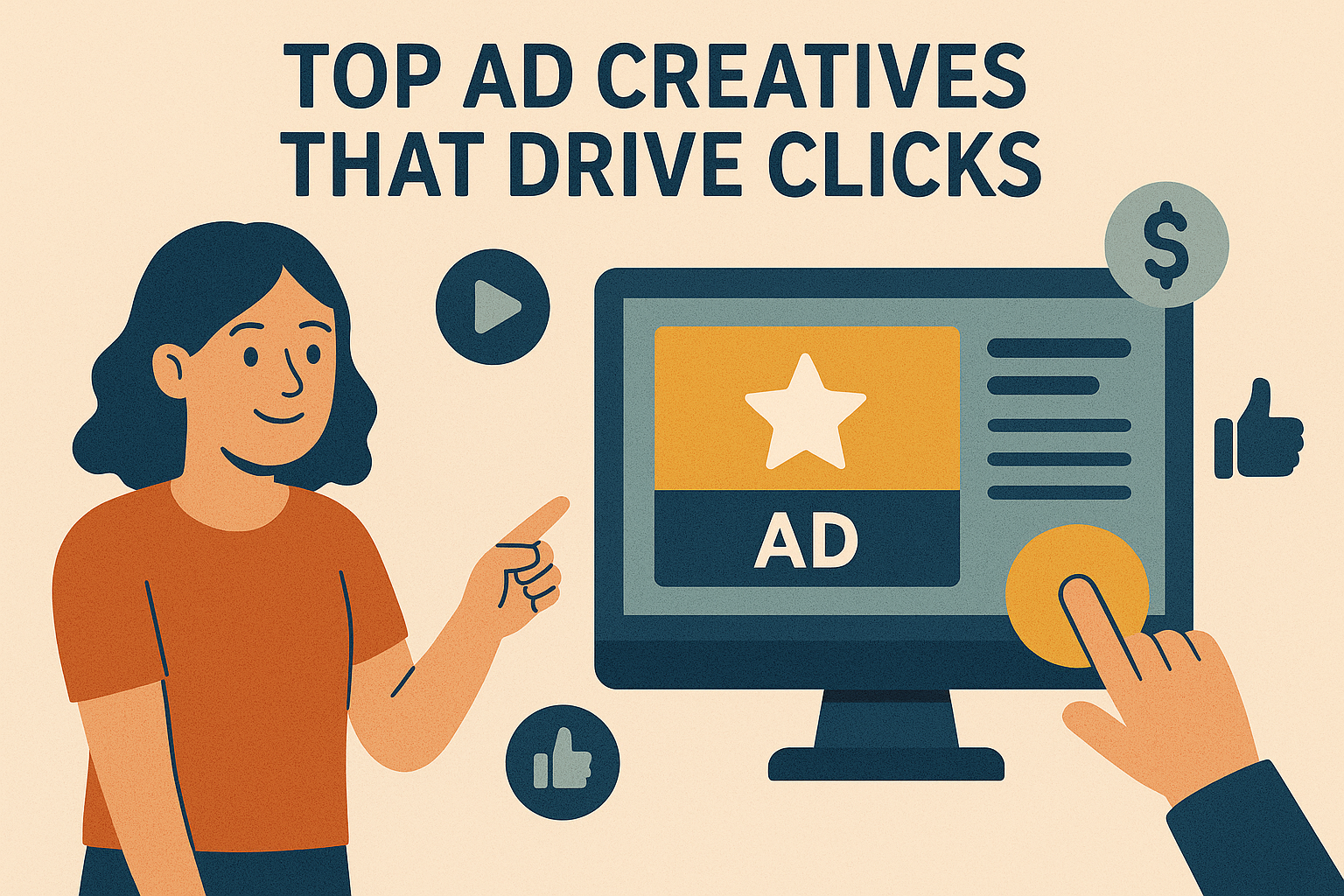
Top Ad Creatives That Drive Clicks

Top Ad Creatives That Drive Clicks

In a digital landscape overflowing with content, your ad has milliseconds to grab attention. Whether you’re running campaigns on Meta, Google, TikTok, or LinkedIn, the right creative is the make-or-break factor between scroll-past or a click-through. In 2025, top-performing ad creatives aren’t just flashy—they’re strategically designed, deeply relevant, and powered by psychology, data, and AI insights. Here’s what today’s click-worthy ad creatives have in common—and how you can apply the winning formulas to your campaigns. Short-Form Vertical Video Ads Platforms like TikTok, Instagram Reels, and YouTube Shorts dominate attention spans. Vertical videos that are under 15 seconds, feature native-style edits, and lead with a clear hook in the first 2 seconds are outperforming other formats. What works: Bold Static Ads with Minimal Copy In-feed static images still work—when done right. The best-performing images in 2025 have: They’re designed for skimming eyes. No clutter. No confusion. Just clarity and punch. Ads That Tell Micro-Stories People don’t want products—they want solutions. Story-driven creatives win clicks by quickly showing the before/after, problem/solution, or a customer transformation. Examples: These ads evoke emotion, relatability, and curiosity. Text-Only Ads with Smart Copywriting Surprisingly, in-feed text-only ads on LinkedIn and Facebook often outperform visual-heavy formats—when the copy is compelling. High CTR text ads include: They feel more like advice or conversation than advertising, which builds trust. Interactive & Carousel Ads Carousel ads still drive strong CTRs, especially for: They let users swipe through a mini-journey. In 2025, top carousel creatives include AI-generated visuals, branded icons, and mini-narratives told over 3–5 slides. Hyper-Personalized Creatives With advanced targeting and AI, top-performing ads now dynamically adjust: If your ads still show the same creative to every audience segment, you’re leaving clicks on the table. Ads Built for A/B Testing The best ad teams don’t launch one hero creative—they launch dozens of micro-variations, test rapidly, and scale what wins. Test variables: The goal isn’t one perfect ad—it’s fast feedback loops. FAQs 1. What’s the average CTR for top-performing ad creatives in 2025?It varies by platform, but high-performing creatives typically get 2–4% CTR on Meta and 4–6% on LinkedIn or native display ads. 2. How often should I refresh ad creatives?For active campaigns, refresh creatives every 2–3 weeks. Ad fatigue is real—especially on Meta and TikTok. 3. Do I need a designer for every creative?No. With tools like Canva, Adobe Express, and AI-powered generators, even non-designers can build high-performing creatives. 4. Should I use AI to write ad copy?Yes—but always edit with a human touch. AI helps generate variations fast, but emotional resonance still needs a marketer’s eye. 5. What KPIs should I track for ad creative performance?CTR, cost-per-click, engagement rate, time spent (on video), and most importantly—conversion rate per creative. Final Thoughts In 2025, the best ad creatives aren’t just pretty—they’re smart, relevant, testable, and relentlessly user-focused. If you want your ads to drive clicks, start by asking:🔹 “Who am I talking to?”🔹 “What’s their pain point?”🔹 “How can I say more with less?”🔹 “What would make me stop scrolling?” Master those, and your clicks (and conversions) will follow.

Read more
Contact us

Full-Service Data & Email Marketing Agency

Turn your marketing communications into a sales powerhouse and increase revenue with full-service email marketing.

Email us at: info@connectdigitalventures.com

Your benefits:

What happens next?

1

We Schedule a call at your convenience 

2

We do a discovery and consulting meting 

3

We prepare a proposal 

Request a Free Sample/Campaign Demo