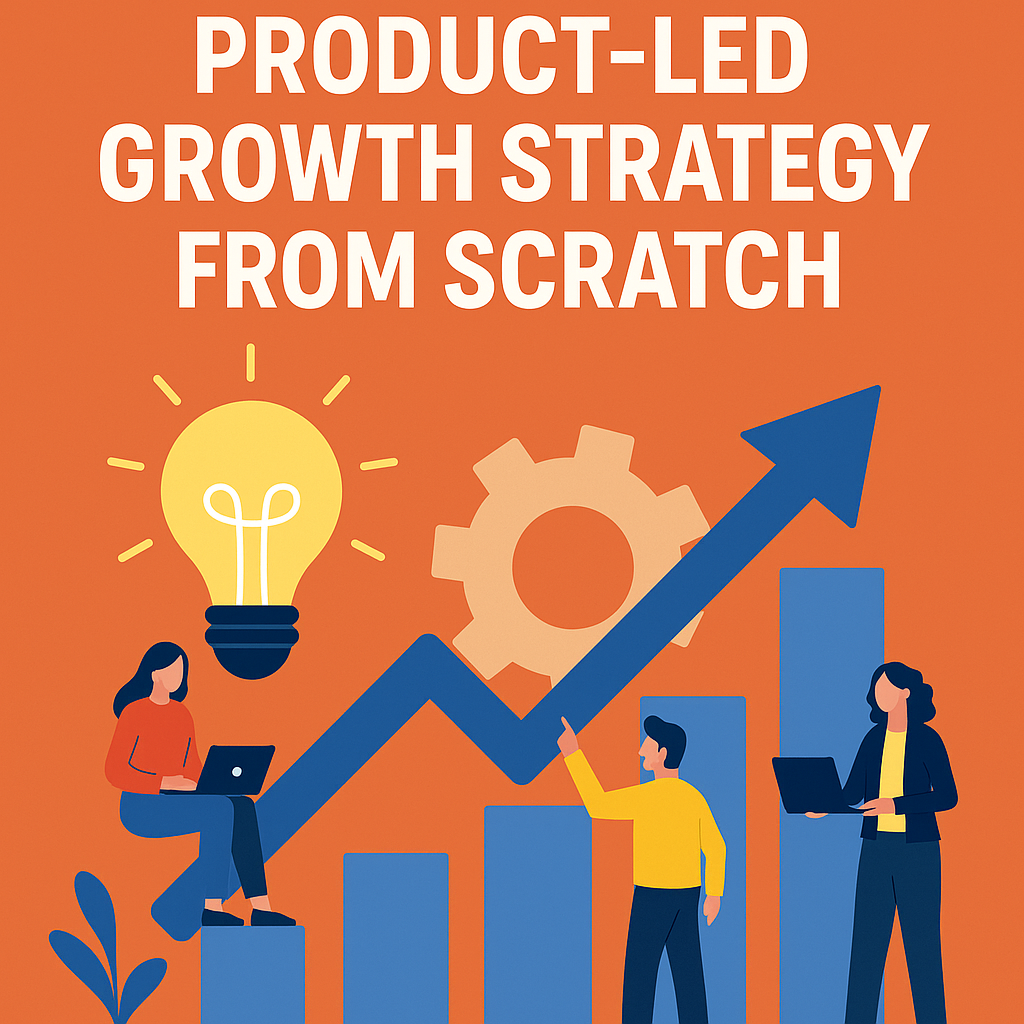
In today’s hyper-competitive digital landscape, traditional sales-led models are giving way to a more organic, user-focused approach Product-Led Growth (PLG). For startups and SaaS companies especially, PLG has emerged as a cost-effective and scalable growth model where the product itself drives acquisition, expansion, and retention.
Whether you’re a founder, marketer, or growth strategist, this guide will help you build a product-led growth strategy from scratch, one that positions your product as your strongest growth engine.
What is Product-Led Growth?
Product-Led Growth is a go-to-market strategy where the product is the primary vehicle for growth. Rather than relying solely on sales or marketing, PLG empowers users to experience the product’s value quickly and independently leading to higher engagement, conversion, and customer satisfaction.
“Try before you buy” becomes the engine that drives adoption, referrals, and upgrades.
Why Product-Led Growth Matters Today
- Faster Customer Acquisition: Users can self-onboard and explore value at their own pace.
- Lower CAC (Customer Acquisition Cost): Less dependence on aggressive paid channels.
- Scalable Growth: Freemium or trial models allow for rapid word-of-mouth and viral growth.
- Customer-Centric Focus: Puts user experience and value at the center of your growth engine.
Step-by-Step: Building a Product-Led Growth Strategy
1. Define Your Value Metric
Your value metric is what success looks like for your users (e.g., “videos created” for a video tool). It should reflect how users gain value and how you charge.
Example: For Slack, the value metric is “messages sent.”
2. Simplify Onboarding
Onboarding must lead users to an “aha!” moment where they first experience value. Reduce friction with interactive tours, checklists, and product nudges.
Goal: Deliver value within the first 5–10 minutes of use.
3. Enable Self-Service and Trial Models
Offer freemium or time-limited trials. Let users explore real features instead of watered-down demos. Empower them to discover the product’s capabilities.
Tip: Use in-app prompts to educate and upsell based on behavior.
4. Incorporate Usage-Based Triggers
Use product analytics to track behavior and engagement. This helps personalize nudges, send timely emails, and offer upgrades based on real intent signals.
Tools: Mixpanel, Amplitude, or Hotjar.
5. Use Feedback Loops to Iterate
PLG is iterative. Collect user feedback through NPS surveys, heatmaps, and usage data. Ship product improvements frequently to keep delighting users.
Pro Tip: Make feature requests part of your community forums or roadmap.
6. Align Teams Around the Product
Marketing, product, sales, and customer success must work together. Your entire company should revolve around how users adopt and expand within your product.
Metric to Track: Product Qualified Leads (PQLs) instead of MQLs or SQLs.
Key Metrics to Monitor in PLG
- Activation Rate: % of users who reach the first “aha” moment.
- Time to Value (TTV): How fast users experience core value.
- Expansion Revenue: Upsells, cross-sells, and upgrades from existing users.
- Net Promoter Score (NPS): Indicator of product satisfaction and referrals.
- Churn Rate: Retention is critical; churn kills PLG.
Examples of Product-Led Growth Champions
- Slack: Viral adoption through team invites.
- Dropbox: Incentivized sharing and free storage for referrals.
- Notion: Beautiful UI + collaborative features = team-wide adoption.
- Figma: Real-time design collaboration wins hearts instantly.
Final Checklist for a PLG Strategy
- A frictionless free trial or freemium plan
- Clear “aha” moments embedded in onboarding
- Product analytics to monitor user behavior
- Growth loops built into product usage
- Self-serve upgrades with contextual prompts
Conclusion
A Product-Led Growth strategy is not just a growth hack it’s a mindset shift. It demands tight integration across teams, data-backed iteration, and a laser focus on user value. Startups that get PLG right can scale faster, reduce acquisition costs, and build long-term loyal users who become product champions.
Your product is your best marketer , now let it speak for itself.
PLG relies on users experiencing the product firsthand, while traditional marketing-led growth focuses on persuasion before product experience.
Not necessarily time-limited trials or interactive demos can also support PLG strategies
A PQL is a user who has experienced enough product value to indicate high purchase intent.
While PLG is most common in SaaS, any product with self-service and high user interaction can apply it.
It varies but with strong onboarding and user value, initial results often appear within 3–6 months.