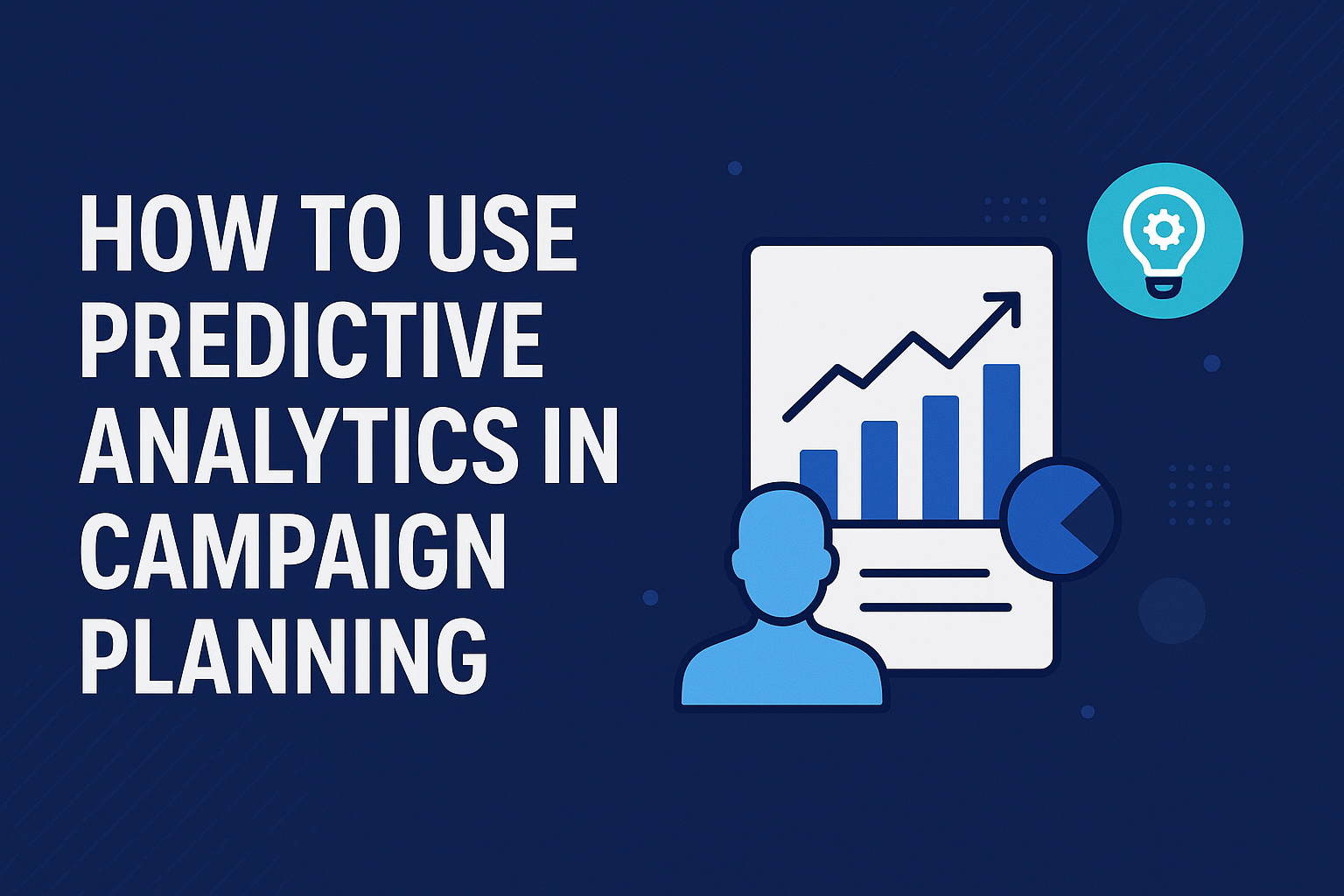
Why Predictive Analytics Is Changing Marketing Forever
Marketing has always relied on one part data, one part creativity, and one part intuition. But as digital channels multiply and customer journeys become more complex, gut feeling isn’t enough. Businesses that win today are those that can anticipate customer behavior before it happens and act on it.
That’s where predictive analytics marketing comes in.
By using historical data, machine learning models, and statistical algorithms, marketers can forecast trends, identify high-value segments, and optimize campaigns before they even launch. The result? Higher ROI, lower wasted ad spend, and campaigns that feel like they’re reading your customer’s mind.
In this detailed guide, we’ll explore:
- The fundamentals of predictive analytics marketing
- How to build a predictive model for campaign planning
- Tools & techniques used by top marketers
- Real-world use cases
- Common mistakes and how to avoid them
- FAQs to answer common beginner and expert-level queries
1. Understanding Predictive Analytics Marketing
1.1 What Is Predictive Analytics?
Predictive analytics uses historical data combined with statistical algorithms and machine learning techniques to forecast the likelihood of future outcomes.
In marketing, it’s used to:
- Identify which leads are most likely to convert
- Predict churn and prevent customer loss
- Forecast campaign performance
- Personalize content and offers
Example: If your e-commerce store has years of transaction data, a predictive model can help forecast which customers are likely to buy during the holiday season — allowing you to send them targeted promotions.
1.2 Difference Between Descriptive, Diagnostic, Predictive, and Prescriptive Analytics
- Descriptive Analytics: What happened? (Past)
- Diagnostic Analytics: Why did it happen? (Past)
- Predictive Analytics: What will happen? (Future)
- Prescriptive Analytics: What should we do about it? (Future actions)
Predictive analytics sits at the intersection of data science and marketing strategy, feeding insights into decision-making.
2. The Role of Predictive Analytics in Campaign Planning
Predictive analytics transforms campaign planning by:
- Improving Targeting: Identifies high-intent audiences.
- Optimizing Timing: Determines the best times to run ads or send emails.
- Refining Messaging: Suggests creative variations for different audience clusters.
- Maximizing Budget: Directs spend to channels with the highest probability of ROI.
3. Steps to Implement Predictive Analytics in Campaign Planning
3.1 Step 1: Collect the Right Data
Your predictive model is only as good as your data.
- Sources: CRM systems, website analytics, ad platform reports, social listening tools, email marketing data, and offline purchase data.
- Data Types:
- Demographics (age, gender, income)
- Behavioral (website visits, clicks, purchase history)
- Engagement (email opens, ad interactions)
- Transactional (order values, repeat purchases)
Pro Tip: Implement a CDP (Customer Data Platform) to unify data from multiple sources.
3.2 Step 2: Clean and Prepare Data
Before modeling, ensure:
- Missing values are handled
- Duplicate entries are removed
- Data is normalized (consistent formats)
- Outliers are checked for validity
3.3 Step 3: Define Campaign Goals
Your campaign goals will dictate the type of predictive model you choose.
- Increasing conversions → Classification model
- Predicting revenue → Regression model
- Forecasting demand → Time-series model
3.4 Step 4: Choose a Predictive Model
Common Predictive Models in Marketing:
- Logistic Regression: Binary outcomes (Will convert / Will not convert)
- Decision Trees & Random Forests: Audience segmentation
- Gradient Boosting Machines (XGBoost, LightGBM): Highly accurate predictions for complex data
- ARIMA/Prophet: Time-series forecasting for trends
3.5 Step 5: Train, Test, and Validate the Model
- Split data into training, validation, and test sets
- Avoid overfitting (where the model learns the training data too well but fails on new data)
- Measure accuracy using metrics like precision, recall, F1-score, or RMSE
3.6 Step 6: Apply Insights to Campaign Planning
Model outputs can directly inform:
- Audience targeting in Facebook Ads or Google Ads
- Content personalization in email campaigns
- Budget allocation across channels
- Seasonal scheduling based on forecasted demand
3.7 Step 7: Monitor and Refine
Predictive analytics is not a one-and-done process.
- Review performance monthly or quarterly
- Retrain models with new data
- Adjust campaign parameters based on updated forecasts
4. Tools for Predictive Analytics Marketing
| Tool | Purpose | Best For |
|---|---|---|
| Google Analytics 4 | Predictive audiences & purchase probability | Web & e-commerce campaigns |
| HubSpot | Predictive lead scoring | B2B lead nurturing |
| Salesforce Einstein | AI-powered sales and marketing predictions | Enterprise campaigns |
| IBM Watson Studio | Custom ML models | Data science teams |
| Python + scikit-learn | Open-source predictive modeling | Technical marketing/data teams |
5. Real-World Examples
E-commerce: Amazon uses predictive analytics to recommend products and anticipate demand for restocking.
Subscription Services: Netflix predicts what shows you’ll enjoy next and uses it to drive personalized email campaigns.
Retail: Target famously predicted a customer’s pregnancy before she announced it by analyzing her purchase patterns.
6. Common Mistakes to Avoid
- Poor Data Quality: Garbage in, garbage out.
- Overfitting Models: Great accuracy in testing but poor real-world performance.
- Ignoring Change: Customer behavior shifts update models frequently.
- Not Aligning with Business Goals: Predictions must lead to actionable strategies.
7. Best Practices for Success
- Start small with one campaign before scaling
- Combine predictive analytics with A/B testing
- Use explainable AI techniques to understand model decisions
- Keep ethics in mind respect privacy and avoid biased data sets
FAQs
Q1: How is predictive analytics different from AI in marketing?
AI is a broad term that includes predictive analytics, which specifically focuses on forecasting outcomes using past data.
Q2: What industries benefit most from predictive analytics marketing?
E-commerce, SaaS, finance, retail, and healthcare see strong ROI from predictive targeting and personalization.
Q3: Can small businesses use predictive analytics?
Yes many tools like HubSpot and Google Analytics offer built-in predictive features without requiring coding.
Q4: How much historical data is needed for predictive analytics?
Typically 6–12 months of clean, relevant data is a good starting point.
Q5: What’s the biggest challenge in predictive analytics marketing?
Ensuring the accuracy and relevance of data, followed by translating insights into actionable campaigns.
Predictive analytics marketing is no longer a futuristic concept it’s a present-day necessity. From enhancing audience targeting to maximizing ROI, predictive models give marketers a competitive advantage. The key lies in pairing quality data with the right models, tools, and a continuous improvement mindset.