Full-funnel marketing is more than just a buzzword it’s a powerful strategy that helps businesses guide customers through every stage of the buyer’s journey, from awareness to decision and loyalty. In 2025’s competitive digital landscape, companies that embrace full-funnel marketing gain a significant edge over those using siloed, one-size-fits-all campaigns.
In this article, we’ll break down what full-funnel marketing really means, why it matters, how to build your strategy, and how to align your content, channels, and measurement across the funnel.
What Is Full-Funnel Marketing?
Full-funnel marketing is a strategic approach that targets consumers at all stages of the buyer journey top (awareness), middle (consideration), and bottom (conversion). Instead of focusing only on quick wins or short-term conversions, this model nurtures long-term customer relationships and increases lifetime value.
Think of it like a funnel:
- Top of the Funnel (TOFU): Attracting new potential customers.
- Middle of the Funnel (MOFU): Nurturing and educating prospects.
- Bottom of the Funnel (BOFU): Converting prospects into customers.
- Post-Purchase: Driving loyalty and repeat purchases.
Why Full-Funnel Marketing Matters in 2025
- Longer Customer Journeys: Buyers today research across multiple channels before making a decision.
- Omnichannel Behavior: Consumers interact with brands across social, search, email, and more.
- Higher ROI: Businesses that use full-funnel strategies see better conversion rates and lower cost per acquisition.
- Better Personalization: Messaging is tailored to each stage, increasing relevance and engagement.
How to Build a Full-Funnel Marketing Strategy
1. Define Your Buyer Journey
Map out how your customers discover, evaluate, and purchase your product or service. This will help you align messaging and touchpoints at each stage.
2. Segment Your Funnel
- TOFU (Awareness):
- Goal: Generate visibility and educate.
- Channels: Paid social, display ads, SEO blogs, influencer content.
- Content: Educational blogs, videos, brand campaigns.
- MOFU (Consideration):
- Goal: Nurture leads and build trust.
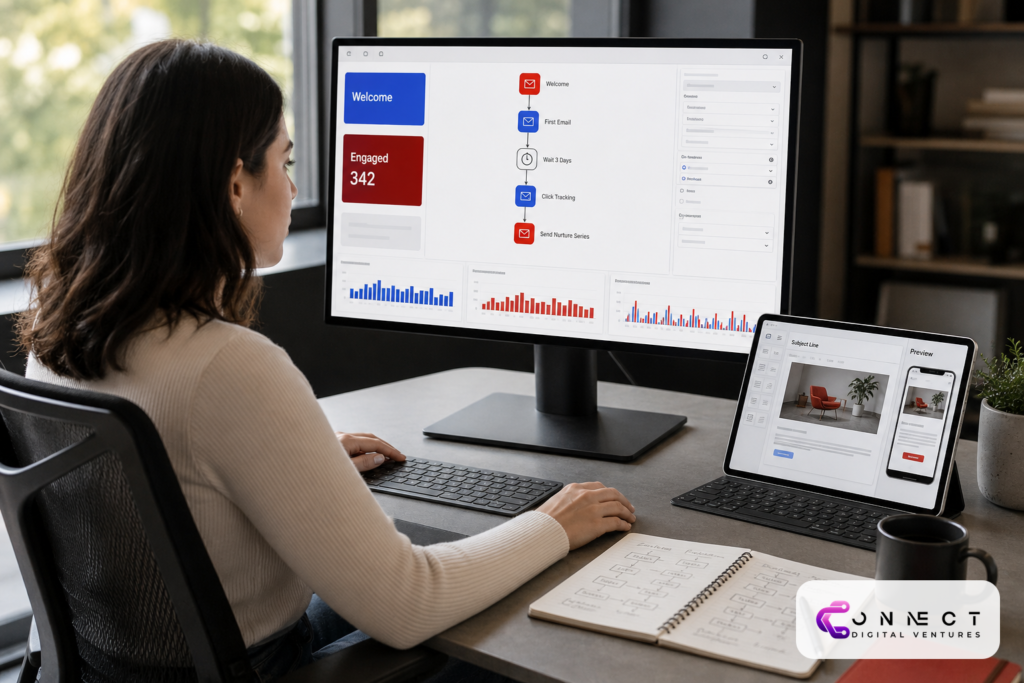
- Channels: Email campaigns, remarketing, webinars.
- Content: Case studies, product demos, eBooks.
- BOFU (Conversion):
- Goal: Drive action.
- Channels: Google Search Ads, retargeting, direct email.
- Content: Testimonials, limited-time offers, free trials.
- Post-Purchase:
- Goal: Retain and upsell.
- Channels: Loyalty emails, onboarding sequences.
- Content: Surveys, referral programs, loyalty incentives.
3. Use Data for Smarter Targeting
Leverage tools like Meta Pixel, Google Analytics 4, and CRM data to track behavior and segment your audience based on their stage in the funnel.
4. Optimize for Every Stage
Set KPIs tailored to each funnel stage. For example:
- TOFU: Impressions, clicks, engagement rate.
- MOFU: Lead quality, time on site, form submissions.
- BOFU: Conversion rate, revenue, ROAS.
- Loyalty: Repeat purchase rate, NPS.
Tools to Support Full-Funnel Execution
- HubSpot / Salesforce – CRM & marketing automation
- Meta Ads + Google Ads – Ad delivery across funnel
- Klaviyo / Mailchimp – Email marketing flows
- Hotjar / Crazy Egg – Behavioral analytics
- GA4 / Looker Studio – Funnel performance insights
Real-World Example
A DTC skincare brand might:
- Run TikTok influencer videos to build awareness (TOFU),
- Send email drips with product benefits (MOFU),
- Retarget website visitors with discounts (BOFU),
- Then follow up with a loyalty program email (Post-Purchase).
This holistic approach creates a seamless buyer experience and increases the odds of turning a one-time buyer into a long-term fan.
Facts
In a world where attention is scarce and competition is fierce, full-funnel marketing isn’t optional it’s essential. By tailoring your strategy across every customer touchpoint, you create a journey that feels personal, builds trust, and ultimately drives more conversions.
If you’re not thinking about the full funnel, you’re only doing half the job.
It boosts conversion and customer lifetime value by aligning messaging across all stages.
No startups and small businesses can scale it using automation and targeted content.
Track different KPIs for each stage: awareness (reach), consideration (leads), conversion (sales), loyalty (retention).
Yes Meta Ads allows segmentation and creative optimization tailored to each stage.
Performance marketing focuses on bottom-of-funnel results, while full-funnel considers every stage from awareness to loyalty.