In today’s hyper-competitive digital landscape, brands that fail to automate their email marketing risk falling behind. As consumers demand timely, personalized communication, email automation has emerged as a cornerstone of modern marketing strategies. From nurturing leads to reactivating dormant customers, the power of email marketing automation lies in its ability to scale relationships while saving time and increasing ROI.
This article delves deep into the tools and strategies essential for successful email marketing automation—and how businesses of all sizes can capitalize on them.
What Is Email Marketing Automation?
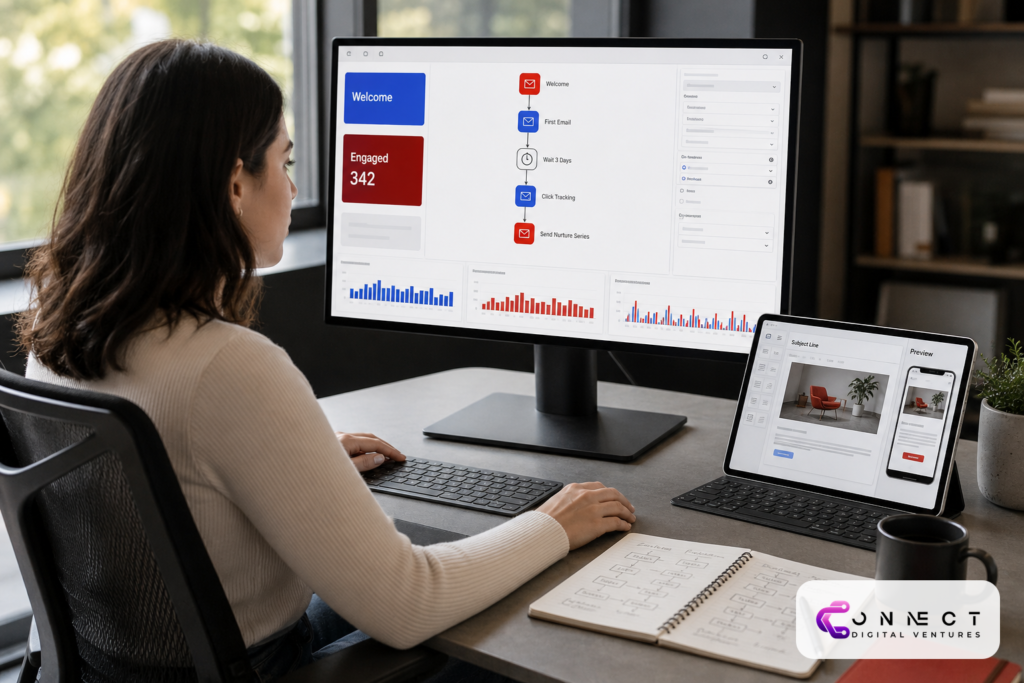
Email marketing automation refers to the process of sending targeted, timely, and personalized emails to subscribers using predefined triggers and workflows. Instead of manually sending emails to each contact, automation allows marketers to deliver the right message at the right time—automatically.
Automation can be as simple as a welcome email series or as complex as multi-step behavioral sequences that adjust based on user actions.
Why Email Automation Matters
- Saves Time: Automated workflows reduce the need for manual intervention, allowing marketers to focus on strategy and creativity.
- Improves Personalization: Tailored emails based on user behavior and preferences lead to higher engagement.
- Boosts Conversion Rates: Automated follow-ups help guide prospects down the funnel.
- Enhances Retention: Drip campaigns and re-engagement sequences keep your brand top-of-mind.
Top Email Marketing Automation Tools (2025 Edition)
- Klaviyo – Ideal for eCommerce businesses, with deep integrations and real-time segmentation.
- ActiveCampaign – Known for advanced automation workflows and CRM integration.
- Mailchimp – A user-friendly choice for small businesses, offering basic automation features.
- HubSpot – A robust tool for B2B with integrated CRM and lead scoring.
- ConvertKit – Perfect for creators and bloggers with intuitive automation paths.
- Drip – Tailored for eCommerce, offering behavior-based automation and multichannel campaigns.
Effective Email Automation Strategies
- Welcome Series
Introduce your brand with a warm and informative multi-part welcome sequence. - Abandoned Cart Emails
Recover lost sales by reminding users of items they left behind. - Re-Engagement Campaigns
Target inactive subscribers with exclusive offers or surveys to bring them back. - Post-Purchase Follow-Ups
Thank customers, recommend complementary products, or request reviews. - Lead Nurturing Drips
Guide leads through the funnel with educational and valuable content. - Event or Webinar Reminders
Use automation to remind and follow up on RSVPs and attendance.
Tips to Maximize Automation Success
- Segment Intelligently: Use data points like behavior, purchase history, and demographics.
- Test & Optimize: Use A/B testing to fine-tune subject lines, CTAs, and content.
- Personalize Beyond Names: Tailor messaging based on user journey and preferences.
- Track Metrics: Monitor open rates, click-through rates, conversions, and unsubscribe rates.
- Maintain List Hygiene: Regularly clean your email list to improve deliverability.
FAQs About Email Marketing Automation
1. What’s the difference between email marketing and automation?
Email marketing is the broader practice of using email to communicate with audiences. Automation involves setting up workflows and triggers to send emails automatically based on user actions or timelines.
2. Is automation suitable for small businesses?
Yes. Tools like Mailchimp and ConvertKit make automation accessible and scalable for businesses of all sizes.
3. How can I personalize automated emails?
Use dynamic fields, behavioral triggers, purchase history, and user preferences to deliver relevant content.
4. How do I measure automation success?
Track open rates, click-throughs, conversion rates, revenue generated, and list growth metrics.
5. How often should I update my workflows?
Review and optimize your workflows every quarter to adapt to audience behavior and campaign goals.
Conclusion
Email marketing automation is more than just a time-saving tool—it’s a powerful strategy to build customer relationships, drive conversions, and grow your brand. With the right tools and tactics in place, businesses can create intelligent campaigns that deliver measurable results while elevating the customer experience.